John Petrucci Guitar Rig And Setup Explained
by Dave Fox
Our team first locked eyes on the John Petrucci guitar rig setup from the third row of a Dream Theater arena show, and the experience was genuinely disorienting. The tone was simultaneously bone-crushing and articulate — a combination that should not exist at that volume. We spent the rest of the night scribbling gear notes on a napkin.

Petrucci is not a gear tourist. He has used variations of the same core signal chain for decades, refining rather than replacing. That consistency produces a tone recognizable in seconds — tight low end, glassy highs that cut through dense arrangements, and mids that sing without nasal honk. Our coverage of music gear spans hundreds of rigs, and this one remains among the most architecturally coherent we have studied.
Dream Theater plays in contexts that punish mediocre gear — odd time signatures, extreme dynamic shifts, and sustained lead passages that expose every flaw in a signal chain. Understanding how this rig is built gives any serious player a masterclass in purposeful gear selection. It compares instructively to our breakdown of the James Hetfield guitar setup — another player who treats rig discipline as non-negotiable.
Contents
Building the John Petrucci Guitar Rig Setup Step by Step
Guitars and Pickups
The cornerstone of the rig is Petrucci's signature Ernie Ball Music Man JP series. He co-designed these instruments over decades of active collaboration, and the result is a guitar built around specific demands: low string action with zero buzz, a fast neck profile, and upper-fret access without contortion. These are working tools, not showpieces.
Current JP builds use DiMarzio pickups designed specifically for him:
- DiMarzio Rainmaker (neck) — voiced for warm, singing leads with clear attack and no low-mid flub
- DiMarzio Dreamcatcher (bridge) — tight, aggressive output optimized for high-gain rhythms that retain note definition
- Piezo system for acoustic-style tones without switching guitars — an underrated live tool that most players overlook
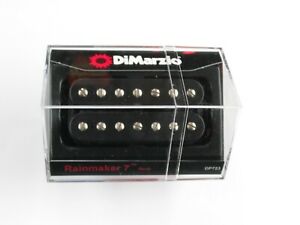
Earlier JP models used the DiMarzio LiquiFire and Crunch Lab pairing, which some players still prefer for a slightly warmer character. Our team leans toward the Rainmaker/Dreamcatcher configuration for modern progressive metal — it resolves note definition in dense chords far better than the older set under high gain.
Pro tip: When replicating Petrucci's pickup response, pickup height matters enormously — the Dreamcatcher turns flabby and unfocused if set too close to the strings, undoing everything the amp does right.
Amplification
Petrucci's primary amplifier is the Mesa/Boogie JP-2C, a signature head developed directly from his long relationship with the brand. It is a dual-channel design — channel 1 handles cleans and light drive, channel 2 delivers the high-gain lead and rhythm sounds that define his recorded tone. Before the JP-2C existed, he used the Mesa/Boogie Dual Rectifier, and traces of that voicing remain in the new amp's DNA.
He runs the head into Mesa/Boogie 4x12 cabinets loaded with Celestion speakers. The cabinet choice matters more than most players acknowledge — the Celestion voicing tightens the low end and smooths the upper-midrange harshness that high-gain Mesa heads can produce at stage volume.
Rack Gear and Routing
The rack is where the rig becomes genuinely complex. Key rack components include:
- Fractal Audio Axe-Fx III — used in more recent live configurations for effects processing and cab simulation in in-ear monitoring contexts
- TC Electronic G-System or equivalent MIDI controller for seamless channel and effects switching
- TC Electronic M3000 for studio-quality reverb and stereo delay
- Eventide rack units for pitch harmonizer duties and special effect textures

The signal routing is looped and MIDI-controlled to eliminate tap-dancing and ensure zero bleed between effects states. This is not optional at the level he plays — a misfire during a 17-minute instrumental piece is not recoverable in front of 15,000 people.
Diagnosing Tone Problems in a Petrucci-Style Rig
Noise and Interference
Anyone attempting to recreate the John Petrucci guitar rig setup in a rehearsal room will almost immediately hit noise problems his touring rig never encounters. His stage setup includes professional power conditioning and isolated grounds at every point. Most rehearsal spaces have neither.
Warning: Running a high-gain Mesa-style amp without a proper noise suppressor in the effects loop will produce 60-cycle hum that makes the rig unusable at any volume above bedroom level — place the suppressor in the loop, not the front of the amp.
The fix is a noise suppressor positioned in the effects loop — not the input stage. Petrucci has used Hush systems and ISP Technologies units at various points. Loop placement targets the noise generated by the preamp specifically, which is where the problem originates in high-gain configurations. Front-of-amp placement is the wrong answer every time.
Losing High-End Clarity
Long cable runs and passive effects in the chain will kill the top-end clarity that defines his lead tone. Our team's recommendation is a clean buffer at the very front of the chain. A buffer preserves the guitar's natural frequency response across 20 or more feet of cable before the signal reaches the amp input. Without one, the tone sounds like it is wrapped in a blanket — present, but softened in ways that no EQ on the amp will fully correct.
Where This Rig Performs Best
Live Arena Performance
The John Petrucci guitar rig setup was engineered for large stages. The combination of high-output pickups, a high-wattage amplifier, and a MIDI-controlled rack means every parameter is locked in from the first note of the show. Nothing drifts. The rig behaves identically night after night, city after city.

This is a meaningful contrast to how players like Tom Morello approach their live rig — Morello builds in unpredictability and improvised texture, while Petrucci optimizes for absolute repeatability. Neither philosophy is wrong; they reflect fundamentally different performance goals. The floor pedalboard handles wah and volume pedal duties while the rack covers everything else, keeping the stage floor clean and reducing the chance of a misstep during technically demanding passages.
Studio and Recording
In the studio, the rig's application shifts somewhat. Petrucci has used direct recording with amp simulation for certain tracks, but the core live chain — JP-2C into Mesa cabinets — translates cleanly to recording environments. Engineers working with him have noted that the amp's gain staging is clean enough to capture at moderate room volumes without sacrificing live character. The result on record matches what the stage rig produces, which is the mark of a well-tuned setup.
Players interested in studio tone philosophy should study how Mark Knopfler and Jerry Cantrell bridge the gap between stage and recording environments — both approach the session context very differently from their live rigs, which illuminates how context should drive gear decisions.
Pro Techniques for Dialing In That Sound
Setup and String Gauge
Petrucci uses D'Addario strings in a custom gauge — heavier than standard for his lower tunings, but not so heavy that speed and articulation suffer. Most players targeting his tone underestimate how much the physical setup of the instrument determines the final result. The amp does not fix mechanical problems — it broadcasts them.
- String action should be low but completely buzz-free — any fret rattle reads as distortion through a high-gain amp
- Intonation must be precisely set — even small errors compound badly across chord voicings in odd time signatures
- Nut slots should be cleanly cut and lubricated to prevent binding during bends
- Neck relief should be minimal — Petrucci favors an extremely flat neck profile compared to most players
Pro tip: The JP-2C's gain is high enough that a poorly set-up guitar will always sound worse through it — the amp amplifies mechanical issues rather than masking them.
Getting the Most from the JP-2C
The JP-2C's channel 2 gain is deceptively interactive. Our team has logged considerable time dialing this amp, and the consistent finding is that less input gain than expected is usually the correct setting. Petrucci's recorded tone is tight and defined — not saturated to the point of compression. Setting gain around 7 and allowing the pickups to push the input stage produces a more dynamic result than cranking to 10.
The five-band EQ on channel 2 is where the magic lives. Scooping the low-mids around 250Hz cleans up the muddiness common to high-gain amps in a band context. Boosting the presence control rather than the treble preserves articulation without adding the ice-pick quality that ruins leads in a live mix. This approach compares instructively to how Yngwie Malmsteen shapes his Marshall mid-range — another player with rigid tonal requirements and strong convictions about where the EQ should sit.
Petrucci vs. Other Guitar Icons: Rig Philosophies Compared

The John Petrucci guitar rig setup represents one particular philosophy among many valid approaches. Our team has broken down rigs across the full spectrum — from the stripped-down minimalism of Jack White to the wah-drenched expressiveness of Kirk Hammett — and the differences illuminate what each player actually prioritizes when building a rig.
| Guitarist | Primary Amp | Guitar Brand | Rig Complexity | Core Philosophy |
|---|---|---|---|---|
| John Petrucci | Mesa/Boogie JP-2C | Ernie Ball Music Man | Very High (full rack) | Engineered precision, repeatability |
| James Hetfield | Mesa/Boogie Custom | ESP / Gibson | High (custom switching) | Controlled aggression, no surprises |
| Kirk Hammett | Mesa/Boogie Mark series | ESP | Medium-High (pedal-heavy) | Wah-centric lead expressiveness |
| Tom Morello | Marshall JCM 800 | Custom "Arm the Homeless" | Medium (creative pedals) | Sound design, deliberate unpredictability |
| Jack White | Various vintage | Various custom / vintage | Low (intentionally minimal) | Raw character, embraced accidents |
What separates Petrucci from nearly everyone on this list is the degree to which the rig is designed to eliminate variables rather than embrace them. Most great players leave some chaos in the chain. Petrucci engineers it out entirely. The result is more consistent output at the cost of spontaneity — a trade-off that makes complete sense for the music Dream Theater plays, where a missed switching cue inside a 13/8 passage carries real consequences.
Frequently Asked Questions
What guitar does John Petrucci use?
Petrucci plays his signature Ernie Ball Music Man JP series guitars, featuring DiMarzio Rainmaker (neck) and Dreamcatcher (bridge) pickups developed specifically for him, along with a built-in piezo system for acoustic-style tones. Earlier models used the LiquiFire and Crunch Lab pairing, which many players still prefer for its warmer character.
What amp does John Petrucci use?
His primary amplifier is the Mesa/Boogie JP-2C, a signature head co-developed with Mesa over years of touring collaboration. It is a dual-channel design — one channel for clean and light-drive tones, one for the high-gain sounds central to his work with Dream Theater. He pairs it with Mesa/Boogie 4x12 cabinets loaded with Celestion speakers.
How complex is the John Petrucci guitar rig setup to recreate?
Extremely complex by most standards. The touring rack includes MIDI-controlled switching, TC Electronic processing, Eventide harmonizers, and in recent configurations an Axe-Fx III for effects and monitoring. A floor pedalboard handles wah and volume duties. Scaling it down to a rehearsal-room version requires starting with the amp and pickups — those are the foundation; the rack is refinement.
Next Steps
- Research the Mesa/Boogie JP-2C specifications and compare them directly to the standard Dual Rectifier — understanding what changed clarifies why Petrucci moved to the signature model and what tonal problems it solves.
- Listen to back-to-back recordings featuring the DiMarzio LiquiFire/Crunch Lab set versus the newer Rainmaker/Dreamcatcher configuration to train the ear for the specific differences before committing to a pickup swap.
- Read the James Hetfield and Kirk Hammett rig breakdowns to build a broader picture of how top-level metal guitarists approach signal chain design from very different starting points.
- If building a Petrucci-inspired rig, start with the amp and pickups and get those right before touching rack effects — the rack is refinement, not foundation, and chasing rack gear first is a common and expensive mistake.
- Watch professionally filmed Dream Theater rig rundown footage to observe how the MIDI switching and rack routing are physically organized on stage — the visual layout reveals routing decisions that gear lists alone do not convey.


About Dave Fox
Dave Fox (also known as Young Coconut) is a musician, songwriter, and music historian who has been making and studying music across genres for over twenty years. His work spans experimental, jazz, krautrock, drum and bass, and no wave — a breadth of listening that informs his writing about musical history, gear, and the artists who push sound in unexpected directions. At YouTubeMusicSucks, he covers music history and genre guides, musician interviews, and music production resources for listeners and players who want more than the mainstream offers.
Check for FREE Gifts. Or latest free acoustic guitars from our shop.
Remove Ad block to reveal all the rewards. Once done, hit a button below