Yngwie Malmsteen Guitar Setup And Rig Rundown
by Jay Sandwich
The Yngwie Malmsteen guitar rig setup is built around a deliberately minimal signal chain that has stayed remarkably consistent across decades of performing: scalloped Fender Stratocasters, Marshall amplifier stacks, and a small collection of vintage-style effects that keep the focus on technique rather than processing. If you want to understand why that combination produces one of the most recognizable tones in rock guitar history — and how much of it you can realistically replicate — this full breakdown covers every component. For more deep dives on how serious players build their rigs, browse the music gear section.
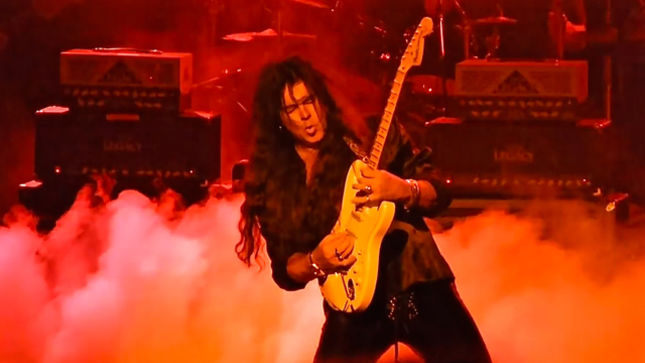
According to his Wikipedia biography, Yngwie Malmsteen built his neoclassical approach by fusing Bach and Paganini with hard rock energy — and every piece of his gear follows that same logic. The scalloped fretboard gives his hands the freedom to execute extreme vibrato without fighting the wood. Ultra-light .008 gauge strings make those techniques physically possible at the tempos he operates at. And the Marshalls behind him convert all of that into sheer presence and cut that fills arenas without any digital polish doing the heavy lifting.
Tone enthusiasts who follow other legendary guitar rigs will recognize this pattern immediately. Just like the players covered in the Kirk Hammett Guitar Setup And Rig Rundown and the Dave Mustaine Guitar Rig Rundown, Yngwie built his sound around a consistent core setup and never felt the need to reinvent it. The gear serves the style — and in Yngwie's case, that style demands absolute clarity at high volume, fast response to a light picking attack, and the kind of sustain that only comes from a screaming tube amp interacting with a room.
Contents
- What the Yngwie Malmsteen Guitar Rig Setup Actually Costs
- Yngwie vs. Other Shred Icons: A Direct Rig Comparison
- The Real Strengths and Weaknesses of the Malmsteen Setup
- When Yngwie's Rig Makes Sense (And When to Think Twice)
- How to Build Toward Yngwie's Sound Over Time
- Where the Malmsteen Rig Performs Best in Real Playing Situations
- Mistakes Most Guitarists Make When Copying Yngwie's Tone
What the Yngwie Malmsteen Guitar Rig Setup Actually Costs
The honest answer is that the full, authentic Yngwie Malmsteen guitar rig setup will run you several thousand dollars at minimum — and that's before factoring in the vintage pieces he collects. Breaking it into components makes it much clearer where the money goes and where you can find credible alternatives without gutting the tone.
The Guitars: Signature Strats, Vintage Finds, and Their Prices
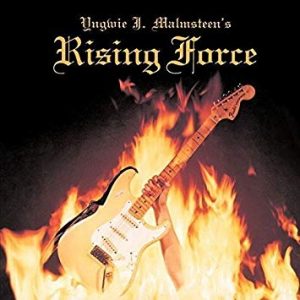
Yngwie's primary guitar is the Fender Yngwie Malmsteen Stratocaster — his official signature model. New, these run between $1,000 and $1,400. The key specs that make it work are the scalloped maple fretboard, brass nut, vintage large headstock, and DiMarzio YJM pickups — specifically the YJM Fury in the bridge and the HS-3 in the neck and middle positions. Used signature models appear regularly in the $700–$900 range and are often already dialed in for his preferred setup.
If you want to retrofit an existing Strat instead, the DiMarzio YJM Fury and HS-3 run around $80–$110 each. A professional scallop job from a skilled luthier adds $150–$300 depending on depth and fret count. Understanding how Fender tailors a signature instrument to a player's specific physical technique — the same principle at work here — is something the Fender Stevie Ray Vaughan Stratocaster review breaks down particularly well. Yngwie's model applies that same logic, just oriented toward classical speed instead of blues feel.

Amplifiers, Cabinets, and Pedals
On the amplifier side, Yngwie runs Marshall heads — typically vintage plexi-style or JCM800-era models — paired with Marshall 4x12 cabinets loaded with Celestion speakers. A used JCM800 head in good condition runs between $1,200 and $2,200. Marshall 1960 cabinets cost $500–$900 used in solid shape. Budget for a full retube when buying any used head — old tubes are the most common reason a JCM800 sounds thin or harsh instead of tight and harmonically rich. New JJ or Tung-Sol EL34s and 12AX7s run $60–$100 for a complete set.
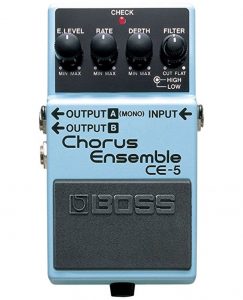
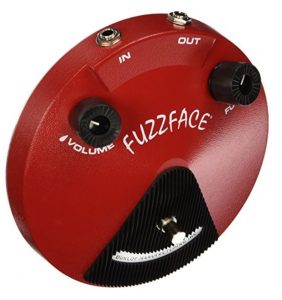
His pedal chain is deliberately short. The DOD 250 Overdrive Preamp pushes the amp's front end into saturation — available used for $50–$100. A vintage Boss CE-1 Chorus Ensemble now runs $300–$500 in the vintage market, though the Boss CE-5 is a widely used modern substitute at around $70. The Dallas Arbiter-style Fuzz Face costs $100–$400 depending on whether you're buying a reissue or hunting NOS vintage. An MXR Flanger rounds out the chain at $100–$150 new. The entire pedal board investment stays modest compared to the guitar and amp.
Yngwie vs. Other Shred Icons: A Direct Rig Comparison
Yngwie's approach to gear is distinctly different from his contemporaries, even those who occupy a similar technical tier. Comparing the Yngwie Malmsteen guitar rig setup to other high-profile shredders makes it clear just how committed he is to the vintage analog path.
Side-by-Side Gear Breakdown
| Player | Primary Guitar | Amplifier | Key Effect | String Gauge | Rig Philosophy |
|---|---|---|---|---|---|
| Yngwie Malmsteen | Fender Strat (scalloped) | Marshall plexi / JCM800 | DOD 250 Overdrive | .008 | Vintage, minimal, technique-first |
| Eddie Van Halen | Custom Frankenstrat | Marshall plexi (modified) | MXR Phase 90, Flanger | .009 | Experimental, DIY-modified vintage |
| John Petrucci | Music Man Majesty | Mesa/Boogie Mark series | TC Electronic G-System | .010 | Modern, rack-heavy, precision-engineered |
| Steve Vai | Ibanez Jem | Carvin Legacy | DigiTech Whammy, multi-rack | .009 | Expansive, multi-layer, studio-grade |
| Paul Gilbert | Ibanez RG / Music Man | Laney GH100L | Minimal pedals | .010 | Clean-first, pure technique-driven |
The table tells the story clearly: Yngwie uses the lightest strings and the most stripped-down signal path of any player in that peer group. Where Petrucci and Vai have embraced modern rack systems and extended-range instruments, Yngwie has stayed completely analog and single-coil-driven for his entire career. That consistency is either a defining strength or a limitation, depending entirely on what you're trying to achieve.
The Real Strengths and Weaknesses of the Malmsteen Setup
No rig is right for every situation. The Yngwie Malmsteen guitar rig setup has genuine advantages that explain its longevity — and real compromises that make it a poor fit for certain players and contexts.
Where the Rig Excels
The biggest strength is immediacy of response. Because the signal path runs directly from guitar to DOD 250 to a cranked Marshall with almost no coloring in between, there are no processing artifacts, no latency, and no digital translation happening. Every nuance of your picking dynamics and vibrato hits the speaker exactly as produced. For a player of Yngwie's technical precision, that transparency is non-negotiable. You develop a physical connection to the instrument that disappears the moment you insert heavy processing into the chain.
The tube amplifier saturation at volume also creates harmonics that a low-volume digital setup cannot replicate convincingly. When the Marshalls are running at stage volume, the interaction between the output transformer, the speakers, and the room produces a sound that's genuinely alive. That's not nostalgia — it's physics, and no software model has fully closed that gap yet.
Where It Falls Short
The rig is volume-dependent. Push a Marshall stack to the level where it truly opens up and you're dealing with significant stage SPL — the kind that creates real problems in small rehearsal spaces and club venues. At bedroom volume, the tone is noticeably thinner and harmonically leaner than what you hear on record. That's a real limitation for practice situations and small-room gigs where a sound engineer can't work with your natural stage volume.
Versatility is the other honest weakness. This rig does one thing exceptionally well: high-gain neoclassical lead tone with a singing sustain and a piano-like note separation. It does not do jazz. It does not handle clean funk. It won't produce ambient textures or modern high-output metal tones without fighting you the entire way.
When Yngwie's Rig Makes Sense (And When to Think Twice)
Players Who Will Get the Most From It
You're the right candidate for this setup if you play predominantly lead guitar in a rock or metal context, you've already built strong fundamental technique, and you perform regularly in situations where volume isn't restricted. The scalloped Strat and Marshall combination rewards players who have the control to exploit them. If your bends are already precise and your vibrato is consistent, the rig makes those qualities louder and more present in the mix. If your fundamentals are still rough, the transparency of the signal path will expose every weakness in real time.
This also makes sense as a long-term target if you're already gigging and building toward a permanent, professional setup. The components hold value. A well-maintained JCM800 and a good-condition signature Strat are assets, not disposable gear — and they'll still be worth serious money years from now.
When You Should Look Elsewhere
If you play mostly at home or in small practice spaces, the volume requirements work directly against you. You'll never hear the rig at the level where it fully opens up, which means spending serious money on gear that never reaches its potential. An amp attenuator can help — but it doesn't fully replicate what happens when a Marshall's output transformer is working hard. If your style spans multiple genres or you need a rig that covers everything from clean jazz to heavy rhythm, this setup will box you in quickly.
How to Build Toward Yngwie's Sound Over Time
Building a version of the Yngwie Malmsteen guitar rig setup doesn't require spending everything at once. Approach it in deliberate phases and you'll have a working, cohesive rig at every stage rather than a collection of mismatched parts waiting to be completed.
Phase One: Get the Guitar Right
The guitar is the most important investment and the hardest component to approximate with a cheaper substitute. Start with the Fender Yngwie Malmsteen Signature Stratocaster — new or used. It's the one piece of the rig that can't be convincingly replicated for less money without significant compromise. The scalloped fretboard is a trained luthier's work; you cannot DIY it credibly without risking the neck. The DiMarzio YJM pickups are affordable to source separately, but they're already included in the signature model at a price point that makes buying the complete guitar the smarter decision.
Get a professional setup done immediately after buying, even if the guitar comes "set up" from the factory. Nut action, saddle height, and tremolo spring tension all affect how the scalloped fretboard responds to your touch. A tech who understands Yngwie's preferences knows exactly how low to take the action and how to set the neck relief. Budget $60–$100 for this — it's not optional if you want the instrument to perform correctly.
Phase Two: Amp, Tubes, and Pedals
Once the guitar is right, move to the amplifier. A used Marshall JCM800 is the most accessible authentic option. Before buying, have the tubes tested or budget for a full retube — degraded tubes are the primary reason a good JCM800 sounds harsh or thin instead of the tight, harmonically complex tone it's capable of at volume. New JJ or Tung-Sol production tubes run $60–$100 for a full set and make a significant audible difference.
Add the DOD 250 as your first pedal. It's inexpensive, immediately effective at pushing the amp's front end into saturation, and directly responsible for a large part of Yngwie's lead tone. The Boss CE-5 chorus gives you the shimmer on cleaner passages at a fraction of the vintage CE-1's going rate. The Arbiter-style Fuzz Face comes later, once the core tone is already locked in and you understand what it's adding rather than just stacking it blindly.
Where the Malmsteen Rig Performs Best in Real Playing Situations
The Yngwie Malmsteen guitar rig setup is purpose-built for specific contexts. Knowing where it genuinely excels helps you decide whether it belongs in your workflow — and how to extract maximum performance from it when it does.
In the Studio
In the studio, this rig is exceptional for recording high-gain lead guitar. The raw transparency of the signal chain captures every articulation decision you make — mic placement does the rest. That same transparency demands excellent technique, however. You can't hide sloppy bends behind reverb or smooth over hesitations with heavy compression the way you can with more processed signal paths. Getting a JCM800 to open up fully in a recording environment also requires significant SPL, which means proper isolation, quality microphones, and a space that can handle it without bleed.
The studio is also where you'll discover just how much of Yngwie's recorded tone comes from the room itself. Close-miking the cabinet with a Shure SM57 positioned off-axis from the center of the cone is a starting point — blending a room mic positioned several feet back adds the spatial character that makes his recorded tones feel three-dimensional rather than flat against the track.
Live on Stage
Live is where this rig is completely at home. On a medium to large stage with proper monitoring, the Marshall stack delivers presence and projection that modeled rigs consistently struggle to match at the physical level. The way the cabinet interacts with stage volume and room acoustics gives the entire band a dynamic reference point that changes how everyone plays. Yngwie's rig at full stage volume is an event in itself — you feel it as much as you hear it. Small venues present the real challenge: an attenuator, a lower-wattage head as a secondary option, or front-of-house reinforcement to compensate for reduced stage volume are all legitimate solutions worth planning for before you commit to a full stack in a 200-capacity room.
Mistakes Most Guitarists Make When Copying Yngwie's Tone
Chasing the Yngwie Malmsteen guitar rig setup without understanding the reasoning behind each choice leads to expensive purchases that still don't produce the right sound. These are the errors that come up most consistently.
The String and Setup Mistakes
The single most common mistake is using strings that are too heavy. Yngwie uses .008 gauge — lighter than what most electric guitarists consider standard by a significant margin. Players who try his techniques on .010s or .011s fight the instrument constantly. The bends feel stiff, the vibrato is restricted, and the fast scalar runs become a battle against string tension rather than a fluid expression of the musical line. Put .008s on the guitar for one week and play Yngwie's material. The physical difference is immediate and undeniable.
Ignoring the scalloped fretboard is the second major setup mistake. You don't need scalloping to play fast — many excellent guitarists have never touched a scalloped neck. But Yngwie's specific approach to vibrato and bending, with his fingers pulling strings up rather than pressing down into the wood, depends on the clearance that scalloping provides. Trying to replicate his exact technique on a standard flat fretboard produces a fundamentally different physical result, regardless of how closely the rest of the rig matches.
Getting the Amp Relationship Wrong
Most players who try to copy this tone crank the gain knob when they should be cranking the master volume. The Marshall's character comes from power amp saturation — not preamp gain. Running a JCM800 at high master volume with moderate channel gain produces a completely different and far more organic kind of saturation than the harsh, buzzing distortion you get from maxed gain at low volume. This is the most technically misunderstood aspect of the entire rig, and getting it wrong makes an excellent amp sound like a cheap practice unit.
Pickup height is the other widely overlooked variable. The DiMarzio YJM pickups need to be set at the correct distance from the strings. Too close and you introduce magnetic pull that disrupts intonation and kills sustain. Too far and you lose output and note definition. Follow DiMarzio's published height specs as a starting point, then fine-tune by ear at stage volume — not practice volume, where the amp's character is behaving completely differently.

Frequently Asked Questions
What guitar does Yngwie Malmsteen primarily use?
Yngwie's primary guitar is the Fender Yngwie Malmsteen Stratocaster — his official signature model featuring a scalloped maple fretboard, brass nut, large vintage headstock, and DiMarzio YJM pickups including the YJM Fury at the bridge and HS-3 in the neck and middle. He also plays vintage Fender Stratocasters collected over the years, used both on stage and in the studio.
What string gauge does Yngwie Malmsteen use?
Yngwie uses .008 gauge strings — considerably lighter than what most rock and metal guitarists consider standard. This gauge allows him to execute extreme vibrato and rapid scalar runs with minimal physical resistance from string tension. The gauge matters far more than the brand when trying to replicate his technique.
What amplifiers does Yngwie Malmsteen run?
Yngwie runs Marshall amplifier heads — historically vintage plexi-style heads and JCM800s — through Marshall 4x12 cabinets loaded with Celestion speakers. He uses multiple heads and cabinets in live rigs and runs them at high volume to achieve natural power amp saturation rather than preamp gain distortion.
What pedals are in Yngwie Malmsteen's signal chain?
Yngwie's core effects include the DOD 250 Overdrive Preamp to push the amp's front end, a vintage-style chorus (historically the Boss CE-1 Chorus Ensemble), a Dallas Arbiter-style Fuzz Face for additional saturation, and an MXR Flanger. The chain is intentionally short to preserve the direct, unprocessed character of his signal.
Why does Yngwie use a scalloped fretboard?
The scalloped fretboard removes wood between the frets, creating a concave channel under each string. Yngwie's fingers make contact only with the strings rather than the fretboard surface, giving him the freedom to apply extreme vibrato and wide bends without physical resistance from flat wood. It's a technique-enabling modification built around how he physically interacts with the instrument.
Can you get close to Yngwie's tone on a budget?
You can get credibly close with a used Fender Yngwie Malmsteen signature Strat, a Marshall DSL20 or similar Marshall-voiced amp, and a DOD 250 pedal. The tone won't be identical — the real power amp saturation at volume from a vintage plexi is hard to replicate cheaply — but scalloped neck, single-coil YJM pickups, and Marshall voicing together get you the fundamental character of the sound.
Does Yngwie Malmsteen use digital effects or modelers?
No. Yngwie runs a fully analog signal chain from guitar to speaker. He has not incorporated digital modelers or software amp simulation into his core live or studio setup, maintaining a commitment to vintage tube amplification and analog effects throughout his career. His rig philosophy prioritizes physical tone sources over digital approximations.
Final Thoughts
The Yngwie Malmsteen guitar rig setup is one of the most clearly defined, consistently maintained signal chains in rock guitar — and studying it teaches you something valuable whether neoclassical metal is your genre or not. Start with the signature Stratocaster, drop your strings to .008s, and find a Marshall head you can push to real volume at least occasionally. You'll learn more about what your hands are actually doing in one week with that rig than you will in months of playing through modelers with the tone already baked in — so go get your hands on the gear and find out for yourself.


About Jay Sandwich
Jay Sandwich is a guitarist and modular synthesizer enthusiast whose musical life has taken him from shredding electric guitar to deep-diving the world of modular synthesis and experimental sound design. He brings a player perspective to music gear coverage — practical, opinionated, and grounded in years of actual playing experience across different setups and styles. At YouTubeMusicSucks, he covers guitar gear, rig rundowns, and musician interviews with the candid perspective of someone who has spent serious time on both sides of the instrument.
Check for FREE Gifts. Or latest free acoustic guitars from our shop.
Remove Ad block to reveal all the rewards. Once done, hit a button below