Who Is John Frusciante?
by Jay Sandwich
A guitarist sits down in a quiet practice room, working through the opening of "Under the Bridge" for the first time, and almost immediately notices that these chord shapes feel different — more open, more breathing — than anything else in the standard rock canon. That quality is precisely what makes understanding who is John Frusciante such a worthwhile pursuit for anyone serious about guitar. Frusciante occupies a singular place in modern rock, and his story spans band departures, personal reinvention, commercial triumph, and a restless solo discography that refuses to stay in any single genre. For readers working through music articles on this site, he represents one of the most layered case studies available in how a guitarist can build lasting influence without relying on technical flash alone.
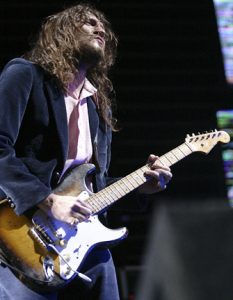
Born in Queens and raised in Los Angeles, John Frusciante approached the guitar with near-obsessive dedication from adolescence, studying records by Jimi Hendrix, the Beatles, and Frank Zappa rather than working through any formal curriculum, and that self-directed education gave his playing a character that no conservatory could have produced. By eighteen, he had auditioned for the Red Hot Chili Peppers and earned the spot, stepping into a band still forging its identity but already positioned on the edge of something enormous. The chemistry he created alongside bassist Flea, drummer Chad Smith, and vocalist Anthony Kiedis remains one of the more chemically improbable combinations in modern rock history — technically disparate players who somehow locked into something cohesive and immediately recognizable.

Albums like Blood Sugar Sex Magik and Californication became defining documents of alternative rock, and Frusciante's contributions extended well beyond guitar parts — he co-wrote songs, shaped arrangements, and provided backing vocals that were integral to the emotional texture of both records. Understanding who is John Frusciante requires taking all of those dimensions seriously, not just the string-bending moments that clip tutorials tend to highlight.
Contents
Knowing When to Leave and When to Return
Few career decisions in modern rock carry as much consequence as Frusciante's repeated departures from and returns to the Red Hot Chili Peppers, each transition reshaping the trajectory of both the band and the guitarist in ways that are still unfolding across the full arc of his discography. His willingness to walk away from enormous commercial success in service of personal and artistic survival distinguishes him from players who remained in commercially successful situations regardless of personal cost, and it provides one of the more instructive case studies available in how creative decisions and life circumstances can intersect without either canceling the other out.
The First Departure and Its Aftermath

Frusciante's exit during the Blood Sugar Sex Magik tour came at the commercial peak of the album's momentum, driven by the psychological pressures of sudden global fame compounded by a deepening struggle with substance dependency that would define the next several years of his life. Rather than retreating into complete silence, he recorded unconventional solo albums that documented his artistic restlessness and his most difficult personal chapter simultaneously — raw, abrasive recordings that established, even in their roughness, that his musical ambitions extended well beyond the stadium rock framework the band had mastered. His earliest solo work revealed an artist already restless with genre boundaries.
Pro insight: Frusciante's first solo recordings, made during his most difficult personal period, demonstrate that artistic output can survive — and even document — a musician's lowest moments without losing its authenticity or creative value.
The Reunion and What It Produced

His return for Californication is widely regarded as one of the more remarkable comebacks in rock history — restoring both his own reputation and the band's commercial standing while demonstrating a musical maturity that surpassed his earlier contributions. The playing on that record, and on the subsequent By the Way and Stadium Arcadium, is harmonically richer and emotionally more restrained than the raw energy of Blood Sugar Sex Magik, reflecting a guitarist who had spent years listening and experimenting during his absence rather than simply waiting to return. His comeback illustrated an underappreciated career lesson: distance from a project does not have to mean the end of a creative relationship.
Breaking Down Frusciante's Guitar Technique
Studying Frusciante from a purely technical standpoint opens up observations about how he integrates multiple guitar traditions into a style that never announces its influences too loudly. Compared to contemporaries like Tom Morello, who treats the guitar as a sound-design laboratory, or Mike McCready, whose Seattle blues roots shape every phrase, Frusciante prioritizes melodic and emotional intuition over any particular technique or genre allegiance. He is technically capable of considerable precision but rarely deploys it for its own sake, preferring to serve the song's emotional arc over showcasing individual facility.
Rhythm Playing and the Groove Foundation
Frusciante's rhythm work is one of the most frequently imitated and least frequently understood elements of his style, particularly in how he constructs chord voicings that leave harmonic space for Flea's bass rather than doubling it. His use of open strings, partial chords, and rhythmic ghost notes creates a textural richness that rewards careful listening and makes his rhythm parts far more structurally complex than a casual pass might suggest. This approach — rooted in funk guitar traditions — gives RHCP recordings a propulsive momentum that neither drums nor bass alone could produce, demonstrating a highly developed ensemble awareness that marks the best rhythm players.
Lead Lines and Melodic Phrasing
His lead playing draws heavily from his deep study of Jimi Hendrix, particularly in the use of wide, expressive vibrato and bends that carry emotional weight even when relatively simple in construction. What distinguishes his soloing from players with similar influences is the consistent melodic logic threading through each phrase — solos develop like short melodies rather than impressive technical gestures, which means even listeners who cannot name individual techniques still register the structural coherence of the playing. The spaces he leaves within a phrase are as important as the notes themselves, giving his solos a conversational quality that few technically proficient guitarists manage to sustain across a full record.
Tip: When studying Frusciante solos, map each phrase against the vocal melody of the same section — most of his lead lines are subtle melodic variations on what Kiedis just sang, which is the root of their emotional immediacy.
The Gear Investment Behind the Sound

Understanding who is John Frusciante also means understanding the specific instruments and signal chain components that shaped his recorded sound across multiple eras, since gear choices at his level rarely happen accidentally and tend to reflect deliberate decisions about tone, feel, and artistic identity. His approach has evolved considerably over the decades — from a relatively stripped-down rock setup in his early RHCP years through an elaborate pedalboard configuration during the band's commercial peak, and ultimately toward a synthesis-heavy studio environment for his later solo work. Unlike guitarists who chase one defining tone, Frusciante has consistently adjusted his tools to match the creative territory he was exploring.
Primary Guitars and Their Roles
| Guitar | Primary Context | Main Role | Signature Tone Character |
|---|---|---|---|
| Vintage Fender Stratocaster | Blood Sugar / Californication era | Lead lines and clean rhythm | Bright, glassy, highly touch-sensitive |
| Gibson SG Standard | Stadium Arcadium sessions | Heavy rhythm and crunch tones | Darker midrange, longer sustain |
| Fender Telecaster | Various studio sessions | Bright rhythm textures | Articulate high-end, punchy attack |
| Vintage acoustic guitars | Solo records throughout career | Fingerpicking and folk-influenced passages | Warm, intimate, minimal sustain |
Amplifiers and Effects
For much of the RHCP era, Frusciante ran Marshall amplifiers at relatively clean settings, placing tonal coloration on the pedalboard — a Dunlop Cry Baby wah, an Electro-Harmonix Big Muff Pi fuzz, and selective modulation effects including chorus and phaser units that appear purposefully on specific songs rather than forming a constant part of his overall tone. His approach to effects was additive only when the song demanded it; each pedal had a defined role within a specific track rather than being left always on as an ambient texture. Readers who want a useful comparative lens might explore the detailed breakdown of Jimmy Page's guitar rig, another player who used a small effects palette with great deliberateness across very different musical contexts throughout his career.
Caring for the Tools: Frusciante's Instrument Philosophy

An often-overlooked dimension of Frusciante's artistry is the physical relationship he maintains with his instruments — particularly his affinity for vintage guitars that show visible wear, a preference that reflects a broader philosophy about how instruments develop character through sustained use rather than through museum-quality preservation. Vintage Fender Stratocasters of the kind he favors require consistent attention to remain playable: regular fret leveling, seasonal neck adjustments to accommodate humidity fluctuations, and periodic review of electronic components that drift out of specification in instruments that are decades old. The decision to use such instruments in demanding live and studio contexts reflects a commitment to a specific tonal ideal that goes well beyond aesthetic preference.
The Vintage Instrument Mindset
- Aged tonewoods often produce resonance and dynamic response that newer instruments struggle to replicate, making vintage instruments valuable to players with highly developed tonal sensitivity.
- Worn nitrocellulose finishes on vintage guitars are thinner and more acoustically transparent than the polyurethane found on most contemporary production instruments.
- Hardware on vintage instruments — tuners, bridges, nut materials — frequently requires replacement or shimming to maintain tuning stability during vigorous performance conditions.
- Playing visibly aged instruments rather than keeping them in cases reflects a working musician's priorities: function and feel over preservation and resale value, a distinction that matters enormously in how the instrument responds to a player's touch.
Studio Discipline and Sonic Consistency
In the recording environment, Frusciante's approach consistently emphasizes capturing sounds that resist accidental replication — investing significant pre-recording time to ensure microphone placement, amplifier settings, and room acoustics all contribute positively to the intended result before a single bar of music is committed. This kind of preparatory discipline transfers to any level of studio work, from professional commercial facilities to modest home setups, and it is one of the less glamorous but more consequential habits separating well-recorded guitar tracks from technically competent but sonically flat ones. The parallels to classic-era production philosophy covered in the site's analysis of landmark recording techniques are worth noting for anyone developing a disciplined studio practice.
Warning: Vintage instruments are highly sensitive to humidity fluctuations — sustained exposure to dry or overly humid environments can cause irreversible warping in necks and top woods that no amount of setup work will fully correct.
Who Is John Frusciante Beyond the Band: A Lasting Legacy

The full picture of who is John Frusciante comes into sharpest focus when the entire arc of his career is taken together, because he is one of the rare rock musicians who has built lasting credibility in multiple distinct creative contexts without any of them undermining the others. His work with the Red Hot Chili Peppers established his public profile and gave him a platform that most guitarists never reach; his solo records demonstrated an artistic depth that extended well beyond the commercial framework that platform created; and his increasingly serious embrace of electronic music production has introduced his sensibility to audiences with no particular connection to alternative rock whatsoever. Each phase reinforces the others rather than diluting them.
The Solo Discography as Ongoing Statement

The breadth of Frusciante's solo output — spanning raw acoustic confessionals, psychedelic rock, orchestral arrangements, and synthesizer-driven electronic compositions — demonstrates an artist for whom genre boundaries function as suggestions rather than constraints, and whose curiosity has consistently outpaced commercial expectations. Albums like The Empyrean represent him at his most ambitious, drawing on classical composition principles and extended instrumental passages that have very little precedent in the RHCP catalog. His peers in the guitar-hero-turned-solo-artist space, including John Mayer, have navigated similar questions about creative independence alongside a core audience, though few have moved as decisively away from their origin point as Frusciante has across his most experimental solo phases.
Influence on the Next Generation
Frusciante's influence on younger players is documented across countless interviews and tutorial channels where guitarists who came of age during the Californication and By the Way era credit him as a foundational reference for melodic construction, tonal sensitivity, and the primacy of emotion over technique. His emphasis on feel, space, and serving the song resonates particularly with players who followed him from RHCP into his more experimental solo territory, tracking a creative evolution that parallels — in ambition if not always in style — the trajectories of other widely studied players like Mark Knopfler, whose own body of work rewards that same kind of sustained attention. Frusciante's legacy is ultimately not a specific sound but a specific set of priorities — melody over speed, feel over flash, and sustained artistic development over commercial comfort — that continue to shape how guitarists approach their craft across generations.
Frequently Asked Questions
Who is John Frusciante?
John Frusciante is an American guitarist, singer, and producer best known as the lead guitarist of the Red Hot Chili Peppers, whose melodic style and emotional approach to playing have made him one of the most influential rock guitarists of the past three decades, alongside a substantial and eclectic solo discography.
How many times did Frusciante leave the Red Hot Chili Peppers?
Frusciante has departed and rejoined the band on multiple occasions — most notably leaving during the Blood Sugar Sex Magik tour, returning for Californication, departing again after Stadium Arcadium, and subsequently rejoining the band for another creative period, making his relationship with the group one of the more complicated in modern rock history.
What guitars is John Frusciante most associated with?
Frusciante is most closely associated with vintage Fender Stratocasters and Gibson SG Standards, with his choice shifting between them depending on the tonal requirements of specific songs; he also incorporates various acoustic guitars on his solo records and, in later work, an extensive array of vintage synthesizers.
What are Frusciante's most significant albums?
Within the RHCP context, Blood Sugar Sex Magik and Californication represent his most widely recognized contributions; from his solo catalog, The Empyrean is broadly considered his most fully realized and compositionally ambitious statement, with Shadows Collide with People and To Record Only Water for Ten Days also drawing considerable critical attention.
What influences shaped Frusciante's guitar style?
His primary influences include Jimi Hendrix, the Beatles, Frank Zappa, and the original RHCP guitarist Hillel Slovak, with additional debts to funk rhythm guitarists, psychedelic rock, and the broader Los Angeles alternative scene that surrounded his formative years as a player.
Has Frusciante worked outside the Red Hot Chili Peppers?
Beyond his extensive solo discography, Frusciante has contributed guitar work and production to records by artists including Mars Volta and various electronic producers, and his later solo output moved so decisively into electronic territory that it attracted an audience with minimal connection to his RHCP work.
Why did Frusciante initially leave the band during the Blood Sugar Sex Magik tour?
His departure was driven primarily by the psychological strain of sudden worldwide fame, combined with the personal difficulties and substance dependency struggles he has discussed openly in subsequent interviews, a period that ultimately led to some of his most unconventional and revealing early solo recordings.
Is John Frusciante considered one of the greatest rock guitarists?
Multiple music publications have placed Frusciante on lists of the greatest rock guitarists, typically citing his melodic inventiveness, tonal sensitivity, and the depth of his solo catalog alongside his RHCP contributions, though such rankings are inherently subjective and generate ongoing discussion in guitar communities worldwide.
Next Steps
- Listen through the RHCP discography in sequence, paying close attention to how Frusciante's guitar tone and melodic approach evolve from Mother's Milk through Stadium Arcadium, and take note of the specific tonal and compositional differences that distinguish each album period from the others.
- Explore his solo catalog starting with Shadows Collide with People and The Empyrean to understand how his compositional thinking differs when freed from a band context — listen specifically for his use of layered vocals and orchestral arrangement alongside guitar.
- Study his rhythm technique by isolating guitar parts in any RHCP track that offers multitrack or stem access, focusing on chord voicings and the rhythmic placement of each stroke relative to the bass and drum parts rather than treating the guitar as the primary melodic element.
- Cross-reference his gear documentation across video interviews and rig rundowns — including comparisons with contemporaries covered in the site's broader music articles — to build a complete picture of how specific instruments and effects contributed to his recorded sound at each stage of the career.
- Transcribe one complete Frusciante solo by ear rather than from tab, starting with something accessible like "Under the Bridge" and working toward more complex passages once the melodic logic behind his phrasing becomes clear as a structural approach rather than a series of isolated licks.


About Jay Sandwich
Jay Sandwich is a guitarist and modular synthesizer enthusiast whose musical life has taken him from shredding electric guitar to deep-diving the world of modular synthesis and experimental sound design. He brings a player perspective to music gear coverage — practical, opinionated, and grounded in years of actual playing experience across different setups and styles. At YouTubeMusicSucks, he covers guitar gear, rig rundowns, and musician interviews with the candid perspective of someone who has spent serious time on both sides of the instrument.
Check for FREE Gifts. Or latest free acoustic guitars from our shop.
Remove Ad block to reveal all the rewards. Once done, hit a button below