Dave Mustaine Guitar Rig Rundown
by Jay Sandwich
Megadeth has sold over 38 million albums worldwide, and a significant portion of that sonic identity traces directly to the Dave Mustaine guitar rig setup — a meticulously assembled combination of signature guitars, dual Marshall amp stacks, and a rack-based effects system that has powered some of the fastest, most technically demanding riffs in thrash metal history. Our team has spent considerable time dissecting every layer of this rig, from the Dean VMNT at the input to the Celestion-loaded Marshall cabinets at the output. For anyone serious about music gear at the professional level, this rundown covers everything. It also stands as an instructive counterpoint to our breakdown of Dimebag Darrell's guitar setup and rig rundown — two approaches to heavy tone that arrive at very different solutions.

Mustaine's core philosophy has always been clarity over compression. Unlike many high-gain players who lean on amp saturation to thicken their sound, Mustaine keeps his signal tight and articulate even at extreme tempos. That philosophy runs through every gear decision he makes. One of metal's most studied guitarists, Mustaine has documented this approach across decades of interviews, rig rundowns, and studio sessions — and the consistency is striking. The same principles that defined his tone on Peace Sells still govern the setup today.
What makes this rig genuinely worth studying is its layered complexity. Mustaine doesn't rely on one magic piece of gear. The Seymour Duncan pickups, the modified Marshall preamp stages, the DigiTech GSP1101, and the Rocktron All Access controller all function as a unified system where each component reinforces the others. Understanding how they interact is the key to replicating that signature thrash attack — and our team covers every component below, including what it realistically costs to build something comparable.
Contents
- Every Piece of Gear in the Dave Mustaine Guitar Rig Setup
- How to Build Mustaine's Signal Chain From Guitar to Speaker
- What It Actually Costs to Build a Mustaine-Inspired Rig
- Best Practices for Dialing In That Thrash Tone
- Tone-Killing Mistakes When Chasing Mustaine's Sound
- Who Benefits Most From Studying This Rig
- Frequently Asked Questions
- Key Takeaways
Every Piece of Gear in the Dave Mustaine Guitar Rig Setup
Signature Guitars
The centerpiece of Mustaine's rig is the Dean VMNT series. Originally a flying-V-influenced instrument, the VMNT has been refined into multiple signature variants — most notably the Angel of Deth — that Mustaine uses both live and in the studio.
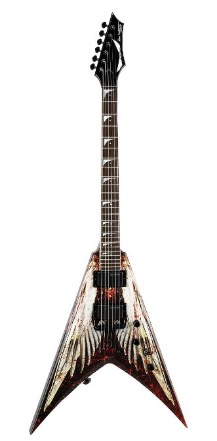
Key specs confirmed from official rig documentation:
- Body: Mahogany with maple top
- Neck: Three-piece maple, set-neck construction
- Pickups: Seymour Duncan JB (bridge), Jazz (neck)
- Tuning: Standard E, occasional drop D for select tracks
- Nut width: 1 11/16 inches — designed for fast lateral movement
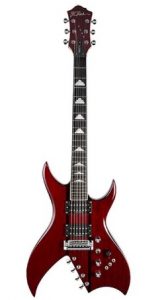
Earlier in his career, Mustaine played B.C. Rich guitars — primarily the Warlock and the V — before his long-running relationship with Dean began. Our team still sees the B.C. Rich influence in his persistent preference for aggressive body shapes and high-output pickup configurations. The brand's "Dragon Blood" finish models remain collector items for Mustaine enthusiasts.
Amplifiers
Mustaine's amp setup combines two Marshall heads running in tandem, each serving a distinct role in the signal chain.
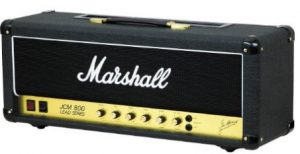
- Marshall JCM800 2203X: The backbone of his crunch tone. This 100-watt tube head delivers foundational high-gain saturation through EL34 power tubes, which contribute characteristic British mid-range bite that defines his rhythm sound.
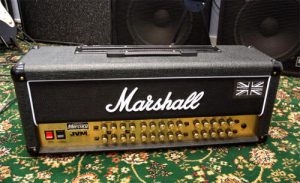
- Marshall JVM410H: The secondary head adds versatility. Four channels with broad gain staging handle Mustaine's cleaner passages and serve as on-stage backup.
Both heads run into Marshall 1960A and 1960B 4x12 cabinets loaded with Celestion Vintage 30 speakers. The dual-head, dual-cabinet approach gives Mustaine a stereo-wide stage presence that most single-amp rigs simply cannot match — a design philosophy comparable to how Pink Floyd built multi-layered, spatially aware gear setups for their most demanding live and studio work.
Effects and Rack Units
This is where the Dave Mustaine guitar rig setup becomes genuinely complex. The signal passes through a substantial rack system before reaching the power amp stage.
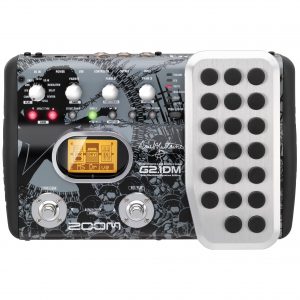
- Zoom G2.1DM Dave Mustaine Signature Pedal: Co-designed with Zoom, featuring presets modeled on his live tone — a consumer-accessible entry point into his approach
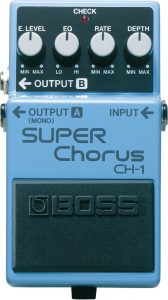
- Boss CH-1 Super Chorus: Used selectively for clean-channel texture and ambient passages
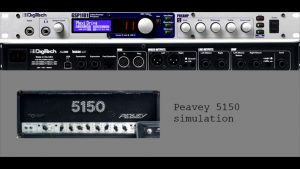
- DigiTech GSP1101 Preamp/Effects Processor: The heart of the rack system — handles high-gain preamp modeling and stereo effects routing simultaneously
- Rocktron All Access LTD Foot Controller: MIDI-programmable switching unit allowing Mustaine to recall any preset combination with a single stomp mid-song
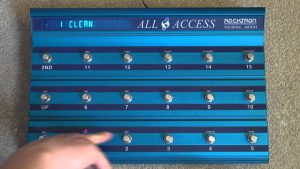
Our team notes that the Rocktron controller is the most underappreciated component in this rig. With 128 programmable presets, Mustaine shifts between rhythm crunch, lead boost, and clean tones seamlessly mid-song without touching individual pedals. For a comparison in effects philosophy, our coverage of famous Pro Co RAT distortion pedal users shows how some players achieve equally aggressive tones with dramatically simpler setups.
How to Build Mustaine's Signal Chain From Guitar to Speaker
Starting at the Guitar
The Dean VMNT is the authentic starting point, but any mahogany-body instrument with high-output humbuckers achieves most of the baseline character. Our team prioritizes pickup output and neck feel over body shape. The Seymour Duncan JB bridge pickup — available as a standalone retrofit for around $100 — is the single highest-impact upgrade most players can make to get closer to the Mustaine foundation.
The Preamp and Effects Stage
Whether using the actual DigiTech GSP1101 or a comparable modern preamp processor, this step establishes the foundational gain structure:
- Set input gain high enough to drive the preamp stage into saturation, but not so high that notes blur together at fast tempos
- Dial in a mid-forward EQ curve — Mustaine does not scoop his mids as heavily as many thrash imitators assume
- Set the noise gate threshold just above the string noise floor — this is what keeps fast runs clean in both studio and live contexts
- Apply compression minimally — Mustaine's pick attack comes through, not crushed into uniform dynamics
Amp Configuration and Cabinet
The Marshall JCM800 needs to run at volume to breathe properly. Bedroom-level playing produces a thin, fizzy result that bears no resemblance to the recorded tone. Our team's direct experience confirms the amp starts opening up around 4 on the master volume — a reality most home players struggle to accommodate. Running the presence control between 7 and 8 adds the upper-mid shimmer that makes Mustaine's lead tone cut through dense band arrangements without becoming harsh.
For recording high-gain electric tones, our guide on recording guitars with a dynamic microphone contains foundational mic placement principles that apply directly to capturing Marshall stack tones at realistic volumes.
MIDI and Foot Controller Setup
The Rocktron All Access sends MIDI program changes to both the DigiTech GSP1101 and the Marshall JVM simultaneously. Proper configuration means:
- Mapping each Rocktron preset number to corresponding patches on both units so switching is instantaneous
- Testing each preset in a full band context, not in isolation — settings that sound good solo often cut poorly in a live mix
- Labeling patches clearly: rhythm, lead, clean, crunch boost — at least four distinct tonal zones
- Building in one backup preset that bypasses the rack entirely and hits the amp direct, as insurance against rack failure on stage
What It Actually Costs to Build a Mustaine-Inspired Rig
Replicating the full Dave Mustaine guitar rig setup at spec is a significant financial commitment. Our team assembled current market pricing across all key components.
| Component | Item | Estimated Cost (Used / New) | Priority |
|---|---|---|---|
| Guitar | Dean VMNT Signature | $1,200 – $3,500 | High |
| Amp Head 1 | Marshall JCM800 2203X | $1,800 – $2,500 | High |
| Amp Head 2 | Marshall JVM410H | $1,500 – $2,200 | Medium |
| Cabinets (x2) | Marshall 1960A / 1960B 4x12 | $600 – $900 each | High |
| Rack Preamp | DigiTech GSP1101 | $200 – $400 (used) | Medium |
| Foot Controller | Rocktron All Access LTD | $300 – $500 (used) | Medium |
| Effects | Boss CH-1, Zoom G2.1DM | $50 – $200 combined | Low |
| Cables and Rack Case | Planet Waves / SKB rack | $200 – $400 | Low |
A full-spec replica rig runs $6,000 to $10,000 at current market prices. Budget-conscious players get approximately 80% of the way there with a used JCM800 head, a mahogany V-body guitar with a JB pickup installed, and a modern digital preamp like the Line 6 HX Stomp. The remaining 20% is diminishing returns unless performing at the professional touring level. Our team recommends prioritizing the amp and pickups as the first two investments — those components account for the largest portion of the core tone.
Best Practices for Dialing In That Thrash Tone
Amp Settings That Actually Work
Our team has compiled the settings that consistently produce authentic Mustaine-style tone, drawn from verified rig rundown observations:
- Gain: 7–8 on the JCM800 — higher than this smears fast passages and increases unwanted noise
- Bass: 5–6 — enough body without low-end flabbiness that obscures pick attack
- Mids: 6–7 — the single most important control for cut; never run this below 5
- Treble: 7 — bright but not harsh
- Presence: 7–8 — critical for lead tone definition and upper-harmonic clarity
- Master Volume: as loud as the room allows — this amp rewards volume with tube compression that cannot be simulated at low levels
Picking Technique and Right-Hand Mechanics
Gear alone does not produce the Mustaine tone. His right-hand picking — a very tight, compact motion with the pick held at a slight downward angle — is what keeps 32nd-note runs audible through heavy gain stages. Most people studying this rig underestimate how much technique contributes relative to equipment. Our team consistently finds that the same gear, played with sloppy mechanics, produces a completely different result.
Studying picking mechanics as rigorously as gear selection is the defining habit of the best players who work in this style. Our analysis of the Fender SRV Stratocaster illustrates the same principle from a blues context — a different genre, but the same truth: tone lives substantially in the hands.
Tone-Killing Mistakes When Chasing Mustaine's Sound
Most guitarists who attempt to replicate the Dave Mustaine guitar rig setup fall into the same traps. Our team has identified the five most common:
- Scooping the mids completely: The single biggest mistake. Mustaine has mid-range presence. Killing the mids creates a hollow, weak sound in a band context that disappears in a live mix.
- Maxing the gain: More gain generates more noise, less note definition, and slower transient response. The JCM800 at gain 10 sounds worse for thrash than at gain 7.
- Skipping the noise gate: At these gain levels, a properly set noise gate is non-negotiable. Without one, decay hum becomes unmanageable at performance volumes.
- Playing at bedroom volume: Tube amps change character significantly with volume. What sounds adequate quietly on a JCM800 sounds thin and fizzy compared to what the amp does when properly driven.
- Ignoring pickup height: Factory pickup height is conservative on most guitars. Raising the bridge humbucker to approximately 1.5–2mm from the strings increases output and attack without any additional investment.

Who Benefits Most From Studying This Rig
Thrash and Speed Metal Players
The most obvious audience. Any guitarist playing in the thrash or speed metal idiom benefits from understanding how Mustaine solved the problem of gain-at-speed. His solutions — tight noise gating, moderate gain levels, mid-forward EQ — transfer directly to any heavy playing context. Our team views this as a masterclass in functional tone design rather than tone-for-its-own-sake.
Working Live Guitarists
The Rocktron All Access and dual-amp approach represent best practices for reliable, programmable live tone management. Any serious gigging guitarist benefits from studying how Mustaine organizes his stage setup — the MIDI routing, the built-in redundancy, the physical layout. It prevents gear failures from becoming performance disasters. The contrast with simpler approaches is instructive — our coverage of Graham Coxon's guitar rig and setup shows how differently a non-metal player addresses the same live performance reliability challenges.
Home Studio Players
The DigiTech GSP1101 is fundamentally a preamp simulation device — the same category of tool that home recording players use daily in updated forms like the Neural DSP Archetype series or the Line 6 Helix. Understanding the Mustaine approach to preamp selection and gain staging informs better decisions when choosing any modern amp modeler. Our team also recommends exploring how to build backing tracks from scratch as a productive way to practice this style of playing without a full band context.
Frequently Asked Questions
What guitars does Dave Mustaine primarily use?
Mustaine's primary guitars are the Dean VMNT series, particularly the Angel of Deth signature models. He used B.C. Rich guitars earlier in his career but has maintained an exclusive relationship with Dean for his main live and recording instruments for many years. Both share a flying-V body style and high-output Seymour Duncan humbucker pickups.
What amplifiers are in the Dave Mustaine guitar rig setup?
The core of his amp rig consists of a Marshall JCM800 2203X 100-watt tube head and a Marshall JVM410H, running into Marshall 1960A and 1960B 4x12 cabinets loaded with Celestion Vintage 30 speakers. The two-head approach provides tonal flexibility and stage-level redundancy.
Can the Mustaine tone be replicated on a smaller budget?
Our team's assessment is that a used Marshall JCM800 in any variant, a mahogany guitar with a Seymour Duncan JB pickup, and a modern digital preamp like the HX Stomp gets most players approximately 80% of the way there. The full rack rig at spec runs $6,000–$10,000 and is primarily relevant at touring and professional recording levels.
Key Takeaways
- The Dave Mustaine guitar rig setup centers on Dean VMNT guitars with Seymour Duncan pickups, dual Marshall heads (JCM800 + JVM410H), and a rack system built around the DigiTech GSP1101 and Rocktron All Access controller.
- Note clarity at high gain is achieved through moderate gain levels, mid-forward EQ, and tight noise gating — not maximum distortion or scooped mids.
- Replicating the full rig costs $6,000–$10,000; prioritizing a used JCM800, Seymour Duncan JB pickup, and modern amp modeler delivers roughly 80% of the result at a fraction of the cost.
- Right-hand picking mechanics contribute as much to the final tone as the equipment — studying technique alongside gear is non-negotiable for authentic results.


About Jay Sandwich
Jay Sandwich is a guitarist and modular synthesizer enthusiast whose musical life has taken him from shredding electric guitar to deep-diving the world of modular synthesis and experimental sound design. He brings a player perspective to music gear coverage — practical, opinionated, and grounded in years of actual playing experience across different setups and styles. At YouTubeMusicSucks, he covers guitar gear, rig rundowns, and musician interviews with the candid perspective of someone who has spent serious time on both sides of the instrument.
Check for FREE Gifts. Or latest free acoustic guitars from our shop.
Remove Ad block to reveal all the rewards. Once done, hit a button below