Best Amplifiers for Heavy Metal: A Complete Guide
by Dave Fox
The best amplifiers for heavy metal deliver three things without compromise: crushing gain structure, tight and controlled low-end, and mids that punch through a full band mix without turning to mush. Your amp is the core of your tone — every other piece of gear in your chain serves it. This guide gives you a direct breakdown of the top models on the market, the key differences between amp types, and a clear framework for choosing what actually fits your rig and your style.
Browse our full music gear section for more in-depth gear coverage. If you're moving into heavier territory from a classic rock background, our best amplifiers for rock music guide gives you a useful point of comparison before committing to a dedicated metal rig.
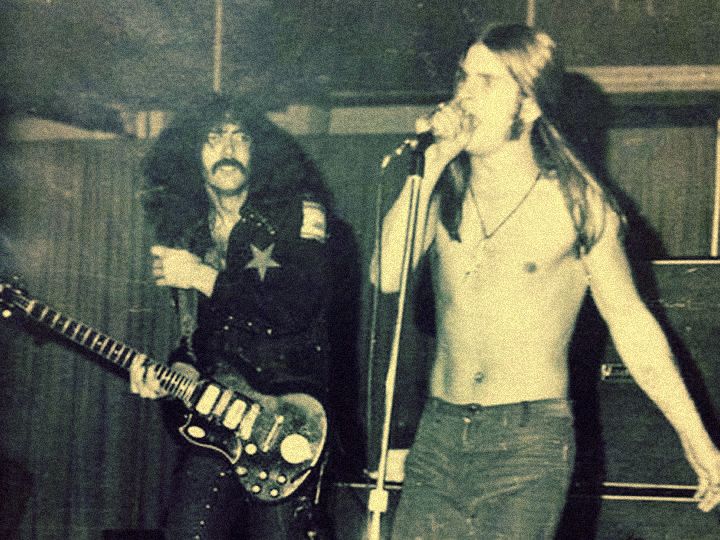
Heavy metal tone didn't emerge from a design brief. It was discovered by accident when bands in the late 1960s pushed tube amplifiers past their rated limits and found that the resulting distortion wasn't a flaw — it was a new sonic language. Tony Iommi's downtuned, Laney-driven guitar on early Black Sabbath records set a template that every metal amp designer has been working from since. That origin matters, because it tells you exactly what these amps are engineered to do.
The genre has fractured into dozens of subgenres since then, each with distinct tonal demands. Thrash needs speed and articulation. Doom needs weight and sustain. Death metal requires surgical low-mid precision. The "best" amp for heavy metal is always relative to where you sit in that landscape — and this guide covers every corner of it.
Contents
- Where Heavy Metal Tone Actually Comes From
- Matching the Best Amplifiers for Heavy Metal to Your Subgenre
- Tube vs. Solid-State vs. Modeling: The Real Trade-offs
- The Best Amplifiers for Heavy Metal: Top Picks
- New vs. Used: When Each Option Makes Sense
- Building Your Metal Rig for the Long Term
- Keeping Your Metal Amp in Fighting Shape
Where Heavy Metal Tone Actually Comes From
The Sabbath Blueprint
The origin of heavy metal as a distinct genre is inseparable from musicians coaxing sounds from amplifiers that weren't designed for what they were being asked to do. Tony Iommi, working with prosthetic fingertips and lighter string gauges, downtuned his guitar and pushed his Laney past comfortable settings. Ritchie Blackmore was cranking Marshalls through mismatched speaker configurations. These weren't choices from a gear manual — they were experiments born of necessity, and the results defined a genre.
What those early players discovered is what amp engineers eventually codified into deliberate design: metal tone requires more gain than a clean amp delivers, a midrange voicing tuned to either scoop or cut depending on the subgenre, and enough power handling to push air in a live setting. Every metal amp built since has been engineered around those three pillars.
How Amp Engineering Evolved for Metal
Through the 1970s and 1980s, manufacturers started responding directly to what heavy guitarists were demanding. Marshall added master volume controls. Mesa/Boogie introduced cascading gain stages that stacked preamp distortion rather than relying on power amp saturation. Soldano's SLO-100 gave players a dedicated high-gain preamp channel that became a reference point for an entire generation of boutique builders.
By the 1990s and 2000s, brands like Peavey, Randall, ENGL, and Diezel were engineering amps specifically for the demands of extreme metal — tight, high-gain circuits with enough headroom to handle down-tuned seven and eight-string guitars without losing definition. The current metal amp market is the direct result of that decades-long arms race, and the options available today are better than they have ever been.
Matching the Best Amplifiers for Heavy Metal to Your Subgenre
Traditional and Classic Metal
Classic metal — early Metallica, Judas Priest, Iron Maiden — was built on modified Marshall circuits and, later, Mesa Boogie Dual Rectifiers. These amps deliver a particular character: compressed, singing lead tones, enough gain for rhythm work, and a midrange that's present without being brittle. A Marshall JVM series or a Mesa Mark V covers this territory definitively.
You don't need a hyper-modern high-gain amp for classic metal sounds. The tone is more about the way the amp saturates than raw gain quantity. A Marshall with the gain at seven often sounds better for classic metal than a boutique amp pushed all the way up — the circuit breathes differently at moderate gain settings.
Thrash, Death, and Extreme Metal
Thrash and death metal demand a different tool. Tightness in the low-end is everything — a loose, flabby bass response destroys the articulation that makes fast rhythm playing intelligible. The Peavey 6505+ became the default for these genres because it delivers exactly that: surgical lows, aggressive gain, and enough output power to fill a stage.
Modern death and technical metal players have gravitated toward the Diezel VH4 and Friedman BE-100 for their combination of precision and dynamics. These amps let you play with nuance without sacrificing aggression — something cheaper high-gain amps consistently fail to deliver at speed.
Doom, Sludge, and Stoner Metal
Doom and sludge metal take a fundamentally different approach. These genres favor low-wattage tube amps driven hard — Orange, Hiwatt, and vintage Sunn models are common choices. The goal is natural power amp saturation, not preamp gain. Lower wattage means the amp breaks up at manageable volumes, and that natural compression is exactly what makes doom tone feel physically heavy without extreme gain settings.
Stoner metal sits between doom and hard rock tonally. It responds well to amps with a slightly scooped midrange and thick, warm low-end — a Mesa Boogie Rectifier at moderate gain, or a modded Marshall circuit, works consistently well in this space.
Tube vs. Solid-State vs. Modeling: The Real Trade-offs
Tube Amps: The Gold Standard
Tube amps remain the benchmark for heavy metal tone because of how they respond to your playing. When you dig in harder, the amp compresses and saturates differently — that dynamic interaction between your picking attack and the gain stage is what gives tube amps their feel. The harmonics produced by tubes under load are richer and more complex than what solid-state circuits generate, and that complexity is audible in a mix.
The trade-offs are real. Tubes need to be replaced periodically. The amps are heavier. They cost significantly more. And they need to be played loud enough to actually engage the power amp section, which creates challenges in smaller rehearsal spaces and home studios.
Solid-State and Modeling: Closing the Gap
Solid-state amps like the Randall Thrasher have carved out a legitimate place in metal because of one key advantage: consistency. A solid-state amp sounds the same every night, regardless of temperature, tube wear, or bias drift. For working musicians who gig constantly, that reliability has genuine value.
Modeling units — Kemper, Fractal Axe-Fx, Neural DSP — have become genuinely competitive with tube amps at both recording and live levels. The gap in feel still exists for many players, but the tonal accuracy of top-tier modelers has improved to the point where the argument against them has weakened considerably. Many touring professionals run a tube amp on stage backed by a modeler as insurance.
| Amp Type | Tone Character | Reliability | Weight | Cost Range | Best For |
|---|---|---|---|---|---|
| Tube | Dynamic, harmonically rich | Requires maintenance | Heavy (30–50 lbs) | $800–$4,000+ | Stage, recording, full-band rehearsal |
| Solid-State | Consistent, tight, precise | Very reliable | Moderate | $400–$1,500 | Touring, consistent live use |
| Modeling | Accurate to excellent | Excellent | Light | $300–$3,000 | Recording, silent practice, fly dates |
The Best Amplifiers for Heavy Metal: Top Picks
High-End: Diezel VH4 and Friedman BE-100
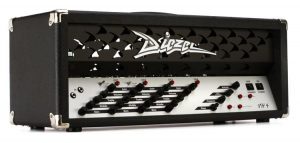
The Diezel VH4 is the amp that serious European metal players have been running for decades. It's a 100-watt, four-channel head with a gain structure that stays precise even at extreme settings. The low-end is tight without being thin, and the high-gain channels maintain enough clarity to make fast picking passages sound defined rather than blurred into noise. It's expensive — around $4,000 new — but it's a lifetime amp if you buy it and treat it right.
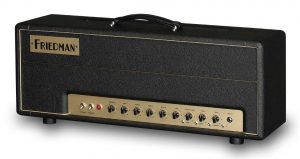
The Friedman BE-100 started as a modified Marshall and evolved into something distinctly its own. Three channels span clean to extreme high-gain, and every one of them is genuinely usable. The BE (Brown Eye) channel is the star — a saturated, compressed rhythm tone with enough midrange bite to cut through any mix without getting harsh. Used by players across hard rock and metal, it crosses genre lines without compromise. It sits around $3,500 new, with a healthy used market.
Mid-Range Workhorses: Mesa Boogie Triple Rectifier and Marshall JVM410H
The Mesa Boogie Triple Rectifier pushes 150 watts through three rectifier sections, producing a thick, saggy bottom-end that works well for both modern and classic metal. It has more gain than most players will ever need, and enough tonal range across its three channels to cover crunch through full crush. It's a heavy amp in every sense — and it needs a matched cabinet to sound its best. Pair it with a Mesa or Avatar 4x12 and it rewards you with one of the most powerful live tones available.
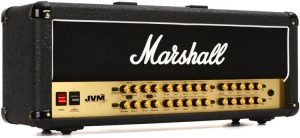
The Marshall JVM410H takes a different approach. Built on JCM800 architecture with modern flexibility added — four channels, each with three mode switches — it gives you twelve distinct voicings from a single head. The JVM410H is particularly strong for classic and traditional metal tones, with a character that sits naturally in a band mix without requiring aggressive EQ corrections. It's available new around $2,000 and is widely available used.
Value Picks: Peavey 6505+ and Randall Thrasher
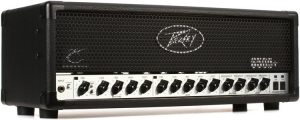
The Peavey 6505+ is the default metal amp for a reason. Originally co-designed with Eddie Van Halen (released as the 5150), it was adopted wholesale by the extreme metal community after EVH left Peavey, and it has appeared on more death metal and metalcore recordings than any other amp in history. The lead channel delivers aggressive, compressed gain with exceptional note-to-note clarity at speed. Used units run $500–$700. Nothing at that price point touches it for pure metal tone.
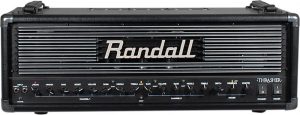
The Randall Thrasher is a solid-state amp designed specifically for extreme metal, and it sounds better than its price suggests. The gain structure is tight, punishing, and utterly consistent from night to night. For players who gig hard and want zero maintenance variables interfering with their sound, it makes a compelling case as a gigging workhorse.
Pro tip: Before buying any amp new, search your local used market first. Tube amps lose 30–40% of their value fast — you can often find a lightly used amp in excellent condition for significantly less than retail, with the previous owner absorbing the depreciation hit.
New vs. Used: When Each Option Makes Sense
When to Buy New
Buying new makes sense in specific circumstances:
- You're buying a boutique amp with thin used market availability — Diezel, Friedman, and Bogner rarely show up locally at fair prices
- You want the full manufacturer warranty and don't want to inherit someone else's maintenance problems
- The amp is a limited run or custom configuration that doesn't exist on the secondary market
- You're buying a modeling unit where firmware updates and support are tied to original purchase registration
When to Go Used
For most players, the used market is the smarter play:
- Mass-produced amps — Mesa Boogie Rectifier series, Peavey 6505+, Marshall JVM — are abundant used at strong prices
- A used amp at 60% of retail delivers the same tone as a new one at full price
- Certain older production runs (early Marshall JCM800, late 1980s Mesa Mk IIC+) are considered tonally superior to current production and exist exclusively on the used market
- You can test the amp before committing, and flip it for minimal loss if it doesn't work for your rig
The one caution with used tube amps: always ask about tube age and bias history. A well-maintained used amp is an excellent buy. One that's never had its tubes checked is a maintenance project you're paying full price for.
Building Your Metal Rig for the Long Term
Amp and Cabinet Pairings
Your amp head is only half the equation. The cabinet — specifically the speakers — shapes your final tone as much as the amp itself. Most serious metal players run a 4x12 loaded with Celestion Vintage 30s, G12T-75s, or a mixed configuration of both. The Vintage 30 adds midrange presence and definition; the G12T-75 adds low-end weight and punch. A mixed cab gives you both simultaneously, and it's a setup that holds up across most metal subgenres.
Match your cabinet's impedance to your amp's output tap. Running a 16-ohm cabinet into an 8-ohm output causes output transformer stress over time. It won't destroy the amp immediately, but it shortens lifespan and affects tone. Check the spec sheet and run the correct impedance — it takes thirty seconds and protects a $2,000+ investment.
Pedals That Complement Metal Amps
Even the best metal amp benefits from smart pedal choices in the signal chain. The most universally useful pedal in any metal rig is a clean boost or overdrive placed before the amp input — this tightens the amp's gain response and adds definition to fast rhythm passages. Our review of clean boost pedals covers exactly how a boost interacts with a preamp stage, and the principle applies to high-gain metal rigs just as directly as it does to any other context. Similarly, running an overdrive at low-gain settings stacked into a high-gain amp is a technique covered in depth in our overdrive pedal review — the approach is genre-agnostic.
Beyond boosting, a noise gate is non-negotiable for extreme metal. High gain produces high noise, and a gate placed after your drives and before the amp input keeps the silence between riffs clean. A parametric EQ in the effects loop lets you sculpt the amp's voice without changing its gain character — useful for room-to-room adjustments on tour.
Warning: Never place your noise gate before a boost or overdrive in the signal chain — gating the signal before it hits your drive pedal defeats the purpose of both. The gate goes after your drives, before the amp input.
Keeping Your Metal Amp in Fighting Shape
Tube Maintenance Basics
Tube amps require periodic tube replacement — how often depends on how hard you play and how frequently you gig. Power tubes typically last one to two years under regular use. Preamp tubes last considerably longer, often five years or more. Watch for these signs that power tubes need replacement:
- Unusual hum or noise that wasn't there before, particularly with the volume low
- Tone that sounds flat, dull, or lacking the compression you're accustomed to
- A tube glowing red (red-plating) — shut the amp off and replace immediately
- Visible cracks or dark internal deposits on the tube envelope
When you replace power tubes, the amp needs to be re-biased — this adjusts the idle current to match the new tubes' characteristics. Some amps have fixed bias circuits (no adjustment required), but most high-end metal amps use adjustable bias. If you're not comfortable setting bias yourself, take the amp to a qualified tech. Running tubes out of bias damages the output transformer over time, and that's an expensive repair.
General Amp Care
Always let your amp warm up for two minutes at idle before pushing it hard — this simple habit extends tube life significantly by allowing the cathodes to reach operating temperature before being stressed. Use a proper amp cover when storing or transporting the amp. Keep it out of direct sunlight and away from moisture.
When you record, microphone placement has a dramatic impact on how the amp translates to tape. A mic placed slightly off-axis from the speaker cone produces a warmer tone than dead center. Phase relationships between multiple mics also matter — if you're running two mics on a cabinet simultaneously, understanding microphone phasing is essential before you commit to a position, because a phase issue will hollow out your low-end and make even a great amp sound thin on playback.
Keep potentiometers and input jacks clean with a light application of contact cleaner once a year. Dust accumulates in the chassis and causes crackling and signal dropout. A few minutes of preventive maintenance each year keeps expensive problems from developing.
Frequently Asked Questions
What wattage do I need for a heavy metal amp?
For live use with a full band, 50–100 watts is the standard range. Higher wattage gives you more clean headroom before the power amp saturates, which is ideal for modern metal where you want gain from the preamp, not the power stage. For home and studio use, 15–30 watts is more practical — you can push the power amp into its sweet spot at manageable volume levels.
Is tube or solid-state better for heavy metal?
Tube amps remain the benchmark for feel and harmonic complexity, but solid-state amps have closed the gap considerably. For most players, a tube amp is preferable because of its dynamic response to picking attack. For touring musicians who prioritize consistency and zero maintenance, a quality solid-state or modeling unit is a completely legitimate choice — many professional touring rigs use exactly that.
What is the best heavy metal amp for home use?
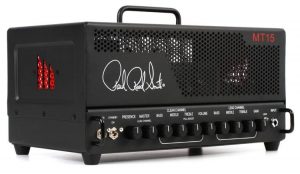
The PRS MT15 is an excellent 15-watt option that delivers real metal tones at lower volumes and includes a power amp section that actually saturates at home-friendly levels. The Mesa Boogie Mark V:25 is another strong choice. Both amps have power-reduction features that let you engage the power amp without needing stage volume levels.
Can I use a clean amp with pedals to get heavy metal tone?
Yes, and many players do — particularly in doom and stoner metal, where natural power amp saturation is the goal. A clean platform amp paired with a high-gain distortion pedal produces solid results. The trade-off is that the gain character comes entirely from the pedal rather than the amp, so you lose the harmonic interaction that makes tube amp overdrive feel alive under your fingers.
Do I need a 4x12 cabinet for metal?
No, but it helps for live use. A 4x12 moves more air and projects further in a large room than a 2x12. For recording and rehearsal, a 2x12 or even a 1x12 is fully sufficient. Speaker choice matters more than cabinet size — a 2x12 loaded with Celestion Vintage 30s will outperform a cheap 4x12 with generic speakers every time.
What amps do professional heavy metal guitarists use?
The most common professional metal amps are the Mesa Boogie Rectifier series, Peavey 6505/5150, Diezel VH4, Friedman BE-100, and ENGL Powerball. Many touring players now run a Kemper or Fractal Axe-Fx as backup or as a primary rig on fly dates. Choices vary considerably by subgenre — doom players favor entirely different gear than death metal players.
How often do I need to replace tubes in a metal amp?
Power tubes typically last twelve to twenty-four months under regular gigging conditions. Preamp tubes last much longer — five years or more is common. Replace power tubes immediately if you see red-plating, hear unusual hum, or notice the amp has lost its dynamic response. Always have the amp re-biased after replacing power tubes, either by a tech or using the amp's built-in bias adjustment if available.
Is the Peavey 6505+ still worth buying for metal?
Absolutely. The 6505+ remains one of the best value propositions in heavy metal amplification. Its lead channel delivers gain, tightness, and clarity that made it the go-to amp for an entire generation of extreme metal recordings. Used units are widely available at strong prices. The clean channel is unremarkable, but for pure metal tone, nothing near its price point competes.
Next Steps
- Identify your metal subgenre and the specific tonal character you're after — classic, thrash, doom, or modern extreme — before evaluating any specific amp model, because the right choice differs dramatically across those categories.
- Search your local used market for the Peavey 6505+, Mesa Boogie Rectifier series, or Marshall JVM410H — all three are widely available used at prices well below retail, with strong long-term reliability records.
- Before buying any used tube amp, ask specifically about tube age, bias history, and whether the amp has had any component failures — get that information before you hand over money.
- Test any amp through the cabinet you intend to actually use, not the store's house cab — the same amp through two different cabinets can sound like entirely different gear, and the cab is half your tone.
- If you plan to record, decide whether your project warrants a full tube amp setup or whether a quality modeler serves you better — our breakdown of album vs. EP production can help you frame that decision in terms of the investment your recording actually needs.


About Dave Fox
Dave Fox (also known as Young Coconut) is a musician, songwriter, and music historian who has been making and studying music across genres for over twenty years. His work spans experimental, jazz, krautrock, drum and bass, and no wave — a breadth of listening that informs his writing about musical history, gear, and the artists who push sound in unexpected directions. At YouTubeMusicSucks, he covers music history and genre guides, musician interviews, and music production resources for listeners and players who want more than the mainstream offers.
Check for FREE Gifts. Or latest free acoustic guitars from our shop.
Remove Ad block to reveal all the rewards. Once done, hit a button below