5 Famous Female Mandolin Players
by Jay Sandwich
IBMA award records suggest women represent roughly 12 percent of recognized professional mandolin performers, a figure that dramatically understates their formative influence on the instrument's broader artistic trajectory. The world of famous female mandolin players spans Grammy winners, IBMA honorees, and progressive Americana innovators who collectively expanded the instrument's reach across multiple acoustic music traditions. Readers tracing the mandolin's cross-genre presence will find useful supplementary context in this site's roundup of 10 famous mandolin rock songs, which documents how the instrument migrated well beyond its bluegrass origins.
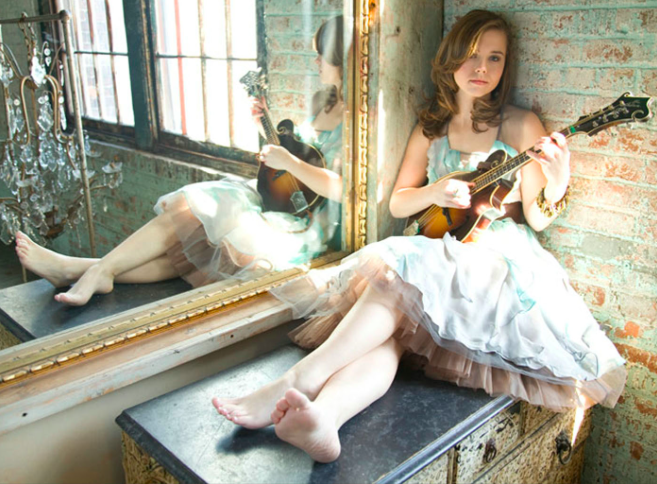
The mandolin places specific and demanding technical requirements on its players — paired string courses require simultaneous left-hand pressure across both strings of each course, and the right-hand tremolo technique central to melodic playing develops slowly through years of disciplined, structured practice. Those demands help explain why the women who achieved durable professional recognition each developed highly distinctive technical identities, separating their recorded work clearly from contemporaries working within the same traditions.
The five artists profiled here each hold verifiable records of professional achievement, including Grammy nominations or wins, IBMA award recognition, or documented contributions to mandolin pedagogy across careers spanning multiple decades. Their professional histories collectively cover traditional bluegrass, progressive Americana, folk, and children's music, illustrating the full breadth of what famous female mandolin players have contributed to acoustic music broadly understood.
Contents
Five Famous Female Mandolin Players: Profiles and Legacies
The following profiles draw on published biographical accounts, IBMA and Grammy award records, and music journalism to document each artist's specific and verifiable contributions to the mandolin's professional tradition across several decades of recorded and live performance.
Sierra Hull
Sierra Hull, from Byrdstown, Tennessee, signed with Rounder Records at age 16 and later became the first bluegrass student to receive a full scholarship to Berklee College of Music, a recognition reflecting her exceptional early technical development. Her Grammy-nominated album Weighted Mind drew widespread critical attention for merging progressive compositional approaches with traditional mandolin technique, and her subsequent recordings have continued pushing the instrument toward jazz-influenced melodic territory that earlier acoustic players seldom explored with comparable depth or consistency.
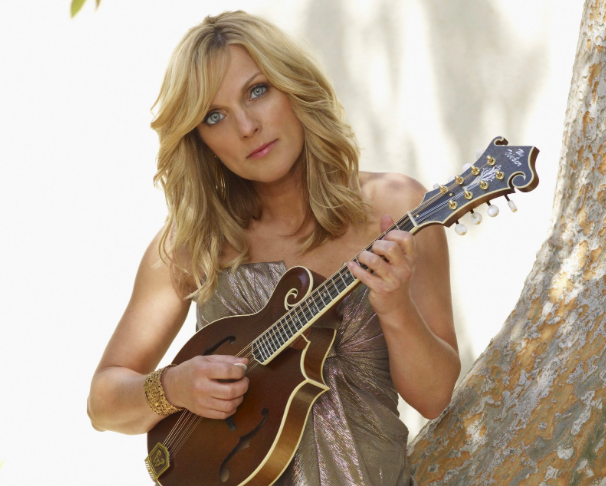
Rhonda Vincent
Rhonda Vincent holds multiple IBMA Female Vocalist of the Year awards alongside a sustained reputation as a mandolin player of exceptional tonal clarity and picking speed, described consistently across decades of bluegrass journalism as "The Queen of Bluegrass." Vincent began performing publicly in childhood as part of a family band based in Kirksville, Missouri, and her catalog across major bluegrass labels demonstrates a command of the traditional idiom alongside sophisticated harmonic awareness that has distinguished her work from contemporaries throughout her career.
Sarah Jarosz
Sarah Jarosz, a three-time Grammy Award winner, incorporates mandolin as a primary melodic voice within a broader folk and Americana practice, having begun touring professionally while still enrolled in high school in Austin, Texas. Jarosz's approach prioritizes melodic phrasing and tonal restraint over raw velocity, and her documented cross-genre collaborations have contributed measurably to mainstream recognition of the mandolin as a credible lead instrument outside strictly traditional acoustic contexts.

Cathy Fink
Cathy Fink is a Grammy-winning folk and children's music artist whose career has included mandolin performance across hundreds of recordings and live engagements, establishing her as one of the most extensively documented female mandolinists working primarily in the folk tradition. Her work with longtime musical partner Marcy Marxer has received recognition from the International Folk Music Alliance and represents a sustained, decades-long commitment to both acoustic instrument education and professional performance at a consistently high level.
Lynn Morris
Lynn Morris, a former IBMA Female Vocalist of the Year, built a sustained career as a bluegrass mandolinist and bandleader through the 1990s and into the 2000s, recognized consistently by genre press for her precise picking style and controlled tonal production throughout her performing years. Morris's recordings on Rounder Records remain instructive primary-source material for students studying right-hand tremolo control and left-hand chord voicing in the instrument's upper registers, where intonation demands are most rigorous and consistent accuracy is hardest to maintain under live performance pressure.
Instruments and Gear Behind the Sound
Preferred Mandolin Models
The mandolins associated with these five players reflect a consistent professional preference for carved-top F-style and A-style instruments from established American luthiers and respected vintage builders, with the Gibson F-5 design — rooted in Lloyd Loar's early twentieth-century specifications — appearing regularly in the touring and recording configurations of multiple prominent female mandolinists. Readers exploring the broader acoustic instrument landscape will find relevant historical and practical context in this site's overview of the main instruments in folk music, which places the mandolin within its full acoustic-instrument tradition.
Amplification and Accessories
For live performance, professional mandolin players typically route internal pickup systems — most commonly the K&K Pure Mandolin or LR Baggs M1 — directly to a DI box rather than relying on microphone capture, a configuration that reduces feedback risk significantly in loud stage environments. Players exploring music gear options for mandolin amplification should account for the instrument's midrange-heavy frequency profile, which responds differently to acoustic amplifiers than guitar-optimized systems and often requires parametric EQ adjustment to avoid harshness in the upper midrange frequencies above 3 kHz.
| Instrument Tier | Common Models | Typical Price Range | Best Suited For |
|---|---|---|---|
| Entry-Level A-Style | Loar LM-110, Oscar Schmidt OM10 | $100–$350 | Beginner practice, light folk strumming |
| Mid-Range F-Style | Recording King RM-991, Kentucky KM-630 | $400–$900 | Intermediate bluegrass, gigging |
| Professional Carved-Top | Weber Gallatin, Collings MT, Eastman MD515 | $1,500–$5,000 | Advanced performance, studio recording |
| Vintage / Collector Grade | Gibson F-5 (Loar era), pre-war A-4 | $8,000–$30,000+ | Concert performance, investment-grade ownership |
Technique Approaches Worth Studying
Right-Hand Tremolo Development
The right-hand tremolo — a rapid alternating pick stroke that sustains melody notes across the mandolin's characteristically short-scale neck — represents the defining technical challenge separating intermediate from professional-level players, and several of the artists profiled here have addressed its development explicitly in published interviews and documented masterclass recordings. Sierra Hull has described practicing tremolo passages at metronome markings well below performance tempo, gradually increasing speed only after confirming stable pick angle and wrist rotation — a method consistent with standard instrumental pedagogy for right-hand accuracy development across multiple acoustic instruments.
Pro insight: Mandolin tremolo accuracy degrades rapidly under muscle fatigue — short, focused practice sessions at controlled tempos consistently produce faster long-term technical gains than extended high-speed repetition within a single sitting.
Left-Hand Chord Voicing
Left-hand chord voicing on mandolin differs substantially from comparable guitar technique because the instrument's paired string courses require clean simultaneous pressure across both strings of each course, making full barre positions considerably more taxing than equivalent shapes on a single-string instrument at similar scale lengths. Students studying the left-hand approaches of the five players profiled here are advised to examine live recordings closely, since intonation accuracy under sustained performance conditions reveals more about genuine left-hand development than studio recordings — where pitch correction tools are widely applied — can reliably demonstrate on their own.
When the Mandolin Excels — and When It Struggles
Acoustic and Ensemble Settings
The mandolin functions most naturally as a lead melodic voice in small acoustic ensembles — string bands, bluegrass quartets, and chamber folk arrangements — where its bright transient attack and defined upper-register projection allow it to carry clearly without amplification in rooms seating several hundred people. Its comparatively limited sustain relative to guitar or violin also makes it well-suited to the rhythmic chop-chord patterns central to bluegrass rhythm sections, a technique documented prominently across the recorded output of all five players profiled here. Readers exploring the folk repertoire where mandolin performance traditions are most firmly rooted will find relevant documentation in this site's survey of classic folk songs everyone should know.

High-Volume and Electric Contexts
The mandolin's frequency profile, concentrated heavily in the upper midrange between roughly 2 kHz and 5 kHz, creates practical mixing challenges in dense electric band configurations where guitar, bass, and drums already occupy much of the same spectral territory, making the instrument's natural voice easy to obscure or lose entirely. High-volume rock and electric settings work against the mandolin's acoustic design in ways that acoustic or lightly amplified ensemble contexts do not — which explains why the most widely recognized famous female mandolin players built their careers primarily within bluegrass, folk, and Americana traditions rather than high-volume electric band settings.
Understanding Mandolin Investment Costs
Entry-Level Instruments
Entry-level mandolins priced between $100 and $350 — including widely distributed models from The Loar and Oscar Schmidt — provide sufficient mechanical playability for beginners developing foundational technique, though pressed-top construction common at this price point limits tonal projection and sustain relative to carved-top instruments available at higher tiers. Most educators working in bluegrass and folk instruction fields recommend upgrading to a carved-top instrument once basic tremolo and chord technique are reliably established, typically within the first one to two years of consistent, focused study.
Mid-Range and Professional Instruments
The mid-range tier, spanning roughly $500 to $2,500, represents the practical working range for most gigging mandolinists, encompassing quality instruments from Kentucky, Recording King, Eastman, and Weber that offer genuine carved-top construction and responsive tonal performance at accessible price points. Professional and boutique instruments from builders such as Collings, Gilchrist, and custom independent luthiers — whose construction history is documented in the Wikipedia overview of the mandolin — typically begin above $3,000, with vintage and collector-grade examples extending well into five figures, reflecting the substantial skilled labor and tonal development involved.
Frequently Asked Questions
Who is considered the most famous female mandolin player?
Sierra Hull is widely cited in contemporary music journalism as the most technically accomplished female mandolin player of her generation, holding a Grammy nomination and a documented record as Berklee College of Music's first full-scholarship bluegrass student. Rhonda Vincent is equally recognized within traditional bluegrass circles, making the designation largely dependent on which musical tradition a given observer prioritizes most heavily.
What musical styles do most famous female mandolin players perform?
The majority of widely recognized female mandolin players built their careers primarily within bluegrass, folk, or Americana traditions, where the instrument's acoustic projection and historical role as a lead melodic voice align naturally with established ensemble structures. A smaller number, including Sarah Jarosz, have developed careers crossing into broader acoustic pop and folk-rock territories while retaining the mandolin as a central instrumental voice.
Is the mandolin more difficult to learn than guitar?
The mandolin presents a distinct set of technical demands — paired string courses require simultaneous pressure across both strings of each course, and the right-hand tremolo fundamental to melodic playing requires dedicated focused practice to develop reliable accuracy. Most professional educators consider the early learning curve for mandolin broadly comparable to acoustic guitar, with the tremolo representing a specific challenge that guitar study does not share.
What mandolin models do professional female players typically use?
Professional female mandolinists most commonly use carved-top F-style instruments from established American builders including Gibson, Collings, Weber, and Gilchrist, with vintage Gibson F-5 mandolins from the Lloyd Loar production era among the most historically significant and market-valued examples. Mid-tier professional players frequently rely on instruments from Eastman, Kentucky, and Recording King, which offer genuine carved-top construction at more accessible price points than boutique or vintage examples.
How long does it take to become proficient at mandolin?
Published accounts from mandolin educators and professional musicians consistently suggest that developing functional intermediate technique — sufficient for basic bluegrass rhythm and simple melodic lead playing — requires approximately one to two years of regular, structured practice. Developing the tremolo accuracy, intonation consistency, and harmonic vocabulary associated with professional-level performance typically requires several additional years of sustained study and live ensemble experience.
Do the famous female mandolin players profiled here teach or offer instructional content?
Several of the artists profiled here have produced instructional content or participated in documented educational programs — Sierra Hull has been associated with Berklee Online curriculum, while Cathy Fink has maintained a long-standing commitment to folk instrument education through workshops, published recordings, and affiliated educational events across the United States. Availability of specific instructional materials varies by artist and format.
Where can readers find recordings by these female mandolin players?
Recordings by all five artists profiled here are available through major streaming platforms and physical media channels, with their primary studio albums accessible through Rounder Records, Sugar Hill Records, and the artists' own distribution channels. Live performance recordings are also widely available through concert archive platforms and official artist channels, which provide useful comparisons of technique under live performance conditions versus studio production environments.
Next Steps
- Search for live concert recordings of Sierra Hull, Rhonda Vincent, and Sarah Jarosz on major streaming platforms, focusing specifically on unedited footage where left-hand intonation and right-hand tremolo technique are fully visible and unremediated by studio post-production tools.
- Use the instrument tier table above to identify the price range that aligns with current playing level and practical performance goals, then consult a local instrument dealer or luthier for in-person evaluation of specific carved-top models before committing to a purchase.
- Explore this site's existing coverage of folk music instruments and classic folk repertoire to build a fuller understanding of the musical contexts in which famous female mandolin players and their contemporaries developed their most influential work.
- Locate mandolin-specific instructional resources — including IBMA-affiliated workshops, Berklee Online courses, and published method books from instructors associated with the players profiled here — to establish a structured and progressive practice foundation from the outset.
- Identify regional acoustic music jams or bluegrass open sessions in the local area, since documented accounts from professional players consistently credit live ensemble participation as the most effective accelerator for developing the timing, adaptability, and responsive technique that distinguish professional mandolinists from technically proficient but performance-inexperienced players.


About Jay Sandwich
Jay Sandwich is a guitarist and modular synthesizer enthusiast whose musical life has taken him from shredding electric guitar to deep-diving the world of modular synthesis and experimental sound design. He brings a player perspective to music gear coverage — practical, opinionated, and grounded in years of actual playing experience across different setups and styles. At YouTubeMusicSucks, he covers guitar gear, rig rundowns, and musician interviews with the candid perspective of someone who has spent serious time on both sides of the instrument.
Check for FREE Gifts. Or latest free acoustic guitars from our shop.
Remove Ad block to reveal all the rewards. Once done, hit a button below