Fulltone Fulldrive 2 MOSFET Boost Pedal Review
by Dave Fox
What separates a truly great overdrive pedal from the pile of forgettable boxes that cycle through the used gear market every few months? The Fulltone Fulldrive 2 overdrive pedal offers a compelling answer — and our team has put this pedal through its paces extensively enough to tell that story in full. Widely regarded as a modern classic in the music gear world, the Fulldrive 2 has earned a permanent place on the boards of blues players, rock guitarists, and studio session pros alike. The short version: it earns the hype.
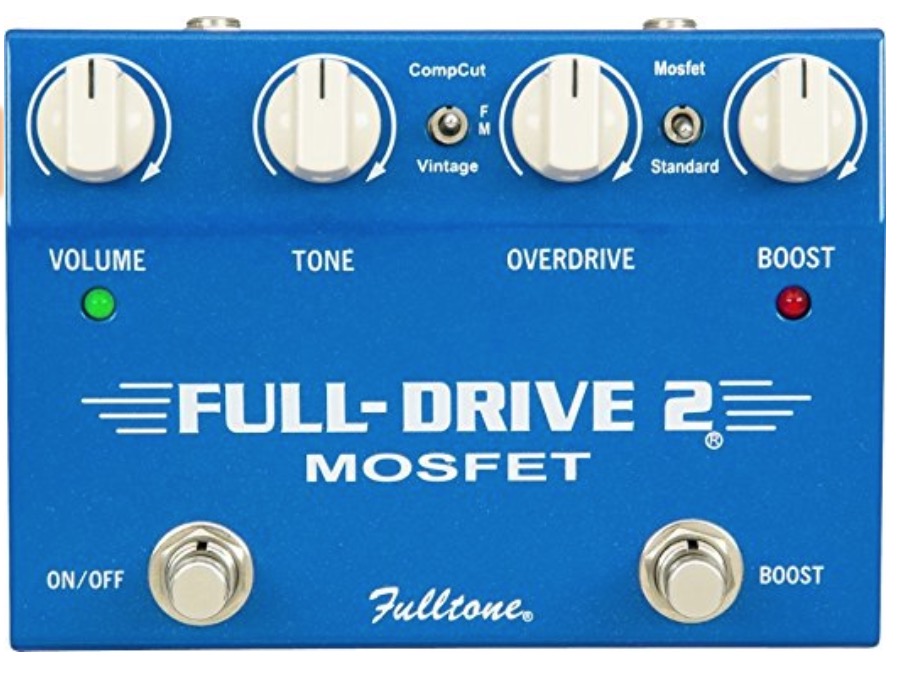
The Fulldrive 2 is a boutique overdrive built on the DNA of the iconic Tube Screamer circuit, but Fulltone's founder Mike Fuller didn't simply clone the thing — he redesigned it with three selectable clipping modes and a dedicated MOSFET boost stage bolted on top. That combination gives the pedal a tonal range that most single-mode overdrives simply cannot match. Whether a guitarist is chasing warm bluesy breakup or a tight, focused push into an already-cranked amp, the Fulldrive 2 has a setting for it.
Our team has reviewed a lot of overdrive pedals over the years, and very few manage to feel this honest. The Fulldrive 2 doesn't color the signal dramatically — it shapes it. There's a meaningful difference, and spending time with this pedal makes that distinction impossible to ignore.
Contents
- Controls and Hardware: What Makes the Fulldrive 2 Tick
- Dialing In Tone With the Fulldrive 2
- Where the Fulltone Fulldrive 2 Overdrive Pedal Excels
- Best Practices for Signal Chain Placement
- How Professional Guitarists Use the Fulldrive 2
- When to Reach for the Fulltone Fulldrive 2 — and When Not To
- Final Thoughts
Controls and Hardware: What Makes the Fulldrive 2 Tick
The layout of the Fulldrive 2 is refreshingly logical. Four knobs — Output, Drive, Tone, and Boost — sit on a sturdy aluminum enclosure alongside a three-position clipping toggle and a footswitch for the boost stage. Nothing is buried in a menu, nothing requires a manual to interpret. Our team appreciates pedals that put everything on the surface, and the Fulldrive 2 is a textbook example of that philosophy.
Three Clipping Modes, Three Personalities
The clipping toggle is the most important feature on this pedal. It shifts the character of the overdrive circuit across three distinct behaviors. Comp Cut mode removes the compression inherent in most Tube Screamer-style circuits, resulting in a tighter, more dynamic response that lets picking attack breathe. Standard mode lands closest to the classic TS sound — smooth, slightly compressed, with that familiar mid-forward voicing. Full mode opens up the headroom dramatically, delivering a more open, amp-like breakup that feels less processed and more natural at higher drive settings.
The difference between these modes is not subtle. Switching from Standard to Comp Cut mid-session is like getting a different pedal entirely. Our team's general consensus is that Comp Cut is the most versatile starting point for players who want touch sensitivity intact, but all three modes have legitimate use cases.
The MOSFET Boost Circuit
The second footswitch engages a dedicated MOSFET clean boost stage, entirely separate from the overdrive circuit. MOSFET transistors — Metal-Oxide-Semiconductor Field-Effect Transistors — behave differently from standard silicon in ways that have tangible sonic consequences. The boost stage on the Fulldrive 2 adds volume without adding fuzz or grit. It pushes the amp harder while preserving the tonal character underneath. The Boost knob controls the amount of added gain, and the range is genuinely wide — from a slight nudge to a significant slam into the front end of any tube amp.
| Specification | Detail |
|---|---|
| Clipping Modes | Standard, Comp Cut, Full (3-way toggle) |
| Boost Type | MOSFET clean boost (independent footswitch) |
| Controls | Output, Drive, Tone, Boost |
| True Bypass | Yes |
| Power Requirements | 9V DC, 2.1mm center-negative |
| Current Draw | ~6mA |
| Enclosure | Aluminum (road-worthy construction) |
| Origin | USA (handwired, boutique production) |
Dialing In Tone With the Fulldrive 2
Getting the most from this pedal requires a bit of patience upfront, but the reward is substantial. The Tone knob responds in a way that feels more musical than clinical — rolling it back doesn't just cut highs, it shifts the entire texture of the drive. Our team recommends starting with the Tone knob at noon and adjusting from there in small increments rather than sweeping it dramatically in one direction.
Finding the Sweet Spot
For most players chasing that classic blues-rock breakup, our team finds the sweet spot lives with Drive between 9 o'clock and noon, Output set to unity or slightly above, and Tone sitting just past noon to keep the attack present without harshness. At these settings in Comp Cut mode, the pedal becomes extraordinarily responsive to pick dynamics — playing harder naturally produces more breakup, while a lighter touch cleans up noticeably. That kind of dynamic feel is what separates quality overdrive pedals from cheap imitations.
Pro insight: The Fulldrive 2's Tone knob becomes significantly more useful once the Drive is set — dial in the drive character first, then use Tone to shape the top end rather than treating it as a first adjustment.
Stacking With Other Pedals
The Fulldrive 2 stacks exceptionally well, and that's a direct result of its internal MOSFET boost. Running a mild low-gain overdrive — a clean boost or a gentle compressor — into the Fulldrive 2 builds complexity and richness without crossing into fizz. Our team has also run the Fulldrive 2 into a Klon-style buffer pedal with excellent results: the two circuits complement rather than fight each other, with the buffer cleaning up the low end and the Fulldrive 2 adding the harmonic texture on top. Stacking a transparent buffer before the Fulldrive 2 is one of our team's favorite techniques for live use.
Where the Fulltone Fulldrive 2 Overdrive Pedal Excels
The Fulldrive 2 doesn't try to be everything to everyone, which is exactly why it succeeds in the genres where it belongs. Our team has run this pedal through sessions covering blues, classic rock, country, and rootsy Americana — and the results are consistently impressive.
Blues, Classic Rock, and Everything Between
This is the pedal's native territory. The mid-forward voicing of the overdrive circuit — a characteristic inherited from its Tube Screamer roots — cuts through band mixes with authority. Single-coil guitars particularly benefit from this voicing. Stratocasters and Telecasters respond to the Fulldrive 2 with a focused, singing sustain that feels organic rather than synthetic. Our team ran extended sessions with a mahogany-bodied Les Paul through the Fulldrive 2 in Full mode, and the results were thick and authoritative — exactly the sound most classic rock recordings chase.
Country Players and Clean Boost Applications
Country guitarists frequently use the Fulldrive 2 as a clean boost engaged for solos, keeping the Drive knob low and letting the MOSFET boost do the heavy lifting. This approach preserves the character of the guitar and amp while simply pushing the output level for lead passages. Our team considers this one of the most underrated applications of the pedal — it performs in this role with the kind of transparency that dedicated clean boost pedals sometimes fail to deliver.
Best Practices for Signal Chain Placement
Overdrive pedals are famously sensitive to their position in the signal chain, and the Fulldrive 2 is no exception. Getting the placement right makes a significant difference in how the pedal interacts with both other effects and the amplifier at the end of the chain.
Pedalboard Position Matters
Our team consistently places the Fulldrive 2 after tuners and compressors but before modulation effects like chorus, tremolo, or delay. Running drive pedals before modulation allows the modulation to process the already-shaped signal, which sounds more natural and avoids the artificial quality that comes from running modulation into a heavy drive. Wah pedals are the exception — most players prefer wah before drive, and our experience with the Fulldrive 2 supports that placement strongly. The interaction between a wah's sweep and the Fulldrive 2's clipping response is particularly musical.
Amp Pairing for Maximum Results
The Fulldrive 2 was designed with tube amplifiers in mind, and it shows. The pedal responds to the natural compression and harmonic behavior of a tube output stage in ways that solid-state amplifiers simply cannot replicate. Our team has found the best pairings come from low-to-medium gain tube amps set at the edge of natural breakup — pushing them slightly further with the Fulldrive 2 rather than asking a clean-channel amp to generate all the distortion itself. Platform amps like the Fender Deluxe Reverb, Vox AC15, and Princeton are ideal partners. High-gain amps like the Marshall JCM900 respond well to the Fulldrive 2 in boost mode — using it to tighten the low end and push the front end harder without adding gain on top of gain.
How Professional Guitarists Use the Fulldrive 2
The Fulldrive 2 has appeared on professional pedalboards across a wide range of genres, and studying how working guitarists deploy it reveals a lot about what the pedal does best.
Notable Players and Rigs
Mike McCready of Pearl Jam is among the most well-known Fulldrive 2 users, running it as part of a carefully assembled signal chain that prioritizes dynamic response and tonal authenticity. Our team covered Mike McCready's guitar setup and rig in depth, and the Fulldrive 2's role there is illustrative: it sits as a low-to-medium gain foundation rather than a high-saturation effect. That's exactly how most experienced guitarists approach it — as an always-on foundation or a primary lead drive, not a wall-of-fuzz novelty. The pedal rewards subtlety, and professional players tend to honor that.
Country and Americana session guitarists have also quietly adopted the Fulldrive 2 as a go-to for studio work. The consistency of the MOSFET boost stage — its predictable, clean character — makes it a dependable tool when repeatability matters.
Studio vs. Live Stage Use
Our team's studio experience with the Fulldrive 2 points to one consistent observation: it records beautifully. The pedal's mid-forward character translates well through microphones, sitting in a mix without requiring excessive EQ work afterward. The Comp Cut mode is particularly suited to studio recording because its enhanced dynamic response captures the player's touch more faithfully than the compressed Standard mode. Live, the pedal is equally reliable — the true bypass switching is clean, the enclosure is robust, and the consistent behavior across multiple power supplies makes it a touring-practical choice.
When to Reach for the Fulltone Fulldrive 2 — and When Not To
No pedal is universal, and part of using the Fulldrive 2 well is understanding where its character works for a given situation and where other tools are better suited.
Situations Where It Delivers
The Fulldrive 2 is the right call whenever a guitarist wants touch-sensitive overdrive with strong dynamic control. Blues players, roots rock guitarists, country players, and anyone running single-coil pickups through a tube amp will find this pedal deeply satisfying. It also makes an excellent always-on low-gain foundation — set at mild Drive levels with the MOSFET boost available for solos, it functions like a transparent thickener that makes a clean amp sound richer without sounding processed. Our team has also recommended it to fingerstyle players who want overdrive that genuinely responds to fingertip pressure variation.
Where It Falls Short
Heavy metal is not this pedal's domain. Players chasing tight, aggressive high-gain saturation will find the Fulldrive 2 underpowered for that application — the circuit simply doesn't generate the compression and sustain that metal tones require. Similarly, guitarists using solid-state or modeling amplifiers may not fully extract the pedal's potential, since much of what makes the Fulldrive 2 exceptional is its behavior when pushing a tube amp's natural characteristics. Our team also notes that the mid-forward voicing — while ideal for cut in a band mix — can feel slightly honky in solo recordings or bedroom practice contexts where tonal neutrality is preferred. In those cases, a more transparent drive with a flatter EQ response might serve better.
Final Thoughts
The Fulltone Fulldrive 2 overdrive pedal stands as one of the most thoughtfully engineered drive pedals our team has tested — versatile enough to cover a wide range of playing styles, honest enough to reward skilled hands, and built to last through real-world use. Anyone serious about building a guitar rig that handles overdrive intelligently should spend time with one. Browse our full music gear coverage to explore more pedal reviews and rig breakdowns, and for players who also want to understand how great guitarists chain these tools together, our breakdown of John Petrucci's guitar rig offers an excellent deep-dive into professional signal chain thinking.


About Dave Fox
Dave Fox (also known as Young Coconut) is a musician, songwriter, and music historian who has been making and studying music across genres for over twenty years. His work spans experimental, jazz, krautrock, drum and bass, and no wave — a breadth of listening that informs his writing about musical history, gear, and the artists who push sound in unexpected directions. At YouTubeMusicSucks, he covers music history and genre guides, musician interviews, and music production resources for listeners and players who want more than the mainstream offers.
Check for FREE Gifts. Or latest free acoustic guitars from our shop.
Remove Ad block to reveal all the rewards. Once done, hit a button below