Mark Knopfler Guitar Setup And Rig Rundown
by Jay Sandwich
Fewer than 5% of working rock guitarists have achieved sustained arena-level success playing exclusively with bare fingers — and the complete Mark Knopfler guitar rig rundown explains exactly why that number stays so low. Every instrument and amplifier in this setup was selected to serve a fingerstyle attack that behaves differently through a signal chain than plectrum-driven technique ever could. Our team has spent considerable time cataloguing this rig, cross-referencing live concert footage, print interviews, and gear documentation to build the most accurate picture available of how Knopfler assembles his sound. For anyone serious about exploring this corner of music gear, the details here go well beyond the surface-level lists circulating online.

What separates Knopfler from every guitarist who has attempted to copy him is not the specific instruments — it's the relationship between fingers, strings, and a clean tube amplifier running at the edge of natural breakup. Our research consistently points to one conclusion: the tone lives in the hands first and the hardware second. That said, the hardware matters enormously, and understanding the exact configuration Knopfler uses at different points in his career clarifies the whole picture.
Knopfler's approach belongs to a lineage that includes Jimi Hendrix in its creative ambition, though the sonic destination could not be more different. Both players built their sounds around vintage Stratocasters, yet the results share almost nothing in common — which tells us everything about how much technique shapes tone independent of equipment choices.
Contents
- The Origins of Knopfler's Playing Style
- What People Get Wrong About Knopfler's Tone
- The Mark Knopfler Guitar Rig Rundown: The Full Guitar Collection
- Amplifiers and the Signal Chain
- How Knopfler Deploys the Rig Across Musical Contexts
- Replicating the Rig: A Realistic Cost Breakdown
- Keeping Vintage Gear Stage-Ready
- Frequently Asked Questions
The Origins of Knopfler's Playing Style
Early Influences and the Fingerstyle Decision
Mark Knopfler was born in Glasgow in 1949 and raised in the northeast of England, absorbing an eclectic range of music — American country, Delta blues, Celtic folk, and early rock and roll all fed his developing style. According to his documented biography, he began playing guitar seriously in his teens, largely self-taught and working from records rather than formal instruction. The decision to abandon the pick came naturally rather than as a deliberate artistic statement. He simply found that his fingers gave him more nuance, more attack control, and more tonal variety than any plectrum could. Our team considers this the foundational fact of the entire rig — everything downstream is designed around that choice.
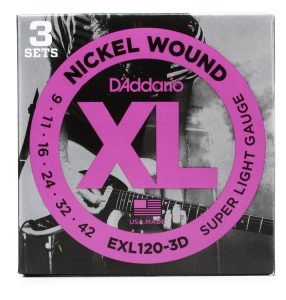
The physical consequence of decades of fingerstyle playing is visible in his right hand. The skin on his fingertips is heavily calloused, producing a harder, more articulate attack than most players expect from someone not using a pick. Strings compound this: Knopfler has long favored D'Addario EXL120 super light gauge strings — a 9-42 set — which respond more readily to variable finger pressure than the heavier gauges many blues players prefer.
The Dire Straits Era and Gear Evolution
Dire Straits formed in London in 1977, and the early recordings document a rig that was surprisingly minimal. A Stratocaster, a small amplifier, and almost no effects — that was the core setup on "Sultans of Swing," the track that broke the band internationally. Over subsequent albums and decades of solo touring, the rig expanded significantly, but the philosophy never changed. Knopfler has always prioritized dynamic range over processed tone, preferring to let the amplifier respond to how hard or softly he plays rather than relying on compression or overdrive pedals to flatten the dynamics into a consistent wall of sound.

What People Get Wrong About Knopfler's Tone
The Effects Myth
The most persistent myth our team encounters is that Knopfler's tone is heavily processed — that some combination of chorus, delay, and overdrive produces that liquid, singing lead sound. This is demonstrably wrong. Knopfler's signal chain is among the sparsest of any major touring guitarist working at stadium scale. The overdrive, when present, comes primarily from a Crowther Audio Hotcake pedal pushed into a clean amplifier, and the apparent "movement" in his tone comes from right-hand technique — the varying pressure and angle of each finger strike — not from a modulation pedal. Our team has reviewed live footage with no effects whatsoever between guitar and amp, producing a tone that rivals anything on the studio records.

Pro insight: The Crowther Hotcake works best set to low gain into a tube amp already running warm — cranking the gain defeats the entire purpose of using it in a Knopfler-style signal chain.
The Single-Guitar Myth
Another widespread misconception is that Knopfler is essentially a one-guitar player who plays Stratocasters exclusively. The full instrument inventory tells a very different story. Over a career spanning five decades, he has maintained a working collection that includes custom Schecters, a Gibson Les Paul Special Double Cut, a 1962 Hofner, multiple acoustics, a resonator guitar, and purpose-built custom instruments. Each appears at specific points in the catalog for specific sonic reasons. Our comparison with rigs like the Jimmy Page setup makes this multi-instrument philosophy easy to recognize — Page similarly built distinct sonic personalities into different instruments rather than relying on a single guitar across all musical contexts.
The Mark Knopfler Guitar Rig Rundown: The Full Guitar Collection
Fender Stratocasters
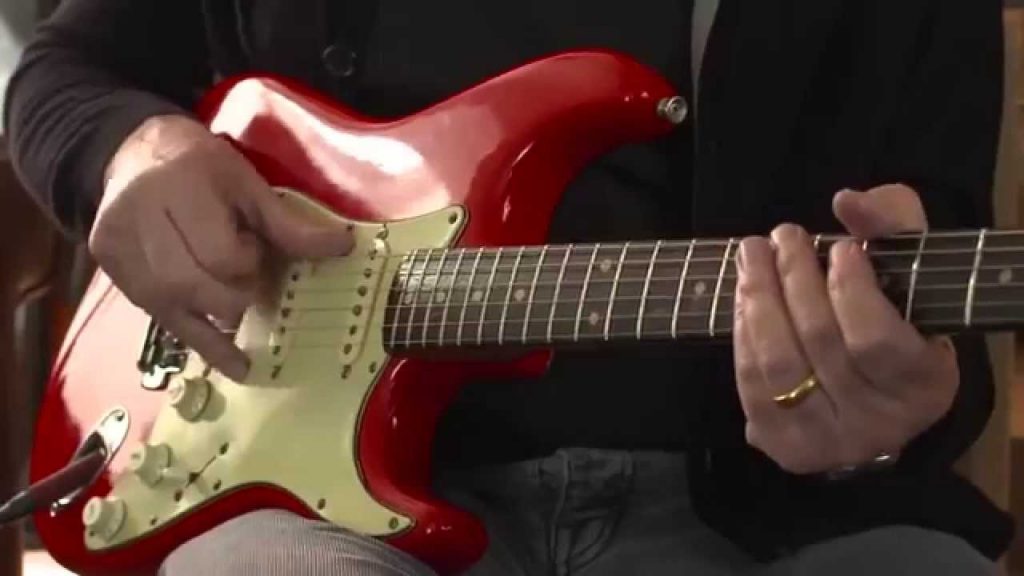
Knopfler's most famous guitar is the 1961 "red" Stratocaster used on the original recording of "Sultans of Swing." It is actually a sunburst model that photographs red under certain stage lighting — a source of decades of confusion about its true color. The single-coil pickups, combined with a maple neck and the specific resonance of an aged alder body, produce a midrange character that later Stratocasters simply do not replicate regardless of how close the specifications appear on paper. Our team considers this one of the genuinely irreplaceable instruments in the history of popular music.
Schecter and Gibson Additions
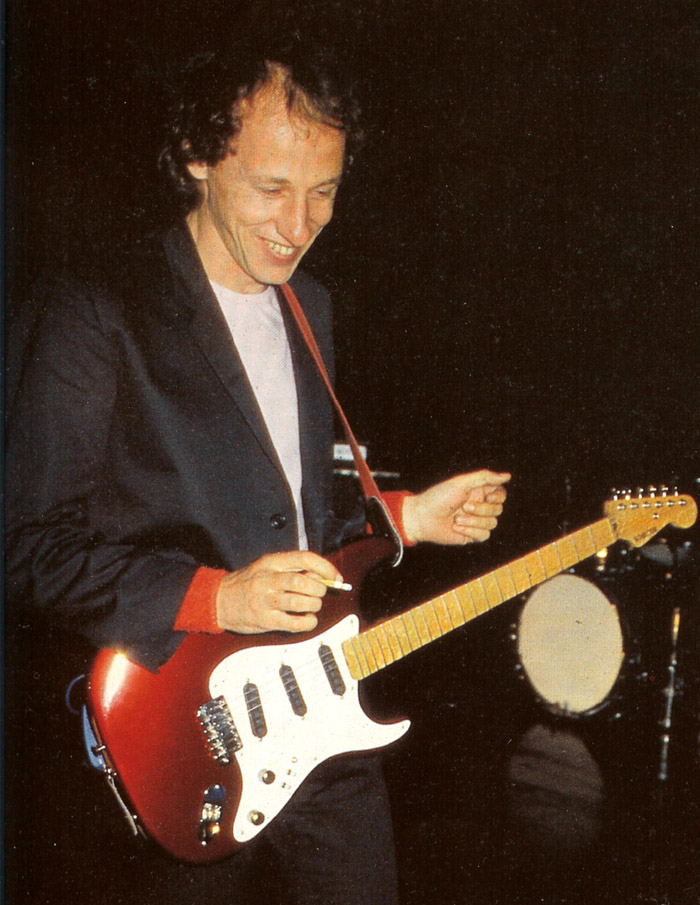
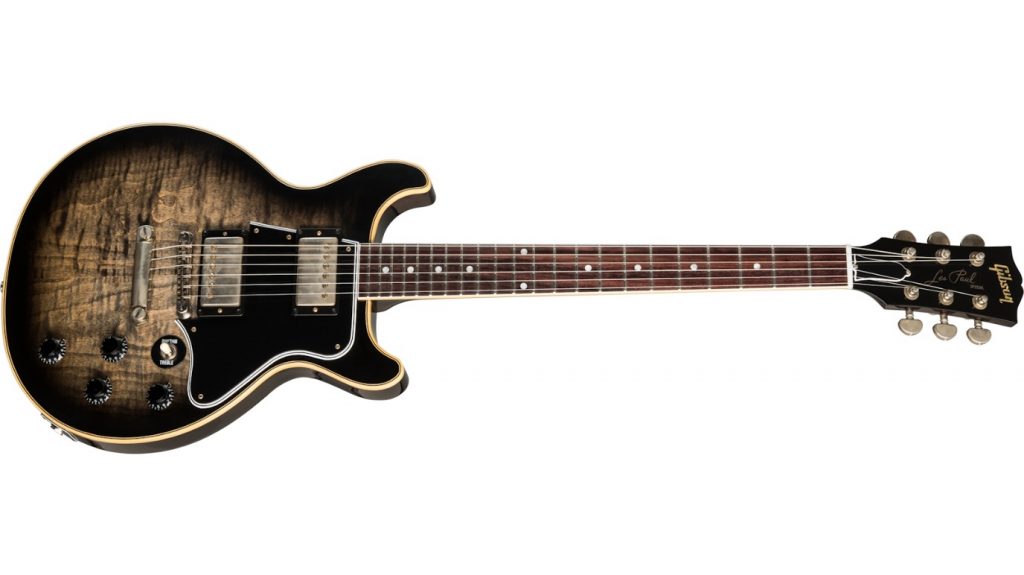
The red Schecter — a custom-built instrument from around 1980 — entered the rig as Schecter was establishing its reputation as the premier custom shop for professional players in California. These instruments were built to exacting specifications, typically featuring heavier bodies and hotter pickups, producing a thicker, warmer tone than vintage Strats. Knopfler deployed this guitar extensively during the "Love Over Gold" era, where denser midrange suited the slower, more atmospheric compositions. The Gibson Les Paul Special Double Cut serves a similar function — humbuckers providing thickness and sustain in contexts where single-coils would read as too bright or thin in the final mix.
The 1962 Hofner Super Solid
The 1962 Hofner Super Solid V2 is arguably the most underrated instrument in Knopfler's collection. German-made at a time when Hofner was producing genuinely innovative solid-body designs, this guitar has a character entirely distinct from American instruments of the same era. Its semi-hollow construction creates a resonance that sits between a pure solid body and a full archtop — articulate enough for fingerpicking but warm enough for ballad work. Knopfler has discussed this guitar in interviews with genuine affection, describing it as irreplaceable for specific sonic applications that no other instrument in the collection can match.

Acoustics and Resonators
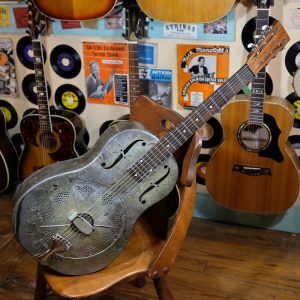
Knopfler's acoustic and resonator instruments receive far less attention than his electrics, but they represent an equally important dimension of the catalog. The Martin D-18 is the central acoustic — a classic dreadnought built around a mahogany body and spruce top that produces a warmer, less aggressive tone than the rosewood-bodied D-28 most players default to. This choice aligns with Knopfler's consistent preference for warmth over brightness across the entire rig. The 1932 National Duolian resonator is the most specialized instrument he owns: a pressed steel-body single-cone guitar used specifically for blues-oriented material where that raw, metallic resonance is sonically non-negotiable. A well-preserved example from this era is genuinely rare on the vintage market.

Amplifiers and the Signal Chain
Marshall JTM45
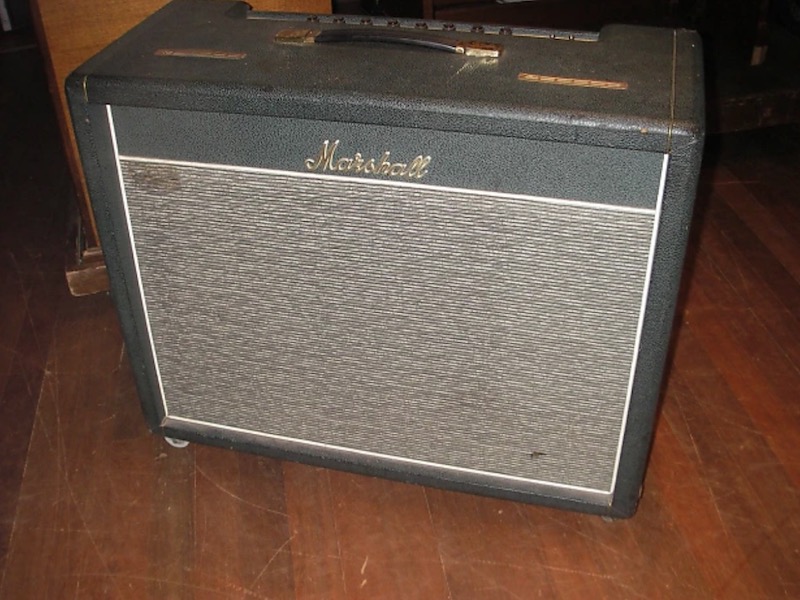
The Marshall JTM45 is where Knopfler's electric tone lives for most listeners. This is the original Marshall design, based heavily on the Fender Bassman circuit, delivering a clean headroom that breaks up progressively rather than suddenly. At moderate volume it produces exactly the warm, slightly compressed clean tone that fingerstyle playing demands. Pushed harder, it transitions into a natural overdrive that preserves the attack dynamics of fingerstyle technique better than any pedal-driven overdrive can. Comparing this approach to Jimmy Page's Marshall Super Lead is instructive — where Page drove Marshalls into high-gain saturation and used the resulting distortion as a tonal color, Knopfler keeps the JTM45 at the edge of breakup: clean enough to hear every note in a chord voicing, yet warm enough to sustain naturally on single-note lead lines.
Soldano, Boutique Heads, and the Reinhardt
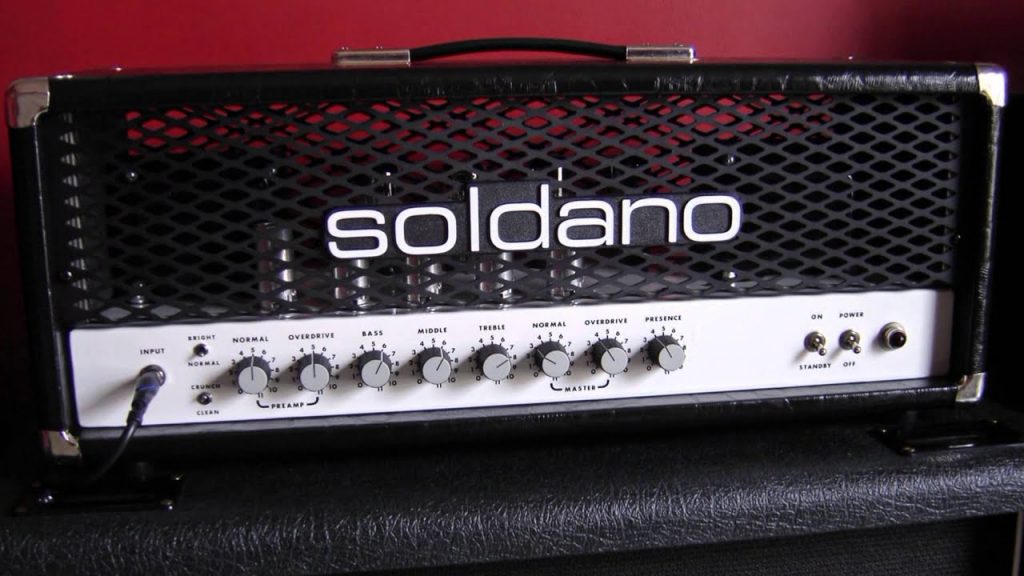
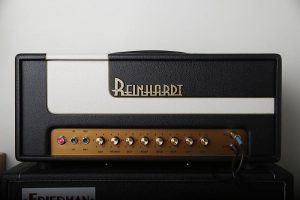
Later in his career, Knopfler added the Soldano SLO-100 to his touring configuration — a high-gain American design that might seem counterintuitive given his preference for clean dynamics. In practice, he uses the SLO-100 on its clean channel at elevated gain settings as a second tonal color rather than deploying its lead channel capability. The Reinhardt Storm 33 represents the boutique end of the current rig — a lower-wattage all-tube design that produces the same dynamic response as the JTM45 but at volumes more appropriate for smaller venues and controlled recording environments. A Dumble-influenced boutique head has also appeared in documented rig configurations, confirming that the core philosophy remains consistent regardless of which chassis houses the output tubes.
Effects Pedals
The pedalboard is minimal by any professional standard. The Crowther Audio Hotcake overdrive is the centerpiece — a New Zealand-made pedal that produces a transparent, touch-sensitive overdrive without adding the compression that most drive pedals introduce. Beyond that, some live rigs have included a Boss CE-1 or CE-2 chorus used at very low depth settings, and a Boss DD-2 digital delay for specific lead applications. The complete board never approaches the complexity that most rock guitarists consider standard. Compared to the extensive setups documented in our coverage of Jerry Cantrell's guitar rig or James Hetfield's setup, Knopfler's board is almost aggressively sparse — and that restraint is precisely the point.
How Knopfler Deploys the Rig Across Musical Contexts
Live Performance
On stage, Knopfler maintains a remarkably disciplined instrument rotation. The vintage Stratocasters handle the majority of the electric material, with the Schecter or Les Paul appearing when a song's harmonic weight demands humbuckers. The Hofner surfaces for specific atmospheric pieces where its semi-hollow warmth fills the sonic role no Strat can occupy. The routing is deliberate and largely consistent across tours — each guitar has a primary function in the set, and switching happens at song breaks rather than mid-song. This approach is the opposite of the any-guitar-for-any-song methodology that many touring players adopt, and it produces a tighter, more intentional live sound as a direct result.
Studio Recording
In the studio, the acoustic instruments take on far greater importance. The Martin D-18 and the National Duolian both appear on recordings where their specific tonal characters are essential rather than optional. Studio work also introduces the AT4055 condenser microphone for capturing acoustic guitar — a side-address cardioid condenser that preserves the full frequency spectrum of the D-18 without the coloration that dynamic microphones introduce. Anyone serious about recording acoustic guitar professionally will find that microphone placement and capsule choice matter as much as the instrument itself, and Knopfler's studio documentation confirms this principle at the highest level.

Replicating the Rig: A Realistic Cost Breakdown
Authentic replication of this rig is expensive. The vintage Stratocasters alone put the genuine article out of reach for most players — a real 1961 Strat in usable condition commands prices that place it in collector territory. The practical question is what a functional approximation costs, and the answer is still significant. Our team's position is clear: money spent on the amplifier and correct string gauge returns far more tonal value per dollar than chasing vintage guitar prices.
| Component | Authentic / Vintage | Practical Modern Equivalent | Budget Entry Point |
|---|---|---|---|
| Fender Stratocaster (early 1960s) | $18,000–$45,000+ | Fender American Vintage II (~$2,200) | Squier Classic Vibe (~$500) |
| Marshall JTM45 | $4,000–$8,000 (vintage) | Marshall Studio JTM (~$1,400) | Blackstar HT-5R (~$350) |
| Soldano SLO-100 | $3,500–$4,500 (used) | Current SLO-100 (~$3,499) | Soldano SLO Mini (~$899) |
| Crowther Audio Hotcake | $200–$300 (vintage units) | Current Hotcake (~$180) | Current Hotcake (~$180) |
| D'Addario EXL120 Strings | N/A | $7–$10 per set | $7–$10 per set |
| Martin D-18 (acoustic) | $3,000–$6,000 (vintage) | Current D-18 (~$2,200) | Sigma DM-18 (~$500) |
A modern American Vintage Stratocaster through a Marshall Studio JTM, strung with EXL120s and played without a pick, gets substantially closer to the benchmark recordings than a genuine 1961 Strat through a digital modeling platform ever will. The amplifier and the technique are the two non-negotiable investments. Everything else is refinement.
Keeping Vintage Gear Stage-Ready
Routine Care for Old Instruments
Vintage instruments from the late 1950s and early 1960s demand maintenance disciplines that differ significantly from modern guitar care. The nitrocellulose lacquer finishes on authentic vintage Fenders and Gibsons are thin, breathable, and chemically vulnerable in ways that polyester-finished modern guitars are not. Nitro reacts badly to rubber strap locks, rubber-backed guitar stands, and many contemporary cleaning products — substances that sit harmlessly on a polyester finish will chemically bond with nitro lacquer over time, leaving permanent damage. Our team recommends vintage-appropriate cleaning products exclusively on these instruments, full stop.
Fret condition is the other major maintenance variable. Vintage fretwire was typically softer than modern stainless or EVO gold alternatives, meaning it wears faster under regular playing. A fret leveling and crowning service every two to three years is reasonable for a guitar in active use. Establishing a relationship with a luthier who specializes in pre-CBS Fender instruments is worth the effort — the setup requirements and structural quirks are genuinely different from modern production guitars, and a generalist tech will often misdiagnose problems that a specialist resolves immediately.
When the Tone Isn't Coming Together
The most common troubleshooting problem our team observes when players try to approximate this rig is a thin, harsh tone from the amplifier. Nine times out of ten, this traces to one of three causes. First, the amplifier's tubes may be aged and losing warmth — a full retube resolves this immediately. Second, the guitar's pickup height may be set too high, causing magnetic pull that flattens string vibration and kills sustain. Third, and most commonly, the player is using a pick. The entire tonal architecture of this rig is optimized around the softer, wider contact surface of a bare fingertip, and substituting a plectrum changes the harmonic character at a fundamental level. No EQ adjustment compensates for a playing technique the rig was never designed to accommodate.
Tube amplifier bias deserves specific mention. The JTM45 runs EL34 output tubes at fairly high plate voltages, and bias drift is a real concern with used or aging tubes. Any player committing to this approach should learn to read and set bias, or engage a qualified technician whenever output tubes are changed. An out-of-bias JTM45 sounds nothing like the benchmark recordings, and this single variable is responsible for more players wrongly concluding the amplifier isn't the right tool for the sound they're chasing.
Frequently Asked Questions
Does Mark Knopfler ever use a guitar pick?
No — Knopfler plays exclusively with his bare fingers and has done so throughout his entire career. This is not an affectation but a fundamental technical choice that shapes every aspect of how his guitars and amplifiers are configured. The softer, wider contact surface of a fingertip produces a different harmonic profile than a plectrum, and his entire signal chain is optimized for that specific attack.
What strings does Mark Knopfler use?
Knopfler has consistently used D'Addario EXL120 super light gauge strings — a 9-42 set. The lighter gauge responds more readily to the variable pressure of fingerstyle technique, allowing greater dynamic range between soft and aggressive passages without the physical resistance that heavier gauges introduce for bare-finger players.
What is the single most important piece of gear in Knopfler's rig?
Our assessment is that the Marshall JTM45 is the most irreplaceable component. It provides the dynamic response, harmonic complexity, and touch sensitivity that the entire playing approach depends on. Substituting a different amplifier architecture fundamentally changes what the rig can do, even with an identical guitar and effects configuration. After the amplifier, string gauge and playing technique — not the specific guitar model — determine whether the sound comes together.
The most expensive rig in the world is silent without the technique that makes it speak — and no piece of gear in Knopfler's collection has ever mattered as much as the decision to put the pick down and never pick it back up.


About Jay Sandwich
Jay Sandwich is a guitarist and modular synthesizer enthusiast whose musical life has taken him from shredding electric guitar to deep-diving the world of modular synthesis and experimental sound design. He brings a player perspective to music gear coverage — practical, opinionated, and grounded in years of actual playing experience across different setups and styles. At YouTubeMusicSucks, he covers guitar gear, rig rundowns, and musician interviews with the candid perspective of someone who has spent serious time on both sides of the instrument.
Check for FREE Gifts. Or latest free acoustic guitars from our shop.
Remove Ad block to reveal all the rewards. Once done, hit a button below