What are the Main Genres of American Music?
by Jay Sandwich
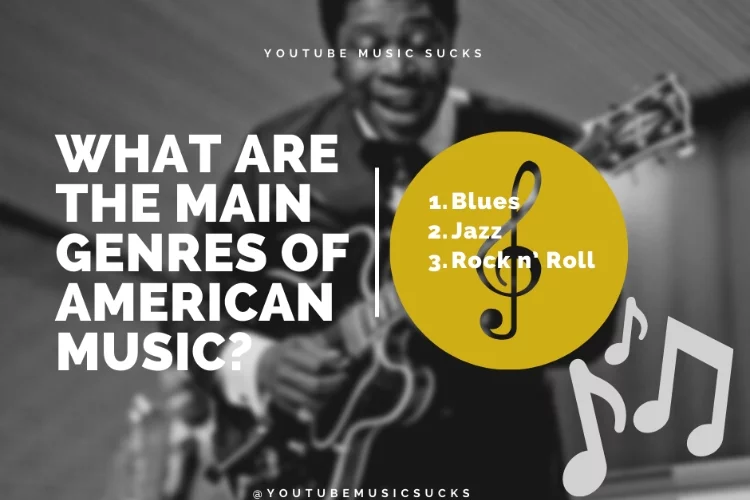
Our team has spent considerable time mapping these connections, and the consistent finding is that no American genre exists in clean isolation from the others. Blues fed directly into rock and roll, while jazz introduced harmonic sophistication that hip-hop producers later sampled extensively. Country absorbed Appalachian folk traditions from European immigrants decades before the genre had a commercial identity. That dense web of mutual influence is the essential context for understanding what makes each tradition genuinely distinct.
This guide covers the main genres of American music through multiple practical lenses: defining strengths, real limitations, landmark artists, and the instruments that make each genre immediately recognizable. Our team also addresses the persistent misconceptions that lead most listeners to fundamentally mischaracterize what they are hearing when genre labels are applied loosely.
Contents
- The Richness and Blind Spots of America's Core Genres
- How to Engage with the Main Genres of American Music
- Artists and Albums That Defined Each Genre's Sound
- The Instruments That Give American Genres Their Identity
- When Genre Blending Elevates Music — and When It Fails
- From First Listen to Devoted Genre Scholar
- Why So Many People Misread American Music Genres
- Key Takeaways
The Richness and Blind Spots of America's Core Genres
What Each Genre Does Best
The main genres of American music each carry a distinct emotional and cultural function, and understanding that function is the most efficient entry point into serious listening. Blues delivers raw catharsis through devastatingly effective call-and-response structures. Jazz offers harmonic and improvisational complexity that rewards repeated listening across decades of engagement. Country and folk prioritize narrative storytelling with an economy of language that most other genres never approach. Rock provides visceral energy through electric instrumentation, while hip-hop brings rhythmic precision, social commentary, and studio production into a single unified art form.
| Genre | Core Strength | Primary Limitation | Defining Era |
|---|---|---|---|
| Blues | Emotional directness and improvisational depth | Perceived as melodically narrow by casual listeners | 1920s–1960s |
| Jazz | Harmonic complexity and live improvisation | Steep access curve for new listeners | 1930s–1960s |
| Country | Narrative storytelling and regional identity | Commercial pressure diluted authenticity | 1950s–present |
| Folk | Acoustic intimacy and protest tradition | Limited production ambition in traditional form | 1960s–present |
| Rock | Electric energy and studio innovation | Fragmented into sub-genres of inconsistent quality | 1950s–present |
| Soul/R&B | Vocal performance and emotional urgency | Commercial homogenization flattens range | 1960s–present |
| Hip-Hop | Rhythmic precision and cultural documentation | Oversaturated market obscures genuine innovation | 1980s–present |
Where Each Genre Struggles
Every genre carries limitations alongside its strengths, and our team finds it counterproductive to romanticize these traditions without acknowledging where they stall. Commercial pressure is the most consistent threat — country lost significant credibility through Nashville's pop-crossover push of the 1980s, and hip-hop's streaming-era economics reward volume over craft in ways that dilute the genre's documentary power. Blues faces a different problem: most casual listeners encounter it through classic-rock filters rather than primary sources, producing a distorted picture of a tradition far broader than the standard canon suggests.
Pro tip: Our team always recommends tracing any genre back at least two generations before its most famous commercial peak — that's where the formative decisions were made and the real character of the tradition lives.
How to Engage with the Main Genres of American Music
Building a Chronological Listening Framework
The most effective approach our team has found involves building a chronological listening map before committing to any single artist or album. Starting with primary sources like Robert Johnson for blues and Louis Armstrong for jazz establishes a baseline that makes every subsequent discovery more contextually meaningful. The Carter Family anchors country listening, and Woody Guthrie serves the same function for folk tradition. Working forward from those roots prevents the common error of interpreting early music through modern aesthetic expectations it was never designed to meet.
- Identify one foundational artist per genre and spend at minimum two weeks with that catalog before moving forward
- Read one genre history — preferably a scholarly text — before expanding to a second major artist within the same tradition
- Cross-reference genres deliberately: trace which specific blues elements appear in the early rock records most people already know
- Keep notes on instrumentation, tempo, vocal style, and lyrical subject matter — patterns emerge quickly and accelerate comprehension considerably
Avoiding the Algorithmic Playlist Trap
Algorithmic playlists are a genuinely poor substitute for intentional genre study, and our team recommends treating them as discovery tools rather than educational resources. A playlist built around a single mood pulls tracks from multiple genres and eras without context, producing a misleading impression of what any individual genre actually sounds like at full range. The playlist version of jazz shares almost no common ground with the free jazz John Coltrane pursued in his final recordings, and that gap matters enormously for serious listeners.
Artists and Albums That Defined Each Genre's Sound

Blues, Jazz, and Country Benchmarks
The benchmark recordings that define these foundational genres are specific, well-documented, and irreplaceable as reference points for any serious listener. Robert Johnson's 1936–1937 sessions established the Delta blues template that every subsequent guitarist, including the British Invasion bands, studied directly. Miles Davis's Kind of Blue (1959) remains the most clarifying single statement of what modal jazz can accomplish with the right personnel. Hank Williams's late-1940s recordings set the country songwriting economy standard that Nashville has been chasing, often unsuccessfully, ever since.
- Blues: Robert Johnson, Muddy Waters, Howlin' Wolf, B.B. King
- Jazz: Louis Armstrong, Duke Ellington, Miles Davis, John Coltrane
- Country: Hank Williams, Patsy Cline, Johnny Cash, Merle Haggard
- Folk: Woody Guthrie, Pete Seeger, Bob Dylan — our list of 12 Classic Folk Songs Everyone Should Know provides an excellent practical entry point into this tradition
Rock, Soul, and Hip-Hop Touchstones
Rock's defining documents run from Chuck Berry's early Chess recordings through classic rock's studio ambition and into the harder-edged territory our overview of heavy metal's history and development covers in detail. Soul music's peak includes Aretha Franklin's Atlantic recordings and Marvin Gaye's What's Going On, both demonstrating that commercial success and artistic ambition could coexist without compromise. Hip-hop's foundational texts — the Sugarhill Gang, Grandmaster Flash, N.W.A, Rakim — established the genre's dual identity as party music and social document within its first decade of recorded existence.
Worth noting: Our team consistently finds that rock listeners who skip the foundational blues and soul records that preceded the genre arrive with significant gaps in understanding why specific guitar techniques and vocal approaches became standard practice.
The Instruments That Give American Genres Their Identity
String Instruments Across the Genre Spectrum
The electric guitar is the most versatile instrument in American music, appearing in blues, rock, country, jazz, and soul with remarkable and consistent frequency. Its role shifts dramatically between genres, making it function as an effectively different instrument in each separate context. In blues, the guitar carries melodic, harmonic, and percussive responsibilities simultaneously. In country, the pedal steel introduces a sliding, crying quality that serves as emotional commentary on the vocal line. Our detailed breakdown of the main instruments in folk music covers how acoustic guitars, banjos, and fiddles each carry distinct cultural weight within that tradition. The mandolin, which most listeners associate with bluegrass, appears in famous rock recordings far more often than generally recognized. That mobility demonstrates how instruments travel fluidly across American genres when players prioritize the music over strict convention.
Rhythm Sections and Electronic Production
The drum kit, bass guitar, and piano anchor most American genre rhythm sections, but hip-hop's use of sampling rewrote those foundational assumptions entirely. The drum machine and sampler are as genre-defining for hip-hop as the pedal steel is for country. Our team considers this parallel essential for correcting the widespread analytical error of treating electronic production as inherently less authentic than acoustic instrumentation. Academic genre scholarship increasingly recognizes production technique as a primary genre-defining characteristic rather than a secondary consideration.
When Genre Blending Elevates Music — and When It Fails

Fusions That Genuinely Worked
The most successful genre fusions in American music share one consistent characteristic: both parent genres contributed something essential to the hybrid, with neither simply absorbing the other. Rockabilly merged country's twang and narrative sensibility with blues rhythm and electric amplification in a way that required both traditions to function as intended. Jazz-funk fusions of the 1970s drew equally from jazz improvisation and soul rhythm sections, producing music neither genre could have generated independently. Our coverage of synthwave's history and characteristics demonstrates the same principle — a genre drawing from multiple electronic traditions while maintaining a distinct and coherent identity throughout.
- Rockabilly (country + blues): worked because both rhythm and melody transformed meaningfully through the merge
- Jazz-funk (jazz + soul): worked because improvisation met groove without either tradition conceding structural dominance
- Country-rock (country + rock): worked in its 1970s form when songwriting remained the clear creative priority above all else
Blends That Undermine Both Traditions
Genre fusion fails predictably when commercial logic rather than genuine musical fluency drives the blending process, and the image above — crunkcore, cuddlecore, cowpunk — illustrates how hybridization produces diminishing returns when novelty replaces structural understanding. Cowpunk as a concept carries intellectual appeal, but most recordings in that category satisfy neither country nor punk audiences, because production decisions required to serve one tradition actively alienate the other. Fusion works when musicians are fluent in both parent traditions, and consistently fails when the hybrid is assembled from surface characteristics alone.
Warning: Our team finds that genre labels on streaming platforms frequently misclassify fusion recordings — serious listeners should always verify genre claims against primary sources rather than relying on platform metadata.
From First Listen to Devoted Genre Scholar
Entry Points That Work for New Listeners
Most people approaching the main genres of American music for the first time benefit far more from a single-artist deep dive than from a genre-wide survey. One artist's catalog provides enough variety to illustrate the genre's full range while maintaining enough coherence to build recognizable reference points. Starting with Johnny Cash for country or Robert Johnson for blues gives any new listener a solid, navigable foundation within a manageable scope. Adding Miles Davis's accessible early period for jazz completes a powerful three-genre starting framework. Anyone curious about how genre and mood interact physiologically will find our piece on how relaxing music reduces stress a useful companion resource.
Advanced Study for Serious Genre Devotees
Advanced genre study involves three practices that most casual listeners never develop: cross-era comparative analysis, close attention to production decisions as deliberate artistic choices, and engagement with historical context. Serious blues scholarship requires understanding Chess Records' role in Chicago, the geography of the Great Migration, and the economics of race records in the 1920s. Those forces explain the music's sonic character more thoroughly than purely musical analysis ever can. Our deep dive on the rise of the MP3 provides essential context for how digitization reshaped access to American genres and transformed listening communities as a direct consequence.
Why So Many People Misread American Music Genres
The Most Common Errors in Genre Classification
The most persistent misconception our team encounters is treating genre labels as fixed, stable categories rather than historically contingent descriptions that shift meaning across decades. "Country music" in 1930 meant something categorically different from "country music" in 1980 or today, and applying contemporary associations backward produces fundamentally inaccurate historical claims. Rock has splintered into dozens of sub-genres — classic rock, punk, metal, indie, alternative — each with distinct aesthetics and vocabularies that share almost nothing beyond electric guitar as a common thread.
- Assuming all blues sounds the same (Delta, Chicago, Texas, and Piedmont styles are substantially different from each other)
- Treating jazz as a single unified genre rather than a family of related traditions spanning nearly a century of development
- Conflating country's commercial Nashville output with its deeper folk and bluegrass roots
- Misidentifying hip-hop as exclusively an East or West Coast phenomenon despite its geographic diversity from the very beginning
How Accurate Genre Understanding Transforms Listening
Correcting these misreadings produces immediate improvements in how anyone engages with American music, because accurate genre framing sets appropriate expectations for each recording. Genre literacy — the ability to place a recording accurately in its historical and stylistic context — is the skill that separates informed listeners from passive consumers. Our team's consistent finding is that anyone willing to invest modest time in genre history develops a qualitatively richer listening experience within weeks, not years. The breadth of the main genres of American music is both the challenge and the reward — each discovery recontextualizes everything heard before it.
Key Takeaways
- The main genres of American music — blues, jazz, country, folk, rock, soul, and hip-hop — are deeply interconnected traditions, each with distinct strengths, limitations, and historical contexts worth understanding independently.
- Effective genre study starts with chronological listening rooted in primary sources and benefits significantly from contextual reading that explains the social and economic forces shaping each tradition.
- Genre fusion works when both parent traditions contribute structurally to the hybrid; commercially motivated blends assembled from surface characteristics consistently underperform artistically and fail to satisfy audiences of either tradition.
- Genre literacy — placing recordings accurately in historical and stylistic context — is the single most practical skill for deepening engagement with American music at any level of prior knowledge.


About Jay Sandwich
Jay Sandwich is a guitarist and modular synthesizer enthusiast whose musical life has taken him from shredding electric guitar to deep-diving the world of modular synthesis and experimental sound design. He brings a player perspective to music gear coverage — practical, opinionated, and grounded in years of actual playing experience across different setups and styles. At YouTubeMusicSucks, he covers guitar gear, rig rundowns, and musician interviews with the candid perspective of someone who has spent serious time on both sides of the instrument.
Check for FREE Gifts. Or latest free acoustic guitars from our shop.
Remove Ad block to reveal all the rewards. Once done, hit a button below