80s Music Production Techniques: Lessons from Def Leppard's Pyromania
by Jay Sandwich
If you want to understand 80s music production techniques, Def Leppard's Pyromania is your single best classroom. That album didn't just sell millions — it taught the entire industry how to build a rock record that sounds both massive and meticulously clean at the same time. The production choices made during those sessions remain relevant, actively applicable, and studied by producers across every genre. Explore more in our music production section for deeper studio craft guides.

Producer Robert John "Mutt" Lange approached Pyromania like an engineer building a skyscraper — every layer was calculated, load-bearing, and placed with precision. He worked alongside engineer Mike Shipley to extract every ounce of performance and texture from each session. What they created wasn't just a great-sounding record; it was a production philosophy you can study, reverse-engineer, and apply to your own work today.
This guide breaks down the core techniques — from gear choices and signal chain philosophy to drum sound construction and vocal arrangement — so you can carry those lessons directly into your productions.
Contents
- The Gear That Built the Pyromania Sound
- Inside the Sessions: What Def Leppard Actually Did
- 80s Music Production Techniques: A Step-by-Step Application Guide
- Where These Techniques Fit in Modern Production
- Keeping Your Processing Clean
- Building a Signature Production Identity
- When Your 80s Mix Sounds Wrong
- Frequently Asked Questions
- Key Takeaways
The Gear That Built the Pyromania Sound
Understanding the foundation of Pyromania means understanding the tools behind it. This wasn't made with luck — it was made with specific, deliberate gear choices that shaped every sonic decision from the first tracked take to the final mix print.
The SSL 4000 Console
The centerpiece of the Pyromania sessions was the Solid State Logic 4000 series console. This desk defined the sound of an era. Its built-in compressor on every channel — and the famous SSL bus compressor on the mix bus — gave records a cohesive glue that's immediately recognizable.

- Channel strip compression controlled dynamics at the source, not just at the mix bus — every track was shaped before it even reached the fader
- The console's EQ had a broad, musical character that complemented rock recordings perfectly
- Total recall wasn't yet standard — engineers kept meticulous written notes on every setting
- The SSL bus compressor became the signature "glue" sound of 80s rock mixes, adding punch and cohesion without killing dynamics
Outboard Compression and Limiting
Beyond the console, the team relied on classic outboard units to shape dynamics. The Teletronix LA-2A optical compressor was a go-to for vocals — its program-dependent release time responds naturally to musical content rather than applying a fixed, mechanical envelope.

- LA-2A on lead vocals for natural, musical compression with minimal coloration
- 1176 limiters for fast transient control on drums and room mics
- Bus compression at the mix stage for punch and to unify disparate elements into a single, coherent sonic statement
The Guitar Rigs
Phil Collen and Steve Clark weren't using elaborate multi-pedal systems by modern standards. They ran classic British amplifiers — primarily Marshall stacks — with relatively direct signal paths. The complexity came from how those amps were tracked, not from the effects chain in front of them.
Pro Tip: Simpler guitar rigs often record better. Effects pedals between your guitar and amp can kill the natural dynamics that make a recorded guitar sound alive and responsive in a mix.
- Marshall heads through speaker cabinets for core tone — loud, full, and saturated
- Minimal in-line effects during recording — effects were added in the mix or printed on returns
- Multiple microphone positions blended during mixing to create a fuller, more dimensional guitar sound
If you want to see how other legendary rock guitarists approached their rigs in this era, our breakdown of Jimmy Page's favorite Marshall amp covers exactly how British amplification defined a generation of hard rock tone.
Inside the Sessions: What Def Leppard Actually Did
Mutt Lange was famously obsessive. He pushed every player to their absolute limit and then asked for more. That perfectionism shows up in every bar of the finished record — and it's the part you can't replicate with gear alone.

Drum Recording and Gated Reverb
Rick Allen's drums on Pyromania are one of the defining examples of 80s music production techniques applied to percussion. The gated reverb drum sound — pioneered by Phil Collins and engineer Hugh Padgham slightly earlier — was deployed here with maximum impact and technical precision.
- Room mics captured a large, ambient sound from the full kit
- A noise gate with a fast attack and a timed release was applied to that room signal
- When the gate closes, the reverb tail cuts off abruptly, creating a sharp "crack" instead of a natural bloom
- Close mics and gated room mics were blended — close mics kept transient definition, the gated room added sheer size
The result is a snare that sounds like it was recorded in an aircraft hangar but still punches through a dense mix without blurring anything around it. That contrast — enormous yet controlled — is the target.

Guitar Tracking: Layers on Layers
Lange built guitar walls, not guitar parts. He tracked both Phil Collen and Steve Clark multiple times per section — not for safety takes, but to create actual layered performances that would be blended across the stereo field in the mix.
- Each guitarist recorded the same rhythm part multiple times on separate tracks
- Performances were panned across the stereo field — far left, left-center, right-center, far right
- Slight performance variations between takes created natural chorus and width without any modulation effects
- Lead lines were also doubled and panned, though less widely than the rhythm layers

Vocal Stacking That Changed Everything
Joe Elliott's lead vocal was strong, but the vocal arrangements on Pyromania are what separated the album from everything else on the charts. Lange had the band sing every harmony part — every single one — multiple times. Then he stacked those takes throughout the arrangement.
The chorus stacks reportedly featured dozens of individual vocal tracks. The result isn't just thick — it has a cathedral-like, orchestral quality that no four-person harmony group could produce live. It's a studio construct, and it's completely intentional.
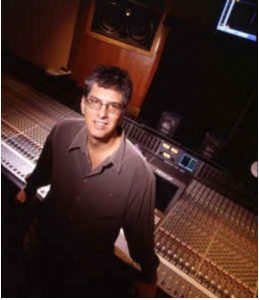
Engineer Mike Shipley managed the logistics of stacking that many tracks while keeping the mix clean — no small feat when you're physically riding faders on a console with limited automation and no recall safety net.
80s Music Production Techniques: A Step-by-Step Application Guide
You don't need vintage gear to use any of these ideas. A modern DAW gives you more flexibility than Lange had — you just need to deploy it with the same intentionality he brought to every session.
Building Your Drum Sound
- Record or program your kit normally — close mics on snare and kick, overhead, and a room mic if available
- Send your snare (or the full kit) to a reverb — choose a long room or hall setting, not a spring or plate
- Route that reverb return through a noise gate plugin
- Set the gate threshold so it opens cleanly on each snare hit and closes before the next one
- Adjust the gate's release time — shorter releases give more "crack," longer releases give more "wash"
- Blend the gated reverb return with your dry kit signal at roughly 20–40% — you want it felt, not consciously heard
Warning: Don't over-use the gated reverb. It's a seasoning, not a main ingredient — if your snare sounds like it's in a parking garage at full wet signal, you've gone too far.
Layering Guitars the Mutt Lange Way
- Record your rhythm guitar part once — nail the performance before multiplying it
- Record the same part again on a separate track — resist the urge to copy and paste the first take
- Pan one take hard left, the other hard right
- Optionally record a third and fourth take, panned at center-left and center-right for added density
- High-pass each track around 80–100Hz to prevent low-end accumulation across all four tracks
- Apply subtle EQ differences between takes — boost slightly different high-mid frequencies on each to prevent them from blending into one smeared mass
For a deeper look at microphone placement and proximity techniques that apply directly to recording guitar cabinets, our guide on recording guitars with a dynamic microphone covers the core principles that translate directly from acoustic to electric tracking.
Stacking Harmonies Like Def Leppard
- Chart your harmony parts before you step into the session — know exactly what intervals you're stacking
- Record the lead vocal first and get the best possible performance locked in
- Record each harmony part at least twice — more takes for chorus sections where density matters most
- Use slight pitch nudges rather than heavy auto-tune on harmony stacks — natural variation is the point
- Pan harmony stacks symmetrically: one slightly left, one slightly right, one center
- Compress the stacked harmonies together on a group bus — this gels individual takes into a single unified "voice"
Where These Techniques Fit in Modern Production
These aren't period-specific tricks that only work on retro-styled records — they're fundamental production tools that solve universal mix problems across genres.

Rock and Metal Productions
This is the obvious application. Any modern hard rock or heavy metal record can benefit from these techniques directly:
- Layered guitar walls — essential for any genre where rhythm guitar defines the energy and width of the mix
- Gated reverb drums — still used in modern arena rock and on deliberately retro-styled productions
- Stacked vocal harmonies — works for everything from power metal choruses to anthemic indie rock hooks
- SSL-style bus compression — the go-to mix glue for dense, busy arrangements that need cohesion without sacrificing punch
| Technique | Best Modern Genre Fit | Effort Level | Mix Impact |
|---|---|---|---|
| Guitar doubling (4 tracks) | Rock, metal, pop-rock | Low | High |
| Gated reverb drums | Arena rock, retro pop, 80s revival | Medium | High |
| Stacked vocal harmonies | Rock, pop, country, metal | High | Very High |
| SSL bus compression | All genres | Low | Medium–High |
| Close + room mic blend | Rock, jazz, acoustic, country | Medium | High |
| Performance-based width | Rock, pop, singer-songwriter | Medium | High |
Pop and Crossover Projects
Modern pop production has quietly absorbed nearly all of these techniques. Stacked harmonies, layered synth pads functioning as a form of harmonic doubling, deliberate bus compression decisions, and reverb staging are everywhere in contemporary chart records. The core lesson from Pyromania — every element should serve the song's emotional impact — applies regardless of genre or tempo.
Keeping Your Processing Clean
Pyromania sounds simultaneously massive and pristine. That combination doesn't happen by accident — it requires disciplined signal management at every stage of the production and mixing process.
Managing Noise and Phase Issues
When you stack multiple guitar tracks and multiple vocal takes, phase relationships between those tracks become a real technical concern. Tracks that partially cancel each other out produce a thin, hollow sound instead of the thick wall you're going for.
- Check phase relationships with a correlation meter on your guitar bus — a reading near -1 means you have a cancellation problem
- Flip the polarity of individual tracks and listen for the combination that sounds fullest and most solid
- Never use the same recorded take panned left and right — slight performance variations are what create width, not polarity tricks
- High-pass filter every track that doesn't need sub-bass content — low-end accumulation from ten stacked tracks turns a powerful mix muddy fast
Gain Staging Across Your Chain
Running your digital signal too hot doesn't add punch — it adds clipping and distortion at the wrong places in your processing chain, which destroys the headroom you need at the mix bus.
- Keep individual track levels averaging around -18 dBFS before any processing
- Leave your mix bus 6–10dB of headroom before the master limiter — this is where glue compression does its best work
- Check that your compressors aren't being slammed — 2–6dB of gain reduction is musical; 15dB is pumping
Pro Insight: Mike Shipley ran every session with conservative gain staging — headroom wasn't wasted, it was weaponized. A loud mix that retains headroom has far more perceived punch than one brickwalled at the tracking stage.
Building a Signature Production Identity
Mutt Lange didn't just copy what was popular — he advanced it. Pyromania arrived after years of him developing his approach across multiple genres and multiple artists. That's the long game every serious producer needs to play.
Developing Your Own Approach
Study the Pyromania techniques, but don't stop there. Building a production identity means pulling from multiple influences and synthesizing something distinctly yours.
- Analyze five or six records you love and identify what they share sonically — not just the gear, but the decisions
- Identify which techniques are genuinely transferable to your genre and which are stylistically specific to the source
- Document your session notes — what worked, what didn't, what settings produced what results in what context
- Develop a reference track library and compare your mixes against them at multiple stages of the session
For producers building out their session work and backing track production, our guide on making a backing track at home from scratch covers the foundational production process from arrangement decisions through final mix delivery.
Knowing When to Break the Rules
Lange bent the conventions of rock production — he brought pop song structure and pop production discipline to a hard rock record. That deliberate rule-breaking is exactly why Pyromania hit differently than everything else on the charts at the time.
- Break a production convention intentionally, not out of ignorance — know the rule before you subvert it
- Test every unconventional choice in a reference context — does it still serve the song's emotional purpose?
- Keep emotional impact as your north star — technical correctness is always secondary to whether it works
When Your 80s Mix Sounds Wrong
You've applied the techniques but the mix doesn't sound like Pyromania — it sounds like an expensive demo. Here's what's likely going wrong, and how to fix each problem specifically.
Muddy Low End
This is the most common problem when using layered guitars and stacked vocals. Each track brings its own low-frequency content, and it accumulates fast across a session with eight guitar tracks and twenty vocal takes.
- High-pass every guitar track at 80–120Hz — even a gentle filter at this point makes a dramatic difference to overall clarity
- High-pass backing vocals at 200Hz or higher — they carry no musical low-end information worth keeping
- Check your bass guitar and kick drum relationship — they need to occupy slightly different frequency spaces without fighting each other
- Use a spectrum analyzer on your mix bus to identify exactly where the accumulation is concentrated
Thin, Lifeless Guitars
Paradoxically, using too many guitar layers often produces a thinner sound because of phase cancellation between takes. If your guitar wall sounds like a cardboard box instead of a Marshall stack:
- Reduce your layer count and check whether the sound improves — sometimes four tracks beat eight
- Re-record the takes with slightly different amp positions or gain settings on each take
- Check your mic placement — small adjustments of even an inch can create significant tonal differences at the source
- Add a subtle mid-range boost around 2–4kHz to restore presence and help the guitars cut through the mix
Vocals That Don't Sit Right
If your stacked vocals sound like a crowd scene rather than a polished choir, the issue is usually inconsistent level relationships and insufficient compression on the harmony group.
- Make sure the lead vocal is clearly louder than the stacked harmonies — the hierarchy should be obvious
- Apply gentle compression to the harmony bus to gel the individual takes into a single coherent texture
- Use subtle harmonic saturation on the harmony group to add warmth and cohesion between takes
- Check levels in mono — if harmonies disappear or thin out significantly, you have phase issues between individual takes
Frequently Asked Questions
What makes 80s music production techniques sound different from modern production?
The core differences are gated reverb on drums, analog console processing, performance-based guitar layering rather than copy-pasting takes, and stacked human harmonies recorded multiple times. Modern production uses digital emulations of these tools, but the fundamental techniques — multiple tracked performances, deliberate reverb staging, bus compression for glue — are identical to what Lange and Shipley used on Pyromania.
What console did Def Leppard use to record Pyromania?
The sessions primarily used an SSL 4000 series console, which was the standard for high-budget rock productions at the time. The SSL's built-in channel compression and distinctive mix bus compressor are central to the album's cohesive, controlled sound.
How many guitar tracks did Mutt Lange stack on Pyromania?
The exact count varied by section, but Lange typically recorded each rhythm guitar part four or more times per guitarist. With two guitarists, that's eight or more guitar tracks on rhythm sections alone — all tracked as live performances, never copied or time-stretched.
Can you recreate these 80s production techniques in a modern DAW?
Absolutely. Your DAW gives you more flexibility than the original studio setup had. You can recreate gated reverb with any reverb plugin and a gate, stack guitar tracks by recording multiple live takes, and use SSL-style bus compressor plugins to emulate the console processing that defined the record's glue.
Who engineered Pyromania and what was their role?
Mike Shipley engineered Pyromania under Mutt Lange's production direction. Shipley managed the logistics of the massive multi-track sessions — gain staging, mic placement, routing, and mix balance — while Lange focused on performances, arrangements, and the broader sonic vision for each track.
What is gated reverb and how do you create it?
Gated reverb is a reverb signal routed through a noise gate, which cuts the reverb tail off abruptly instead of letting it decay naturally. You create it by sending your snare to a reverb send, routing that reverb return through a gate, and setting the gate's release time to match your tempo. The abrupt cut-off is what gives the snare that distinctive, explosive crack.
Did Def Leppard use real guitar stacks or amp simulation on Pyromania?
The core tones on Pyromania came from real amplifiers — primarily Marshall heads through speaker cabinets. Multiple microphone positions were blended for each amp, and multiple live performances created the layered stereo width. There was no amp simulation involved; every tone was tracked through actual hardware in the room.
How can I study 80s music production techniques without access to vintage gear?
Start by listening critically to the records themselves — use headphones and identify what's panned where, how the reverbs behave, and how instruments relate to each other dynamically. Then use plugin emulations of classic outboard gear combined with careful multi-tracking in your DAW. The technique and intent matter more than the specific hardware used to execute them.
Key Takeaways
- 80s music production techniques are built on discipline and intentionality — every layered track, every compression decision, and every reverb choice on Pyromania served a specific purpose in the finished mix.
- Mutt Lange's approach of stacking real, independently recorded performances — rather than copying takes — produces width, depth, and texture that no plugin shortcut can fully replicate.
- The gear matters less than the technique: gated reverb, guitar doubling, vocal stacking, and bus compression all work just as effectively in a modern DAW as they did in an analog studio.
- Clean gain staging and rigorous phase management are what separate a genuinely massive 80s-inspired mix from a muddy, congested one — address those fundamentals before reaching for more processing.


About Jay Sandwich
Jay Sandwich is a guitarist and modular synthesizer enthusiast whose musical life has taken him from shredding electric guitar to deep-diving the world of modular synthesis and experimental sound design. He brings a player perspective to music gear coverage — practical, opinionated, and grounded in years of actual playing experience across different setups and styles. At YouTubeMusicSucks, he covers guitar gear, rig rundowns, and musician interviews with the candid perspective of someone who has spent serious time on both sides of the instrument.
Check for FREE Gifts. Or latest free acoustic guitars from our shop.
Remove Ad block to reveal all the rewards. Once done, hit a button below