Jack White Guitar Setup & Rig Rundown
by Dave Fox
The Jack White guitar rig setup is one of rock's most studied — and deliberately stripped-back — rigs in modern music. White creates a massive, full-band sound using open tunings, vintage gear pushed hard, and a philosophy that treats limitations as a creative tool rather than an obstacle. Whether you want to replicate his tone, understand what makes it so distinctive, or simply appreciate the genius of his approach, this complete rig rundown covers every guitar, amp, and pedal he's used across his career. Dig into more gear breakdowns in our music gear section.

Unlike players such as Tom Morello, who relies on elaborate signal routing and custom-built hardware, White's rig is almost confrontationally simple. No rack gear, no floor-to-ceiling pedalboard, no wireless switching system. Just a guitar with strong tonal character, a vintage amp turned up loud, and a few effects that color rather than dominate his signal. According to Jack White's biography on Wikipedia, he has consistently cited self-imposed limitations as a core creative driver — tuning choices, gear restrictions, and even performance arrangements are all part of a deliberate constraint system he returns to throughout his career.
What makes his rig work isn't just the gear list — it's the specific combination of tunings, playing style, and instrument quirks he's harnessed over decades. If you've tried to recreate his sound and come up short, you were almost certainly chasing the gear without understanding the philosophy behind it. This breakdown gives you both.
Contents
- The Guitars That Define the Jack White Guitar Rig Setup
- Amplifiers: The Engine Behind His Sound
- Effects Pedals and Signal Chain
- Best Practices for Dialing In His Tone
- When to Embrace the Jack White Approach — and When Not To
- Common Mistakes When Building a Jack White-Inspired Rig
- Vintage Gear Care and Quick Wins for His Sound
- Frequently Asked Questions
The Guitars That Define the Jack White Guitar Rig Setup
White's guitars aren't chosen for prestige or playability. They're chosen for character — flaws, quirks, and tonal oddities that make them feel alive under his hands. He gravitates toward instruments that fight back, and that resistance is baked into every note he plays.
The Montgomery Ward Airline
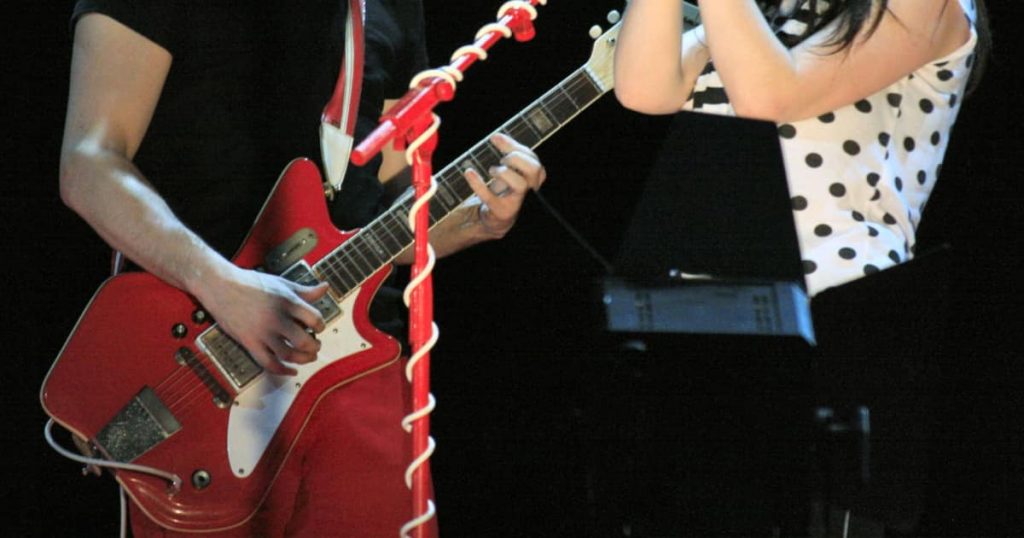
The JB Hutto Montgomery Ward Airline is the guitar most associated with White's White Stripes era. Made by Valco in the 1960s and sold through the Montgomery Ward catalog, these guitars feature a fiberglass body known as Res-O-Glas. That material gives the Airline a uniquely nasal, cutting tone that no wood-body guitar can replicate. White tunes it to open A or open D depending on the song, which transforms chord shapes into slide positions and forces a completely different relationship with the fretboard.
The Airline's cheap construction and unconventional resonant properties actually work in his favor. The fiberglass body cuts through a cranked amp in a way that can sound like two guitars at once — which explains a significant part of how a two-piece band filled arenas. The inherent tonal weirdness of the instrument is a feature, not a bug.
The Gretsch G6199 Billy-Bo Jupiter Thunderbird

The Gretsch G6199 Billy-Bo Jupiter Thunderbird was originally a collaboration between Bo Diddley and Gretsch, and White adopted it as a primary instrument in his later work with The Raconteurs and on solo records. It runs FilterTron pickups — Gretsch's signature humbucking design — which have a brighter, crisper character than a PAF humbucker. Through a cranked vintage amp, they deliver that twangy-but-beefy tone you hear throughout his more recent output.
- The Billy-Bo's semi-hollow construction adds natural body resonance and slight acoustic feedback sensitivity
- FilterTron pickups reduce hum while retaining clarity at high gain settings
- The 24.5" scale length gives the strings a slinkier feel compared to a 25.5" Fender
- White often runs it in standard tuning, which contrasts with his open-tuned Airline work
Other Key Guitars in His Collection

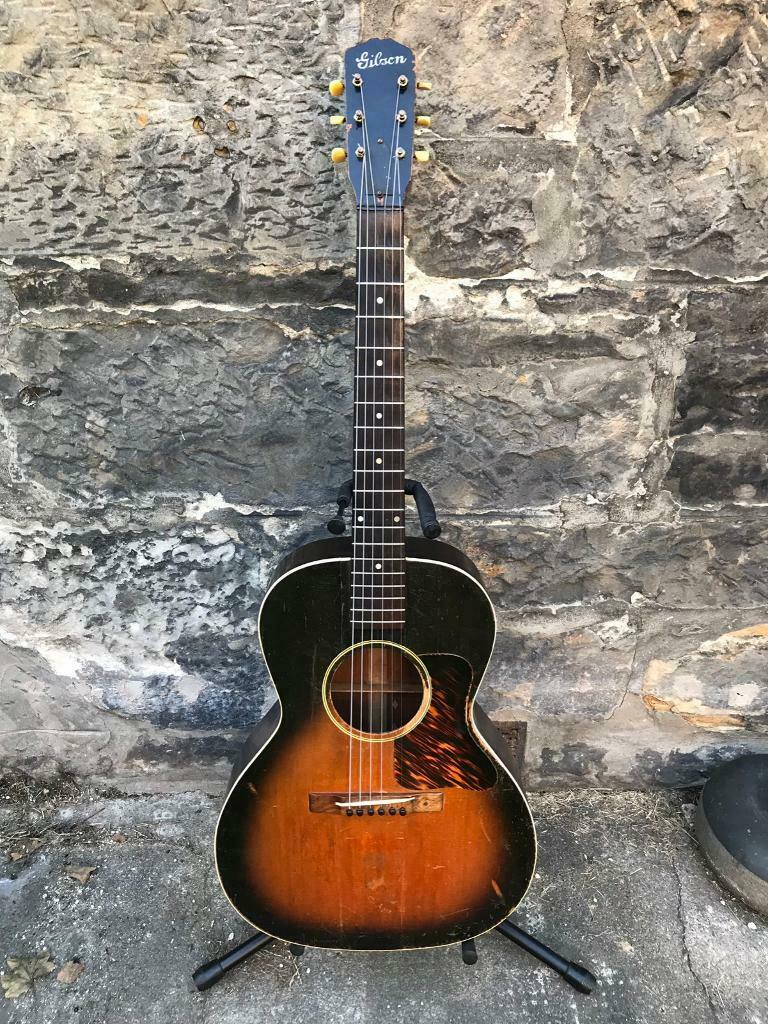
White's collection spans the decades. His 1937 Gibson L-1 — the same model Robert Johnson famously played — connects his work directly to the roots of Delta blues. Just as Jimi Hendrix absorbed the blues tradition and filtered it through a contemporary electric lens, White uses the L-1 to keep a direct line to that raw, pre-amplification sound when songs call for it.
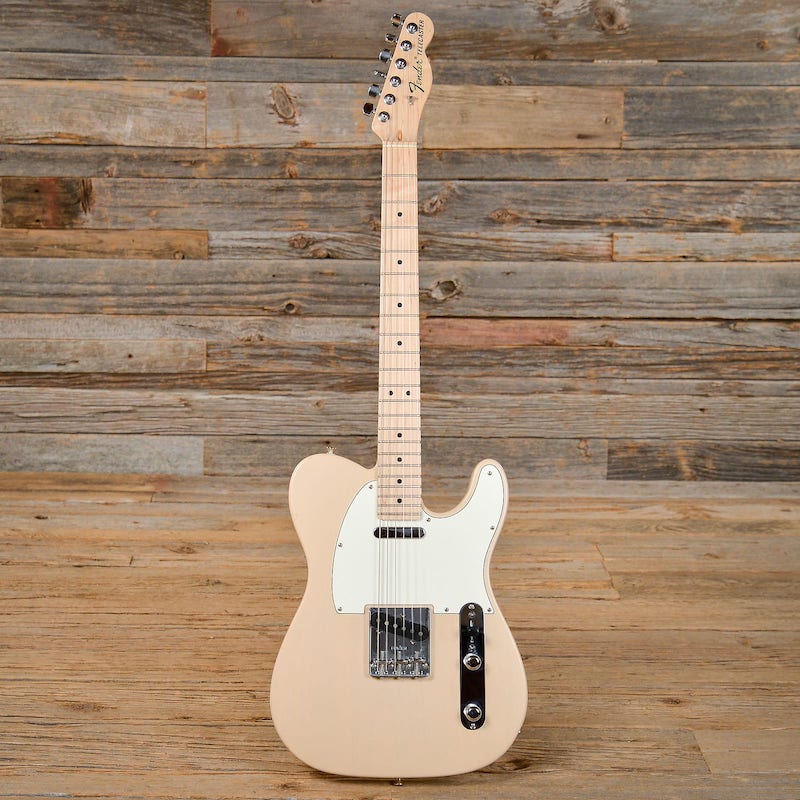
He's also used the Fender Highway One Telecaster in certain live and studio contexts, particularly when he wants a cleaner, more articulate platform. The Highway One series features a nitro lacquer finish and a slightly softer neck profile compared to standard American Fenders. It shows up when a song demands defined, twangy clean tone rather than his signature grit.
Amplifiers: The Engine Behind His Sound
White's amp choices mirror his guitar philosophy exactly. He favors vintage budget gear — brands like Sears and RCA that most players ignore entirely — because these amps break up early, compress naturally at high volumes, and produce a harmonic richness that modern solid-state designs rarely match. Here's a full overview of his main documented gear:
| Category | Item | Key Characteristic | Primary Use |
|---|---|---|---|
| Guitar | Montgomery Ward Airline (Res-O-Glas) | Fiberglass body, nasal cutting tone | White Stripes era, live |
| Guitar | Gretsch G6199 Billy-Bo Jupiter Thunderbird | FilterTron pickups, semi-hollow body | Raconteurs / Solo work |
| Guitar | 1937 Gibson L-1 Acoustic | Delta blues-era tonewood, open tuning | Studio / acoustic passages |
| Guitar | Fender Highway One Telecaster | Nitro finish, articulate Tele twang | Clean tones, select live use |
| Amp | Sears Silvertone 100 Watt | Natural early breakup, midrange-heavy | White Stripes primary amp |
| Amp | RCA Clubmaster | Hi-fi tube circuit, warm low end | Studio recording |
| Amp | Sonic Machine Factory Custom Combo | Hand-wired boutique tube, touring reliable | Live, later career |
| Pedal | DigiTech Whammy | Pitch shifting, octave jumps | Throughout career |
| Pedal | Voodoo Lab Tremolo | Optical tremolo, smooth waveform | Live and studio |
| Pedal | Electro-Harmonix Big Muff Pi | Thick sustaining fuzz | Throughout career |
Sears Silvertone 100 Watt
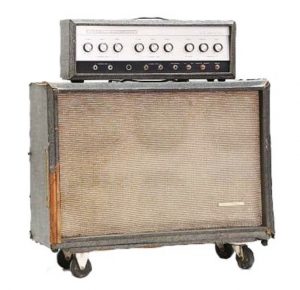
The Sears Silvertone 100 Watt is the amp most closely associated with the early White Stripes sound. Sold through Sears catalogs in the 1960s, these were budget amps built for beginners — not touring musicians. But their cheap transformers and basic tube circuits create a natural overdrive character that expensive boutique amps often struggle to replicate. Push the input hard with a guitar and you get a snarling, midrange-heavy crunch that cuts through a mix immediately.
Running the Silvertone at high volume is the key. The amp isn't designed to stay clean — it's designed to break up early, and that's exactly what White wants. Like Jimmy Page, who understood that a vintage amp's sweet spot lies just past its comfort zone, White digs into the Silvertone's natural compression and harmonic saturation rather than fighting it.
RCA Clubmaster and Sonic Machine Factory
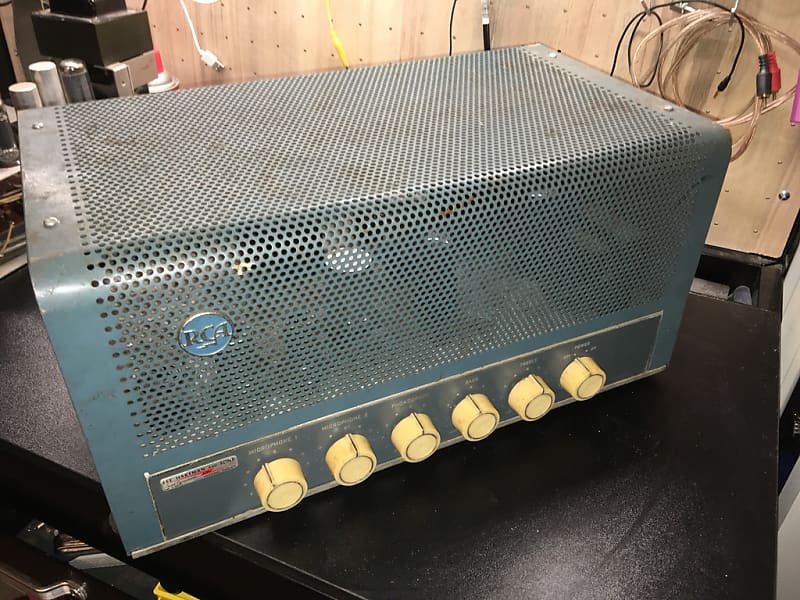
The RCA Clubmaster is an even more unconventional choice — originally designed as a home hi-fi amplifier, not a guitar amp at all. White repurposed it for studio use, exploiting its warm tube-driven low end and unusual frequency response. This is a recurring pattern in his studio work: find an overlooked piece of electronics and see what happens when guitar runs through it.
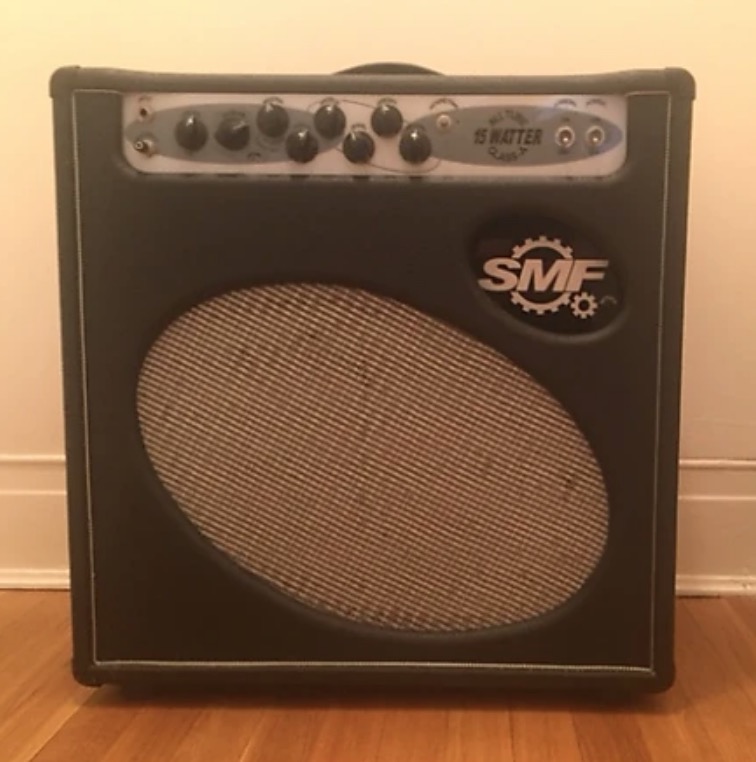
In later years, White began using custom amplifiers from Sonic Machine Factory. These are hand-wired boutique builds commissioned to his specifications — combining vintage tube topology with the reliability required for heavy touring. The Sonic Machine Factory amps retain the character of his vintage Silvertones and RCA units but with far greater consistency night to night on the road.
Effects Pedals and Signal Chain
White's pedalboard is small and surgical. Each pedal serves a specific, identifiable purpose and would be missed immediately if removed. He doesn't use effects as a crutch — he deploys them as deliberate exclamation points within otherwise raw, amp-driven tones.
DigiTech Whammy
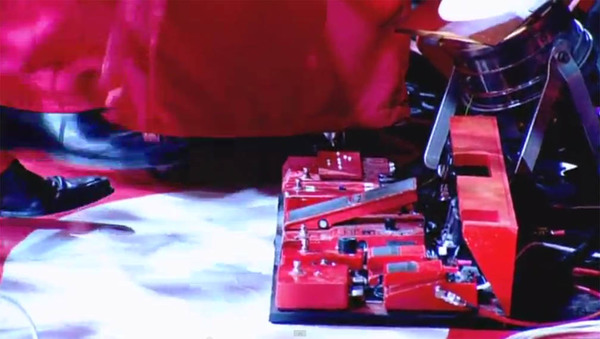
The DigiTech Whammy is arguably the single most important pedal in the Jack White guitar rig setup. He uses it to create octave jumps — those sudden pitch shifts that make his solos feel like they're launching into orbit. Set to an octave up, the Whammy transforms a single-note line into something that sounds like a second guitar or even a horn. Combined with open-tuned riffs, it's a massive part of why a two-person band could fill arenas with apparent ease.
- White typically uses the 1 octave up setting for solo passages
- The Whammy sits early in his signal chain — before distortion pedals
- He uses heel-down position (no shift) as default, rocking forward for the effect
- The original WH-1 Whammy tracks single notes cleanly; chords cause artifacts
Pro tip: If you add a Whammy to your rig, play single-note lines when you engage it — chords cause tracking artifacts that muddy the effect completely and defeat the purpose.
Voodoo Lab Tremolo and Other Pedals
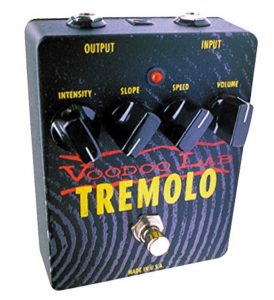
The Voodoo Lab Tremolo gives White's clean and lightly overdriven tones a hypnotic pulse. Optical tremolo circuits — as opposed to bias-modulation designs — produce a smooth, rounded wave that feels more musical and less choppy at moderate speeds. He applies it to rhythm parts where groove and movement matter more than aggression.
Beyond the Whammy and tremolo, his documented board has included an Electro-Harmonix Big Muff Pi for thick sustaining fuzz and a Boss DS-1 or DS-2 for sharper, more aggressive distortion textures. That combination gives him a range from clean-with-tremolo all the way to searing fuzz — effectively three distinct tonal worlds from a handful of pedals. You can find a similarly focused approach explored in Mike McCready's rig rundown, where a minimal selection of key effects does far more work than a complicated chain ever could.
Best Practices for Dialing In His Tone

Getting close to White's tone requires the right mindset before you touch a single knob. The gear list is the easy part. The harder part is understanding why each choice was made and applying those same principles to whatever instruments you're actually working with.
Adopt the Limitation Mindset
White's entire system is built on removing options. If you're sitting in front of a 200-watt amp with 14 knobs and a 15-pedal board, you're already working against his philosophy. Start by picking one guitar, one amp setting, and no more than three pedals. Force yourself to make the music work within those constraints.
- Pick open tunings — open D or open A — to access his characteristic chord voicings and slide positions
- Use high action; it adds slight string resistance that contributes to the gritty attack
- Treat your amp's natural breakup as your primary overdrive source, not pedals
- Learn his songs in original open tunings before attempting alternate approaches
This approach is common among players who prioritize feel over perfection. Mark Knopfler is another guitarist who achieves complex, nuanced tone from deliberately restrained gear — both players understand that fewer options force better musical decisions.
Let Technique Do the Heavy Lifting
How you play through the gear matters more than the gear itself. White plays hard. He digs into strings with a thick pick, which emphasizes the fundamental frequency and creates natural attack transients that compress against the amp's input stage. That physical aggression is as much a part of his sound as any piece of equipment on his board.
Pick attack, slide technique with a glass bottleneck (not metal — glass produces a rawer, less polished tone), and extreme dynamic range — from whisper-quiet to full throttle — are what separate his tone from someone who buys the same gear and sounds nothing like him. Work on playing with genuine dynamic extremes before you start worrying about pedal settings.
When to Embrace the Jack White Approach — and When Not To

Contexts Where His Philosophy Shines
White's minimalist approach works best when your music has space — dynamic contrast, room to breathe, gaps between notes where the amp's natural decay can do something interesting. Raw blues, garage rock, lo-fi indie, and stripped acoustic arrangements all benefit from the "less is more" constraint system. The limitations push you toward more expressive, deliberate playing because you have nowhere to hide.
The approach also works well for songwriting. Restricting your tonal palette forces melodic and rhythmic decisions rather than tonal ones — a useful creative reset if you've been stuck. Jerry Cantrell takes a similarly focused approach to his setup: his rig is more elaborate, but his core philosophy is about locking into one great signature sound rather than having infinite options available.
When You Should Go a Different Direction
White's approach is the wrong call for certain musical contexts. If your work involves:
- Dense, layered production where multiple guitar tones need clear separation
- Technically demanding passages requiring clean, precise articulation at low gain
- Genres like jazz or fusion where tonal finesse and amp headroom are non-negotiable
- Live situations where consistent, repeatable sounds are required set after set
...then deliberate imperfection and cranked vintage gear will work against you. John Mayer's rig setup represents the other end of the spectrum — a meticulously crafted signal chain designed for maximum tonal flexibility and clean headroom. That approach is the right call for his style even though it looks completely different from White's, because it solves a completely different set of musical problems.
Common Mistakes When Building a Jack White-Inspired Rig
Chasing Identical Gear
The most common mistake is tracking down a Res-O-Glas Airline and a vintage Silvertone, playing them through his exact settings, and wondering why you don't sound like him. The gear is a means to an end. The Airline's unusual fiberglass resonance only works the way it does because of how White physically interacts with it — his specific tunings, slide angle, attack weight, and amp volume settings all interact with the instrument's character.
Buying the same guitar doesn't give you the same hands. Focus on understanding the tonal goals behind each choice, then find instruments in your budget that achieve the same goals. A beat-up Squier with high action running into a cranked practice amp pushed with a Big Muff will get you dramatically closer than an expensive exact-replica rig played at bedroom volume.
Warning: Vintage amps can carry failing capacitors that cause dangerous voltage issues — always have any vintage amp inspected by a qualified technician before you use it at high volume.
Underestimating Playing Technique
White's technique is as important as his gear — possibly more so. His slide work alone is a study in controlled aggression: he presses firmly with a glass slide and lets the imperfection and grind become part of the tone. He also uses open tunings that require completely relearning chord positions and scale patterns from the ground up.
Skip the technique development and replicate only the gear, and you'll get a vague approximation at best. Spend a focused month with open D tuning before worrying about amp brands. Learn his right-hand attack before buying the exact pedals he uses. The technique foundation makes every gear decision finally make sense.
Vintage Gear Care and Quick Wins for His Sound
Keeping Vintage Instruments in Shape
White's rig relies heavily on vintage equipment, and vintage gear demands a genuine maintenance commitment. These instruments and amps weren't engineered to last this long, and many are operating decades past their intended lifespan.
- Electrolytic capacitors in vintage amps fail with age — have them recapped every 15–20 years by a qualified technician
- Vintage guitar electronics (pots, switches, output jacks) oxidize and develop noise — clean annually with contact cleaner
- Fiberglass Airline bodies don't crack like wood, but their pickup cavities and control plates are fragile at the seams
- Old speaker cones develop tears and resonance issues — inspect them visually before any high-volume session
- Wooden necks on fiberglass-body guitars still need humidity control — maintain 45–55% RH to prevent warping
In the studio, White has relied on the AEA R44CX ribbon microphone to capture his amp's natural character. Ribbon mics are particularly sensitive to high-SPL sources — always verify the maximum SPL rating before placing one directly in front of a loud amp cabinet.
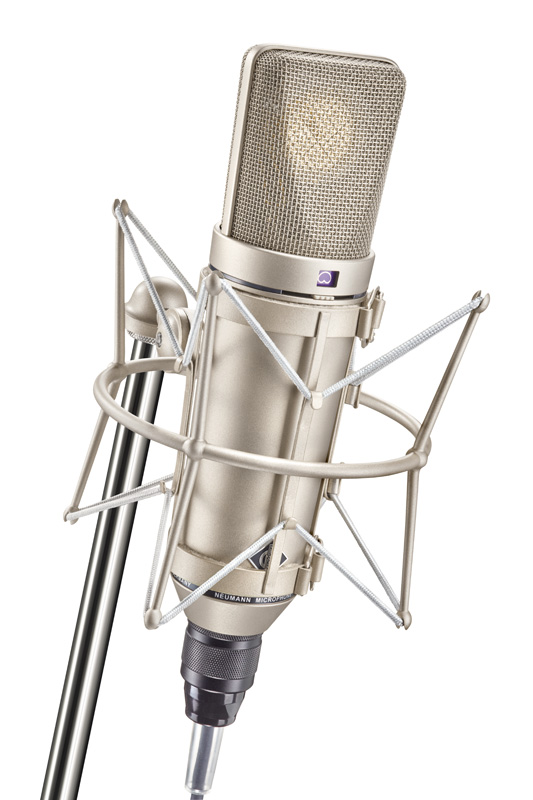
The Neumann U67 tube condenser has also appeared in his Third Man Records recording setup — used for capturing acoustic sources including his 1937 Gibson L-1. If you're recording in the spirit of his approach, combining a ribbon mic for amp body with a condenser for acoustic detail gives you a complementary two-mic palette that achieves similar results with more affordable alternatives.
Quick Wins That Get You Closer Immediately

You don't need to overhaul your entire rig to move meaningfully closer to his sound. These are the highest-leverage changes you can make right now, regardless of what gear you currently own:
- Retune to open D or open A. This single change transforms your chord vocabulary and creates the drone-and-melody interplay that defines his riff style.
- Raise your action. Higher string action increases tension feel and adds grit to your attack — White's action is noticeably high compared to most contemporary players.
- Turn up your amp and back off your guitar's volume knob for cleaner tones. This keeps your preamp warm while giving you dynamic control from the guitar itself.
- Add a DigiTech Whammy. Nothing else sounds like it for those octave jumps. One pedal change here makes an immediate, obvious difference to your range.
- Switch to a heavy pick (1.5mm or thicker). A heavy pick emphasizes the fundamental and creates the aggressive transient attack that's central to his playing identity.
None of these require serious spending. Most are free or under $50. All of them will move your sound in a measurably White-adjacent direction before you invest time hunting down vintage amps or specialty guitars.
Frequently Asked Questions
What guitar does Jack White primarily use?
Jack White is most associated with the JB Hutto Montgomery Ward Airline, a 1960s fiberglass-body guitar made by Valco. Its Res-O-Glas construction gives it a uniquely nasal, cutting tone no wood-body guitar replicates. He has also extensively used the Gretsch G6199 Billy-Bo Jupiter Thunderbird with FilterTron pickups, particularly with The Raconteurs and on his solo records.
What amp does Jack White use?
His most iconic amp is the Sears Silvertone 100 Watt, a budget 1960s catalog amp that breaks up early and produces a snarling midrange crunch at high volume. He has also used an RCA Clubmaster — originally a home hi-fi amplifier — for studio recording, and custom Sonic Machine Factory hand-wired combo amps for live touring in his later career.
What tuning does Jack White use?
White primarily plays in open A and open D tuning, which allows him to play full chords with a single finger or slide and creates the characteristic drone-and-melody interplay across his White Stripes catalog. He also plays in standard tuning on the Gretsch Billy-Bo for certain Raconteurs and solo material where open voicings aren't required.
What pedals does Jack White use?
His core pedals are the DigiTech Whammy (for octave pitch shifts), the Voodoo Lab Tremolo (for rhythmic movement on cleaner tones), and an Electro-Harmonix Big Muff Pi for thick sustaining fuzz. He has also used a Boss DS-1 or DS-2 distortion for a sharper, more aggressive color when songs call for it.
How do you get Jack White's tone without vintage gear?
Focus on technique and tuning first. Retune to open D or open A, raise your action, use a heavy pick (1.5mm or thicker), and play your amp loud enough to get natural breakup. A DigiTech Whammy and a Big Muff Pi cover the most identifiable effects. You'll get 80% of the way there on any decent guitar and amp before you need to think about vintage hunting.
What pick does Jack White use?
White uses thick picks, typically in the 1.5mm and above range. A heavy pick emphasizes the fundamental frequency of each note and creates the aggressive attack transient that compresses against his amp's input — a key component of his raw, punchy sound. The pick choice is one of the most underrated and most accessible elements of his tone to replicate.
Does Jack White use a slide?
Yes. White uses a glass slide rather than a metal one. Glass produces a rawer, less polished tone compared to the smoother, more sustained character of metal slides — it retains more of the string's attack and sounds grittier through a cranked amp, which fits his aesthetic perfectly. He presses with firm pressure to add deliberate impurity to the tone.
What microphones does Jack White use in the studio?
At Third Man Records, White has used the AEA R44CX ribbon microphone to capture amp character and the Neumann U67 tube condenser for acoustic sources including his 1937 Gibson L-1. The ribbon mic picks up the body and warmth of a cranked amp, while the condenser adds detail and air for acoustic or room recording — a complementary pairing that captures the full spectrum of his sound.
Final Thoughts
The Jack White guitar rig setup proves that tone is a philosophy before it's a gear list. Pick up your current guitar, retune it to open D, crank your amp until it starts to complain, and start playing with a thick pick and a glass slide — you'll hear his influence in your hands immediately. If this breakdown sparked your interest in how other players have built their signature sounds, explore the rest of our rig rundown series and see how the philosophy of deliberate constraint shows up across the greatest guitarists in rock history.


About Dave Fox
Dave Fox (also known as Young Coconut) is a musician, songwriter, and music historian who has been making and studying music across genres for over twenty years. His work spans experimental, jazz, krautrock, drum and bass, and no wave — a breadth of listening that informs his writing about musical history, gear, and the artists who push sound in unexpected directions. At YouTubeMusicSucks, he covers music history and genre guides, musician interviews, and music production resources for listeners and players who want more than the mainstream offers.
Check for FREE Gifts. Or latest free acoustic guitars from our shop.
Remove Ad block to reveal all the rewards. Once done, hit a button below