Best Downtempo Techno Artists (2026): Top Chill Electronic Music
by Dave Fox
Our team spent an entire weekend in a listening session that started with peak-hour club techno and drifted, track by track, into something much slower and more meditative. That shift — when the BPM pulls back and the reverb starts to breathe — is exactly how most people first encounter the best downtempo techno artists. It's a genre that doesn't announce itself loudly. It draws listeners in and settles. Our music articles cover electronic genres across the full spectrum, but downtempo techno earns its own dedicated treatment.

Downtempo techno sits between roughly 100 and 125 BPM. It keeps the skeletal percussion and industrial texture of traditional techno while shedding the urgency of peak-hour club music. Anyone who's spent time with dark ambient music will recognize the atmospheric instinct here — but downtempo techno never fully releases its grip on groove. The rhythm stays present. The tension never fully resolves. That restraint is the whole point.
The genre traces back to early-90s Detroit and Berlin, drawing from dub techno, ambient electronics, and post-industrial sound design. Understanding those roots is the fastest route to understanding what separates the essential artists from the merely competent ones.
Contents
The Roots and Rise of Downtempo Techno
Detroit, Berlin, and the Slow Machine
Early Detroit techno established the blueprint: machine percussion, cold funk, and an aesthetic rooted as much in science fiction as in soul. Drexciya, Juan Atkins, and the Belleville Three built a musical language from drum machines and synthesizers that felt simultaneously futuristic and melancholy. When producers started pulling the tempo back and expanding the reverb around those same elements, downtempo techno began taking shape. According to Wikipedia's overview of techno, the genre's minimalist strain developed through the 1990s as producers stripped arrangements down to their essentials — and slowing the BPM was a natural extension of that logic.
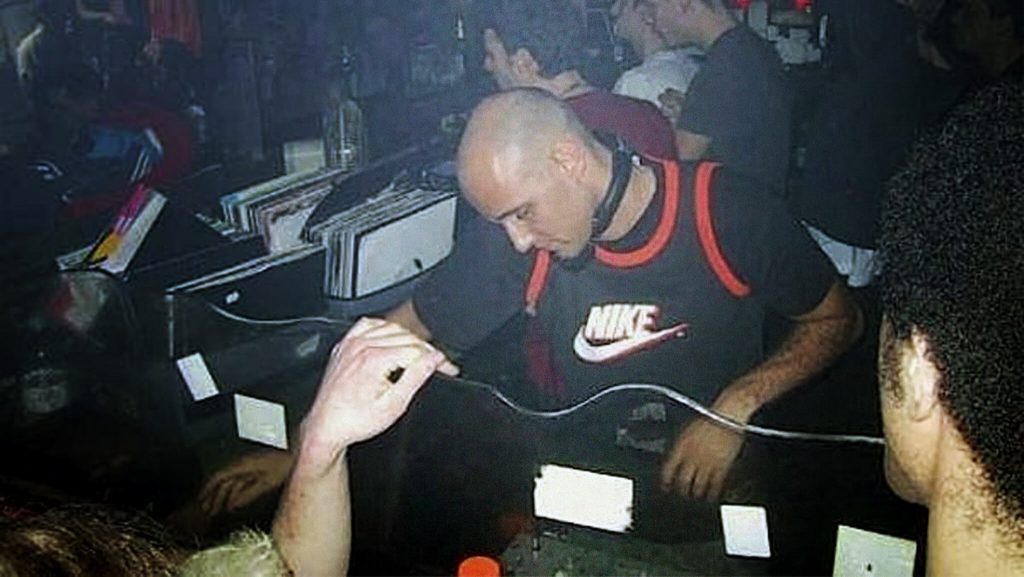
Berlin's industrial geography — vast former warehouses, long club nights, a post-Wall culture still processing radical change — created ideal conditions for slower, darker electronic music. The Basic Channel label, run by Moritz von Oswald and Mark Ernestus, proved that techno could be slow, deep, and hypnotic without sacrificing intensity. That record remains the genre's most important founding document, and nearly every artist in this space acknowledges the debt.
Labels and Scenes That Shaped the Sound
The best downtempo techno artists have rarely emerged in isolation. Modern Love in Manchester gave Andy Stott and Miles Whittaker a home for work that was too slow, too heavy, and too patient for most labels. Kompakt in Cologne released Dettinger's precise, minimal productions. Italy's Como-Milan axis produced Voices From The Lake, a duo that brought a distinctly aquatic, coastal sensibility to the template.

Netlabels also contributed significantly to the genre's spread, making experimental downtempo work available outside traditional distribution channels. Underground genre movements like No Wave demonstrated that institutional infrastructure — or deliberate rejection of it — shapes a genre's sonic identity as profoundly as any individual artist. The same principle applies here: the labels defined what the music could be, and the best artists either worked within that framing or consciously pushed against it.
When Downtempo Techno Works (and When It Doesn't)
Where the Genre Thrives

Downtempo techno finds its strongest footing in a handful of specific listening contexts:
- Late-night headphone sessions — the low-end detail and spatial depth reward concentrated, close listening
- Small club environments with quality sound systems and patient audiences who lean in rather than peak out
- Extended focus or creative work — the tempo sustains attention without demanding it
- Long drives and travel — the genre's forward motion at low BPM maps cleanly onto physical movement
Research on how music affects mood and cognitive focus consistently identifies tempo as a primary variable. Downtempo techno's 100–125 BPM range sits at a well-documented sweet spot: rhythmic enough to maintain engagement, slow enough to avoid over-arousal. That's not an accident. It's why producers who work in this space often describe their goal as controlled tension rather than release.
Tracks in this genre develop slowly. Andy Stott's work typically unfolds over eight to ten minutes. Voices From The Lake build entire sets around gradual textural evolution. Listeners accustomed to shorter song structures benefit from giving themselves time to recalibrate their expectations before reaching any conclusions.
Its Limitations in Certain Contexts
Peak-hour festival slots are largely incompatible with this music. Downtempo techno doesn't build toward a single cathartic release — it sustains. That's its strength in the right context and a real limitation in the wrong one. Social events that need background music also tend to find the genre's density uncomfortable rather than ambient. Unlike synthwave, which achieved broad crossover through immediate melodic accessibility, downtempo techno maintains a deliberate barrier. Most serious listeners in this space describe that difficulty as part of what drew them in — and what keeps them there.
The Best Downtempo Techno Artists Side by Side
| Artist | Origin | BPM Range | Key Album | Best For |
|---|---|---|---|---|
| Andy Stott | Manchester, UK | 100–115 | Faith in Strangers | Late-night headphone immersion |
| Dettinger | Germany | 105–120 | Interlace | Minimalist production study |
| Voices From The Lake | Italy | 110–122 | Self-titled LP | Long-form immersive listening |
| Gesaffelstein | France | 115–125 | Aleph | Dark crossover entry point |
| Peter Van Hoesen | Belgium | 108–120 | From All Sides | Functional hypnotic listening |
| Worakls | France | 100–120 | Worakls Orchestra | Melodic emotional journeys |
| Riyoon | South Korea | 100–115 | No Mind's Land | Introspective ambient-techno |
Established Names
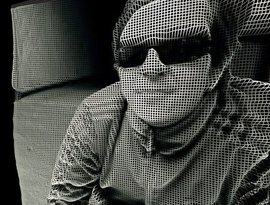
Dettinger remains one of the most consistently underrated figures in the genre. His Kompakt releases — particularly Interlace — demonstrate a level of rhythmic precision and restraint that most producers never approach. Every element earns its place. Nothing decorates for decoration's sake. Studying his arrangement decisions is one of the fastest ways to understand what makes this music function.
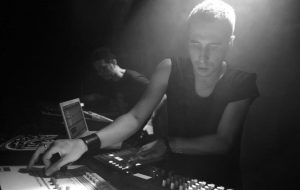
Voices From The Lake — the project of Donato Dozzy and Neel — operate at the intersection of dub techno and deep minimalism. Their self-titled LP set a standard for immersive long-form listening that few albums in the genre have matched. The duo treats time as a compositional material in its own right: the pace at which elements enter and exit is as deliberate as any melodic choice.
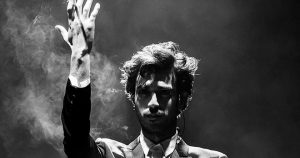
Gesaffelstein occupies the most accessible position among the best downtempo techno artists. His Aleph album functions as a crossover record — industrial enough to satisfy genre purists, structured enough for listeners arriving from rock or pop backgrounds. His production choices are meticulous: every frequency has a defined purpose, and the darkness is calibrated rather than accidental.
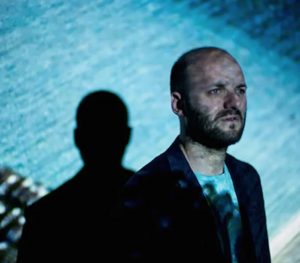
Andy Stott's Faith in Strangers is heavy work. The tempos are slow, the bass is thick, and vocal textures provided by Alison Skidmore add an unsettling human warmth to an otherwise machine-driven sound. Our team considers it one of the most complete albums in the entire downtempo techno catalog — demanding on a first listen, revelatory on a fifth.
Rising Artists Worth Following
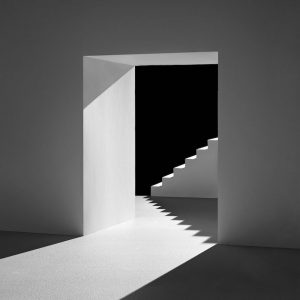
Riyoon operates from Seoul, and his No Mind's Land album brought a distinctly East Asian introspection to the downtempo techno template. The production is sparse, the emotional register is quiet, and the album rewards repeat listening in ways that most electronic music simply doesn't deliver.
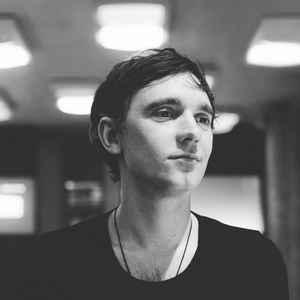
Peter Van Hoesen is a Belgian producer whose work sits at the harder, more functional end of the spectrum. His rhythms retain more club utility than most artists on this list, but the tempos and atmospheric density still place him firmly in downtempo territory. For anyone who wants this genre with a sharper, more industrial edge, Van Hoesen is the right starting point.
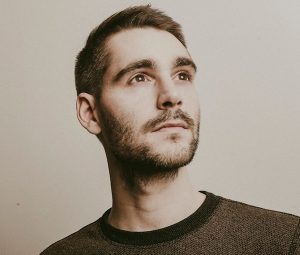
Worakls brings a more melodic, classically influenced approach to the template. Orchestral arrangements paired with electronic production create something genuinely unusual — his Worakls Orchestra album sits unlike anything else in the genre. Our team recommends it as a bridge record for listeners whose backgrounds are in classical or film music rather than club culture.
Entry Points and Deep Cuts
Where to Begin
For anyone approaching the best downtempo techno artists for the first time, three albums function as reliable starting points:
- Gesaffelstein — Aleph: the most structurally accessible entry point, with strong industrial energy that registers immediately even without genre familiarity
- Andy Stott — Faith in Strangers: slower, heavier, and more demanding — best approached once the listening habits have had time to adjust
- Voices From The Lake — self-titled LP: the definitive immersive experience in the genre, ideal for extended late-night sessions
Anyone who regularly explores long-form meditative or ambient music will find the adjustment to downtempo techno less dramatic than expected. The pacing and atmospheric depth overlap considerably — the percussion is simply more present and more intentional.
Going Deeper
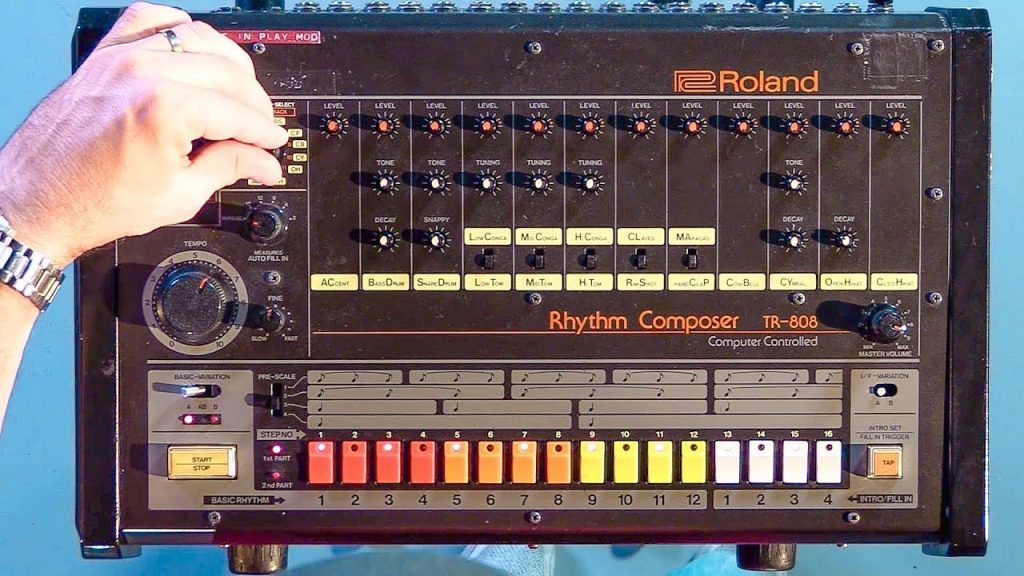
The TR-808 and its descendants appear throughout the genre — the low, resonant kick that defines so much of what the best downtempo techno artists build around. Understanding the tool helps explain the sound. After working through the three entry albums, our team's recommended deeper listening path includes:
- Dettinger — Interlace: a study in restraint and precision that permanently changes how attentive listeners hear rhythmic minimalism
- Peter Van Hoesen — From All Sides: harder and more functional, essential for understanding how the genre can serve a club context without losing its atmospheric depth
- Riyoon — No Mind's Land: the most introspective record on this list, and one of the most rewarding on repeated listening across any genre
Production Techniques Worth Studying
Rhythm Architecture
Pro insight: When studying downtempo techno producers, pay close attention to what's absent — the rests, the gaps, the sounds that stop early. Negative space is doing at least half the compositional work in every essential record in this genre.
The best downtempo techno artists share a specific approach to rhythm: they build around absence as much as presence. The kick drum is sparse. The hi-hat patterns are wide-spaced. The gaps between beats carry as much information as the beats themselves. This runs directly against the instinct of most new producers, who tend to fill space to avoid silence.
Specific techniques that appear consistently across these artists include:
- Ghost notes and soft velocity layers — creating texture without density, motion without weight
- Swing and subtle humanization applied to programmed patterns to avoid mechanical rigidity
- Long reverb tails that blur beat boundaries and generate a sense of continuous forward motion
- Sub-bass movement as a rhythmic element, often doing the work that a second percussion layer would do in higher-BPM techno
Texture and Space
If rhythm is the genre's skeleton, texture is its atmosphere. The best downtempo techno artists treat every sound source as a textural element — not just pads and drones, but snare room, hat bleed, reverb decay, and incidental noise. Dettinger's productions demonstrate this most clearly: each element has a precise function, and none of it is decorative.
Common textural approaches across the genre:
- Tape saturation and subtle harmonic distortion — adds organic warmth and character to digital sources
- Modulated reverb returns — creates motion without adding rhythmic complexity or density
- Filtered noise and field recordings as atmospheric layers beneath the percussion bed
- Sidechain compression applied to pads rather than kicks — the pad breathes with the rhythm instead of ducking under it
Our team has found that studying these techniques alongside the music — listening for how a specific effect behaves, then tracing it through the production — is the most direct path to understanding what makes these records endure. The albums function as tutorials for anyone paying close enough attention to what they're actually hearing.
Frequently Asked Questions
What exactly is downtempo techno?
Downtempo techno is a subgenre of electronic music operating between approximately 100 and 125 BPM. It shares techno's skeletal percussion, industrial texture, and minimalist aesthetic, but replaces the urgency of peak-hour club music with a slower, more meditative groove. The emphasis is on atmosphere, tension, and sustained listening rather than dancefloor release.
How is downtempo techno different from ambient techno?
Ambient techno largely surrenders its grip on rhythm — the percussion often becomes textural rather than functional, and the overall experience sits closer to pure ambient music. Downtempo techno keeps the groove active and structural, even when it's slow and sparse. The distinction is subtle but consistently audible: one invites passive listening, the other requires active engagement with the rhythm.
Who are the most influential downtempo techno artists?
Our team identifies Andy Stott, Voices From The Lake, and Dettinger as the three most consistently influential figures in the genre. Gesaffelstein is the most commercially recognized name. Peter Van Hoesen, Worakls, and Riyoon each represent distinct directions within the genre's broader territory, and all deserve serious attention from producers and listeners alike.
What BPM range defines downtempo techno?
Most downtempo techno sits between 100 and 125 BPM. The lower end — around 100 to 108 — tends to be more atmospheric and ambient-adjacent. The upper range — 118 to 125 — retains more club utility while still operating at a tempo that most techno DJs would consider deliberate and restrained. The genre's defining characteristic is not an exact number but the sense of intentional slowness relative to standard techno.
What gear do downtempo techno producers typically use?
Roland's TR-808 and TR-909 drum machines — or their modern software equivalents — are foundational to the sound. Synthesizers from Moog, Roland, and Elektron appear consistently across these producers' rigs. Heavy use of reverb units, analog saturation, and modulation effects defines the textural approach. The specific gear matters less than the philosophy: every element is chosen for precision and purpose rather than variety.
Is downtempo techno effective for focus or creative work?
Our team finds it genuinely effective for sustained focus work — particularly writing, design, and coding tasks. The tempo range supports attention without demanding it, and the absence of strong melodic hooks means it doesn't compete with cognitive processing. The genre's atmospheric depth prevents it from feeling like silence, which some people find counterproductively distracting on its own.
What labels should listeners explore for more downtempo techno?
Modern Love (Manchester), Kompakt (Cologne), Mule Musiq (Tokyo), and Berceuse Heroique (London) are the four labels our team recommends as essential starting points. Each maintains a distinct aesthetic: Modern Love leans heavy and industrial, Kompakt is precise and minimal, Mule Musiq bridges dub and electronic traditions, and Berceuse Heroique explores the harder, more aggressive edge of the spectrum.
The best downtempo techno artists don't fill the silence — they shape it, and that discipline is what separates music built to last from music that merely sounds good in the moment.


About Dave Fox
Dave Fox (also known as Young Coconut) is a musician, songwriter, and music historian who has been making and studying music across genres for over twenty years. His work spans experimental, jazz, krautrock, drum and bass, and no wave — a breadth of listening that informs his writing about musical history, gear, and the artists who push sound in unexpected directions. At YouTubeMusicSucks, he covers music history and genre guides, musician interviews, and music production resources for listeners and players who want more than the mainstream offers.
Check for FREE Gifts. Or latest free acoustic guitars from our shop.
Remove Ad block to reveal all the rewards. Once done, hit a button below